
 Buy Crypto
- Markets
 Futures
- Spot
- Copy Trade
- Earn
- More
133 Transactions, $8.6 Billion: Who Bought the Crypto Industry in 2025

Original Article Title: "133 Transactions, $8.6 Billion: Who Bought the Crypto Industry in 2025"
Original Article Author: Wan Wan Lin, Beating Insight
The crypto market in 2025 was highly fragmented.
BTC experienced a pullback of over 30% during the year, altcoins saw a sea of red, and cries of "crypto is dead" echoed continuously. The newbies who bought the top at the beginning of the year saw their accounts shrink by half, some have already uninstalled their trading platform apps, while others are still holding on, waiting to break even. The emotions in the crypto community plummeted to the lowest point since FTX's collapse in 2022.
However, amidst this chaos, another group of people was aggressively making acquisitions.
According to PitchBook data, the total amount of mergers and acquisitions in the crypto industry in 2025 reached $8.6 billion, with 267 transactions, an 18% year-on-year increase. This number is nearly 4 times that of 2024 and exceeds the total of the past four years. Using a broader statistical approach from Architect Partners, the total amount is $12.9 billion.
The volume of top transactions was jaw-dropping: Coinbase spent $29 billion to acquire the options giant Deribit, setting the record for the largest acquisition in the history of the crypto industry; Kraken invested $15 billion to acquire the traditional futures platform NinjaTrader, dubbed the "largest TradFi and Crypto integration deal in history"; Ripple acquired Wall Street prime broker Hidden Road for $12.5 billion, officially entering the realm of institutional finance.
Retail investors exited in fear, while institutions aggressively built their positions on the ruins.
Interestingly, these institutions were not buying coins. If they were bullish on the coin price, they could simply buy BTC directly, so why spend billions acquiring companies?
What they were buying were exchanges, licenses, custodians, payment channels, and clearing systems.
What they were bottom-fishing for was the industry's infrastructure.
This reminds people of Wall Street after the 2008 financial crisis. Lehman collapsed, Bear Stearns vanished, but JPMorgan Chase and Goldman Sachs survived and took the opportunity to swallow a bunch of assets. After the crisis, the strong became stronger, and industry concentration significantly increased.
In 2025, the crypto industry is playing out a similar script.
Why Traditional Finance Is "Bottom-Fishing"
Why 2025? Because three keys turned simultaneously.
The first key is the SEC's change of leadership.
During Gary Gensler's era, the crypto industry lived in a state of "Schrodinger's Compliance": you don't know if the token you issued is a security, you don't know when a trading platform's operations will be deemed illegal, you don't know if your company will still exist tomorrow. Almost every well-known company, including Coinbase, Binance, Kraken, Ripple, Uniswap, and OpenSea, has received subpoenas or Wells Notices from the SEC.
This uncertainty is the enemy of mergers and acquisitions. No reputable financial institution is willing to spend $1 billion to acquire a company that could be "surgically removed" by regulation at any time. How do you conduct due diligence? How do you build a valuation model? How do you price legal risks? All are question marks.
In January 2025, the Trump administration took office, and the SEC's attitude made a 180-degree turn. The newly appointed acting chairman, Mark Uyeda, established the Crypto Task Force on his first day in office, announcing an intention to use "dialogue" instead of "enforcement." Over the next few months, the SEC withdrew nearly 60% of its crypto-related lawsuits at a near-fire-sale pace: the Coinbase case was dropped, the Binance case was dropped, the Kraken case was dropped, and even the Ripple case, a century-long legal battle, ended in a settlement.
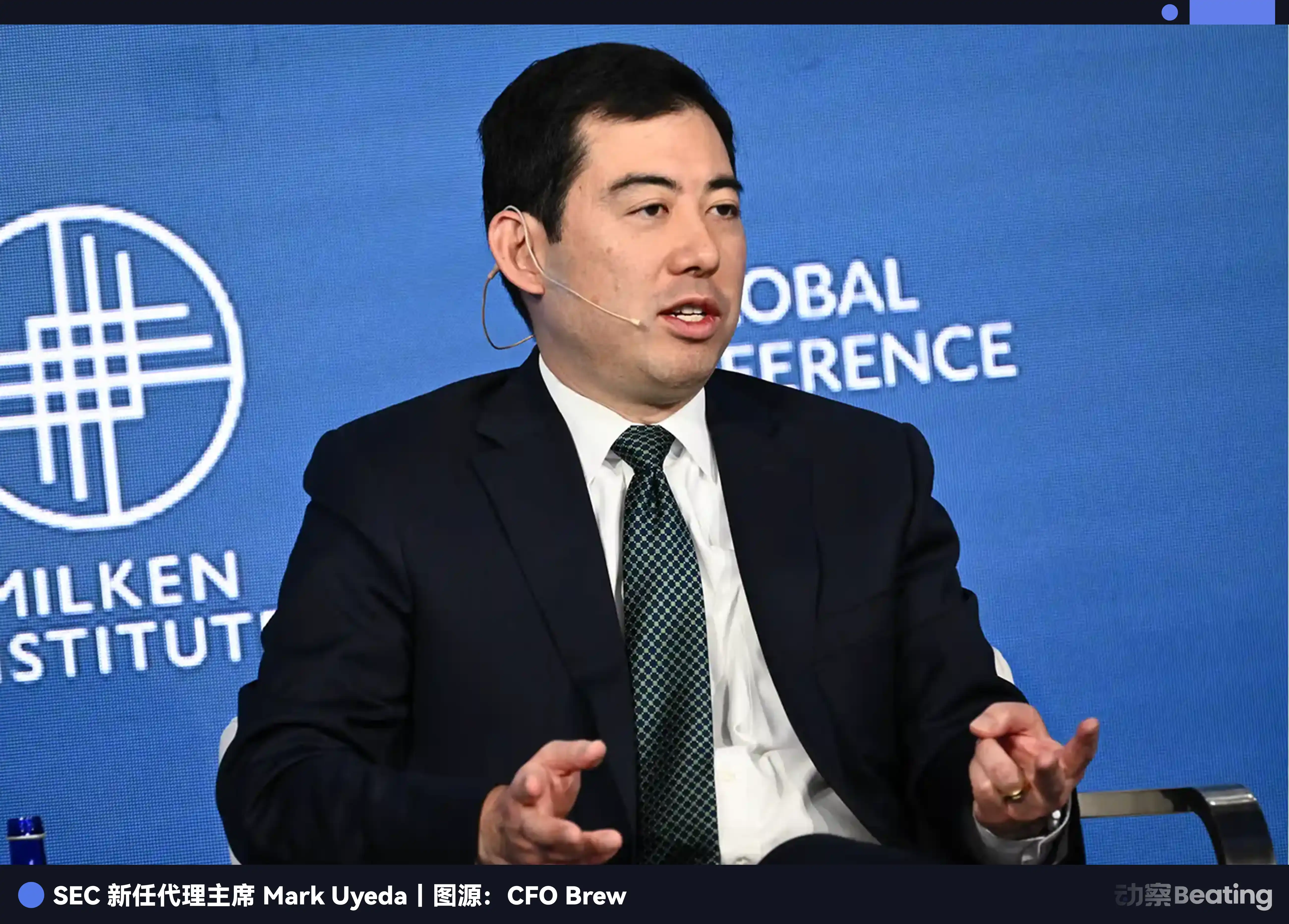
The key to this dismissal was the manner in which it was done: "with prejudice," a legal term meaning not able to be refiled. This gave the market peace of mind: this was a complete turnaround.
The second key is the floodgates of licensing.
On December 12, the Office of the Comptroller of the Currency (OCC) approved national trust bank charters for 5 crypto companies: BitGo, Circle, Fidelity Digital Assets, Paxos, and Ripple. This means they can directly access the Federal Reserve system, provide custody, payment, clearing services, and enjoy the same privileges as traditional banks.
A stark numerical comparison illustrates the point: in the entire year of 2025, the OCC received 18 bank charter applications; in 2024, there was only 1. Once the gates were opened, everyone rushed in.
The third key is the GENIUS Act.
On July 18, the first federal crypto legislation in the United States was signed into law. This law sets rules for stablecoins: 1:1 reserves, monthly disclosure, bankruptcy priority payment. More importantly, it clarifies that compliant stablecoins are not securities or commodities and are not under the jurisdiction of the SEC and CFTC.
This is equivalent to issuing a "Good Citizen Certificate" to stablecoins: banks can now confidently engage in stablecoin business, payment companies can boldly integrate, without worrying about being held accountable one day.
The SEC dropped the lawsuit, eliminating legal risks; the OCC granted the charter, making bank participation possible; the GENIUS Act passed, turning stablecoins into compliant financial products. With three keys turning together, a door that had been tightly closed for a decade has now opened.
The area outside the door is crowded with people holding checks.
The Three Major Buyers Arms Race
When it comes to the ambition and scale of mergers and acquisitions in 2025, MVP definitely belongs to Ripple.
Speaking of Ripple, the impression many in the crypto community may have is still stuck at the "XRP company" - the Ripple that was sued by the SEC in 2020 and fought a four-year legal battle with regulators. But the Ripple after 2024 is a different beast.
The lawsuits have basically settled (with a final ruling in August 2024, reducing the fine from 20 billion to 1.25 billion), the company holds a large amount of cash, and has begun a frenzied expansion of its empire. Their core business has long since transformed: custody, stablecoins, compliance channels - they do whatever makes money.
In this year, Ripple spent 27 billion dollars on acquisitions, becoming the third U.S. financial company to complete two 10 billion dollar-level acquisitions in the same year, following Morgan Stanley and New York Community Bank. The last time Morgan Stanley did this was in 2020: they bought E-Trade for 13 billion and Eaton Vance for 7 billion.
Ripple is now on the same level as the big players, and these two core transactions are worth a closer look.
The first, a $1.25 billion acquisition of Hidden Road. This is a globally top non-bank prime brokerage firm, serving hedge funds, asset management companies, proprietary trading firms, with businesses covering multiple asset classes including foreign exchange, derivatives, fixed income, digital assets, and more.
What is the concept of a prime brokerage firm? Simply put, it is a company that provides "one-stop back-office services" to institutional investors: you want to trade, I help you settle; you want leverage, I lend you money; you want asset custody, I help you keep it safe. The prime brokerage business of Goldman Sachs and Morgan Stanley is a cash cow.
After the acquisition, Hidden Road was renamed Ripple Prime. Ripple has taken a big step into the core circle of Wall Street.
The second deal, a $10 billion acquisition of GTreasury. This is a 40-year-old enterprise treasury management system provider, not the sexiest sounding, but with an impressive client list: American Airlines, Goodyear, Volvo, all Fortune 500. GTreasury processes over $12.5 trillion in payment flows annually.
Putting these two deals together, Ripple's strategic roadmap becomes clear.
It is no longer satisfied with being a cross-border payments company; it wants to build an "end-to-end institutional financial stack": corporate treasury with GTreasury, institutional prime brokerage with Ripple Prime, cross-border payments with Ripple's own network, all bridged by XRP. From the CFO's computer to the hedge fund's trading desk, the entire chain is connected.
CEO Brad Garlinghouse said a big truth at the Ripple Swell conference: "Most of our acquisitions have focused on traditional finance, with the aim of bringing crypto solutions into it."
To translate this statement: Crypto companies are devouring traditional finance.
Coinbase's strategy is different. It aims to be the "Super App" of the crypto world, a platform where everything can be traded.
The $2.9 billion acquisition of Deribit is the biggest move of the year. Deribit is the world's largest crypto options exchange, with an annual trading volume of over $1 trillion and open interest regularly exceeding $30 billion.
The options market is the main battlefield for institutional investors: hedge funds use options to hedge risk, market makers use options to manage positions, asset management companies use options to structure products. Acquiring Deribit is like getting a ticket to the institutional market.
In addition to Deribit, Coinbase has also acquired the on-chain advertising platform Spindl, token management company Liquifi, DeFi options protocol Opyn, meme coin exchange Vector.fun, and the prediction market company The Clearing Company.
With a total of 10 acquisitions in a year, covering derivatives, DeFi, prediction markets, and meme coin trading. CEO Brian Armstrong's ambition is the "Everything Exchange": everything tradable will be on Coinbase.
Kraken's strategy is more straightforward: acquire licenses first, then take on the business.
15 Billion to Buy NinjaTrader, Buying the CFTC Futures License. This company has a 20-year history and is a veteran player in the U.S. retail futures trading field. In the U.S., to legally provide futures and derivatives trading services to retail investors, you must hold a CFTC license.
Apply for it yourself? A minimum of three years waiting in line, and it's not guaranteed to be approved. Buy a licensed company? You're immediately operational. Time for space, even a 50% premium is considered cheap.
After obtaining the license, Kraken submitted an IPO application in November, aiming to go public in the first quarter of 2026 with a valuation of 200 billion dollars. It is no longer just a cryptocurrency exchange; it is a licensed multi-asset trading platform.
The Abacus of Stripes
Crypto companies are engulfing traditional finance, while traditional finance is also infiltrating crypto in return.
The most typical example is Stripe's acquisition of Bridge.
In February 2025, the payment giant acquired Bridge for $1.1 billion: a stablecoin infrastructure company with only 58 employees, valued at $2 billion in Series A. Stripe offered a 5.5x premium, setting a record for the largest acquisition in company history.
Why would a 58-person startup be worth $1.1 billion?
Because Bridge has something that is hard to buy with both money and time: it is the most mature API platform in the stablecoin field, with clients including Coinbase and SpaceX, allowing enterprises to invoke stablecoin capabilities just like calling a regular payment interface. The founding team comes from Coinbase and Square, with a deep understanding of both payment and crypto.

Do it yourself at Stripe? At least two years. Buy Bridge? The product can be launched next month.
Stripe CEO Patrick Collison calls stablecoins "room-temperature superconductors of financial services." This metaphor accurately captures the essence of stablecoins: they allow money to flow like information, 24/7, across borders, at almost zero cost. Traditional cross-border remittances take 3 to 5 days and charge 3% to 5% fees; stablecoin transfers settle in seconds and cost less than 1 cent.
After the acquisition, Stripe launched three products within six months: Stablecoin Financial Accounts covering 101 countries, a stablecoin consumer card in partnership with Visa, and an Open Issuance platform that allows any company to issue its own stablecoin.
Stripe's ambition is clear: to redefine cross-border payments with stablecoins.
Old money on Wall Street is also moving.
In October, JPMorgan announced it would accept BTC and ETH as collateral, starting with ETF shares and later expanding to spot. This marked the first time a major Wall Street bank formally included crypto assets in its collateral scope. Bloomberg reported that a consortium of 10 major banks is exploring joint issuance of G7 currency stablecoins.
Paxos has acquired the institutional-grade MPC wallet platform Fordefi for over $100 million. Fordefi serves over 300 institutions with a monthly trading volume of $120 billion. With the acquisition, Paxos can now offer a one-stop service for "stablecoin issuance + asset tokenization + DeFi custody."
Five years ago, Wall Street and the crypto community were looking down on each other. Wall Street saw crypto as a scam and a bubble, while the crypto community viewed Wall Street as dinosaurs and vested interests. Now, they are sitting at the same negotiation table, valuing each other's assets in cold hard cash.
The boundaries are blurring. The definitions of "crypto company" and "financial company" are being rewritten.
Epilogue
But everyone is racing against time.
On June 5, 2025, Circle went public on the NYSE, soaring 168% on the first day and accumulating a 247% gain over two days. This performance made it the best-performing first day of an IPO raising over $500 million since 1980. The market priced the issuer of USDC at a $16.7 billion market cap, raising $1.1 billion.
An investment bank analyst did the math: based on the offering price, Circle "left on the table" as much as $1.76 billion, making it the seventh-largest IPO pricing mistake in history. In other words, the market's enthusiasm for the stablecoin race far exceeded the underwriters' expectations.
Following Circle, Bullish and eToro went public. In the full year of 2025, 11 crypto companies completed IPOs, raising a total of $14.6 billion. In comparison, in 2024, only 4 companies raised $3.1 billion.
The IPO pipeline for 2026 is even more crowded. Kraken, valued at $20 billion, aims to go public in the first quarter; BitGo's revenue has quadrupled, and it has already submitted a confidential filing; Gemini and Grayscale are in line. Bitwise CEO Hunter Horsley predicts that this wave of IPOs could create nearly $100 billion in market value.
But 2026 is also a midterm election year in the United States.
The historical pattern is clear: The president's party usually loses seats in the midterm elections. If the Republicans lose the majority in the House or Senate, the crypto-friendly policy window may narrow or even close. The SEC chair may change, the legislative process may stall, and regulatory attitudes may shift again.
This explains why everyone is in a rush. M&A deals need to be closed before the window shuts, IPOs need to be priced before the market sentiment reverses, and licenses need to be obtained before the policy tightens.
The time window may be only 18 months.
Back to the initial question: What is Wall Street betting on?
They are betting on the arrival of the "bidirectional acquisition" era. Crypto companies acquiring traditional finance's licenses, clients, and compliance capabilities; traditional finance acquiring crypto's technology, pathways, and innovation capabilities. Both sides are permeating each other, and the boundaries are gradually disappearing. In three to five years, there may no longer be a distinction between "crypto companies" and "traditional financial companies," only "financial companies."
The $86 billion acquisition spree in 2025 is essentially an arms race for "compliance infrastructure." The winners of this race will not be those obsessing over price charts but the long-term players who secure positions early, obtain licenses, and build full-stack capabilities.
While retail investors are still trying to time the market, institutions have already bought into the entire track.
You may also like

Dragonfly Partners: Most agents will not engage in autonomous trading, how can crypto payments prevail?

US AI Startup Goes All In on Chinese Mega-Model | Rewire News Morning Brief

Trump Lies Again: A "Five-Day Pause" Psyop, How Wall Street, Bitcoin, and Polymarket Insiders Synced Uposciogen

When a Token Becomes Labor, People Become the Interface

Ceasefire News Leaked Ahead of Time? Large Polymarket Bets on Outcome Before Trump's Tweet

BlackRock CEO's Annual Shareholder Letter: How is Wall Street Using AI to Keep Profiting from National Pension Funds?

Sun Valley Releases 2025 Financial Report: Bitcoin Mining Revenue Reaches $670 Million, Accelerating Transformation to AI Infrastructure Platform
On March 16, 2026, in Dallas, Texas, USA, CanGu Company (New York Stock Exchange code: CANG, hereinafter referred to as "CanGu" or the "Company") today announced its unaudited financial performance for the fourth quarter and full year ended December 31, 2025. As a btc-42">bitcoin mining enterprise relying on a globally operated layout and dedicated to building an integrated energy and AI computing power platform, CanGu is actively advancing its business transformation and infrastructure development.
• Financial Performance:
Total revenue for the full year 2025 was $688.1 million, with $179.5 million in the fourth quarter.
Bitcoin mining business revenue for the full year was $675.5 million, with $172.4 million in the fourth quarter.
Full-year adjusted EBITDA was $24.5 million, while the fourth quarter was -$156.3 million.
• Mining Operations and Costs:
A total of 6,594.6 bitcoins were mined throughout the year, averaging 18.07 bitcoins per day; of which 1,718.3 bitcoins were mined in the fourth quarter, averaging 18.68 bitcoins per day.
The average mining cost for the full year (excluding miner depreciation) was $79,707 per bitcoin, and for the fourth quarter, it was $84,552;
The all-in sustaining costs were $97,272 and $106,251 per bitcoin, respectively.
As of the end of December 2025, the company has cumulatively produced 7,528.4 bitcoins since entering the bitcoin mining business.
• Strategic Progress:
The company has completed the termination of the American Depositary Receipt (ADR) program and transitioned to a direct listing on the NYSE to enhance information transparency and align with its strategic direction, with a long-term goal of expanding its investor base.
CEO Paul Yu stated: "2025 marked the company's first full year as a bitcoin mining enterprise, characterized by rapid execution and structural reshaping. We completed a comprehensive adjustment of our asset system and established a globally distributed mining network. Additionally, the company introduced a new management team, further strengthening our capabilities and competitive advantage in the digital asset and energy infrastructure space. The completion of the NYSE direct listing and USD pricing also signifies our transformation into a global AI infrastructure company."
"As we enter 2026, the company will continue to optimize its balance sheet structure and enhance operational efficiency and cost resilience through adjustments to the miner portfolio. At the same time, we are advancing our strategic transformation into an AI infrastructure provider. Leveraging EcoHash, we will utilize our capabilities in scalable computing power and energy networks to provide cost-effective AI inference solutions. The relevant site transformations and product development are progressing simultaneously, and the company is well-positioned to sustain its execution in the new phase."
The company's Chief Financial Officer, Michael Zhang, stated: "By 2025, the company is expected to achieve significant revenue growth through its scaled mining operations. Despite recording a net loss of $452.8 million from ongoing operations, mainly due to one-time transformation costs and market-driven fair value adjustments, the company, from a financial perspective, will reduce its leverage, optimize its Bitcoin reserve strategy and liquidity management, introduce new capital to strengthen its financial position, and seize investment opportunities in high-potential areas such as AI infrastructure while navigating market volatility."
The total revenue for the fourth quarter was $1.795 billion. Of this, the Bitcoin mining business contributed $1.724 billion in revenue, generating 1,718.3 Bitcoins during the quarter. Revenue from the international automobile trading business was $4.8 million.
The total operating costs and expenses for the fourth quarter amounted to $4.56 billion, primarily attributed to expenses related to the Bitcoin mining business, as well as impairment of mining machines and fair value losses on Bitcoin collateral receivables.
This includes:
· Cost of Revenue (excluding depreciation): $1.553 billion
· Cost of Revenue (depreciation): $38.1 million
· Operating Expenses: $9.9 million (including related-party expenses of $1.1 million)
· Mining Machine Impairment Loss: $81.4 million
· Fair Value Loss on Bitcoin Collateral Receivables: $171.4 million
The operating loss for the fourth quarter was $276.6 million, a significant increase from a loss of $0.7 million in the same period of 2024, primarily due to the downward trend in Bitcoin prices.
The net loss from ongoing operations was $285 million, compared to a net profit of $2.4 million in the same period last year.
The adjusted EBITDA was -$156.3 million, compared to $2.4 million in the same period last year.
The total revenue for the full year was $6.881 billion. Of this, the revenue from the Bitcoin mining business was $6.755 billion, with a total output of 6,594.6 Bitcoins for the year. Revenue from the international automobile trading business was $9.8 million.
The total annual operating costs and expenses amount to $1.1 billion.
Specifically, they include:
· Revenue Cost (excluding depreciation): $543.3 million
· Revenue Cost (depreciation): $116.6 million
· Operating Expenses: $28.9 million (including related-party expenses of $1.1 million)
· Miner Impairment Loss: $338.3 million
· Bitcoin Collateral Receivable Fair Value Change Loss: $96.5 million
The full-year operating loss is $437.1 million. The continuing operations net loss is $452.8 million, while in 2024, there was a net profit of $4.8 million.
The 2025 non-GAAP adjusted net profit is $24.5 million (compared to $5.7 million in 2024). This measure does not include share-based compensation expenses; refer to "Use of Non-GAAP Financial Measures" for details.
As of December 31, 2025, the company's key assets and liabilities are as follows:
· Cash and Cash Equivalents: $41.2 million
· Bitcoin Collateral Receivable (Non-current, related party): $663.0 million
· Miner Net Value: $248.7 million
· Long-Term Debt (related party): $557.6 million
In February 2026, the company sold 4,451 bitcoins and repaid a portion of related-party long-term debt to reduce financial leverage and optimize the asset-liability structure.
As per the stock repurchase plan disclosed on March 13, 2025, as of December 31, 2025, the company had repurchased a total of 890,155 shares of Class A common stock for approximately $1.2 million.

The US AI Startup Is Loving China's Open Source Model

Three Weeks of the US-Iran War: Who's Making Money, Who's Paying the Bill?

Interpreting Polymarket's Major Update Last Night: Fee Expansion, Self-Regulation, and New Incentives

From Human Application to Intelligent Collaboration: How GOAT Network Builds the Next Generation Digital Economy

CZ Washington Dialogue: Crypto Entrepreneurs are Accelerating Their Return to the United States

Morning Report | Strategy increased its holdings by 1,031 bitcoins last week; Katana Blockchain acquires IDEX; NYSE completes rule change to eliminate trading limits on crypto ETF options

Electric Capital: Tracking 501 types of yield-generating RWA assets, we discovered these patterns
Those who are cut off by AI will not disappear; they will become the creators of the next round of the economy

Stablecoins reshaping cross-border payments in Asia? Strategic panorama and investment opportunity analysis

Zuckerberg is building an AI agent to help him as CEO



 App
App