
 Buy Crypto
- Markets
 Futures
- Spot
- Copy Trade
- Earn
- More
Bloomberg: Reaping the Benefits of Crypto? Trump's Commerce Secretary's Family Rakes in $2.5 Billion in One Year

Original Title: Howard Lutnick's Sons Score Record Year as Cantor Denies Trump Conflicts
Original Author: Todd Gillespie
Original Translation: Luffy, Foresight News
Cantor Fitzgerald LP may have a special item on this year's year-end expense report.
"I had just left the office and joked with someone that I would be happy to buy him a fold-up bed because he's coming in on Sunday and not leaving until Friday," said 53-year-old Cantor investment banking co-CEO Sage Kelly in an interview at the New York office.
The New York-based boutique private financial firm has steadily climbed the Wall Street ranks, seized on the cryptocurrency craze, and reignited its special purpose acquisition company (SPAC)-driven dealmaking to undergo its busiest and most successful year ever.
Currently controlled by brothers Brandon Lutnick and Kyle Lutnick, Cantor saw their father Howard Lutnick join the Donald Trump administration earlier this year as Secretary of Commerce. According to sources, the firm is expected to surpass $25 billion in revenue by 2025, marking a historic high and over a one-quarter growth from the previous year.
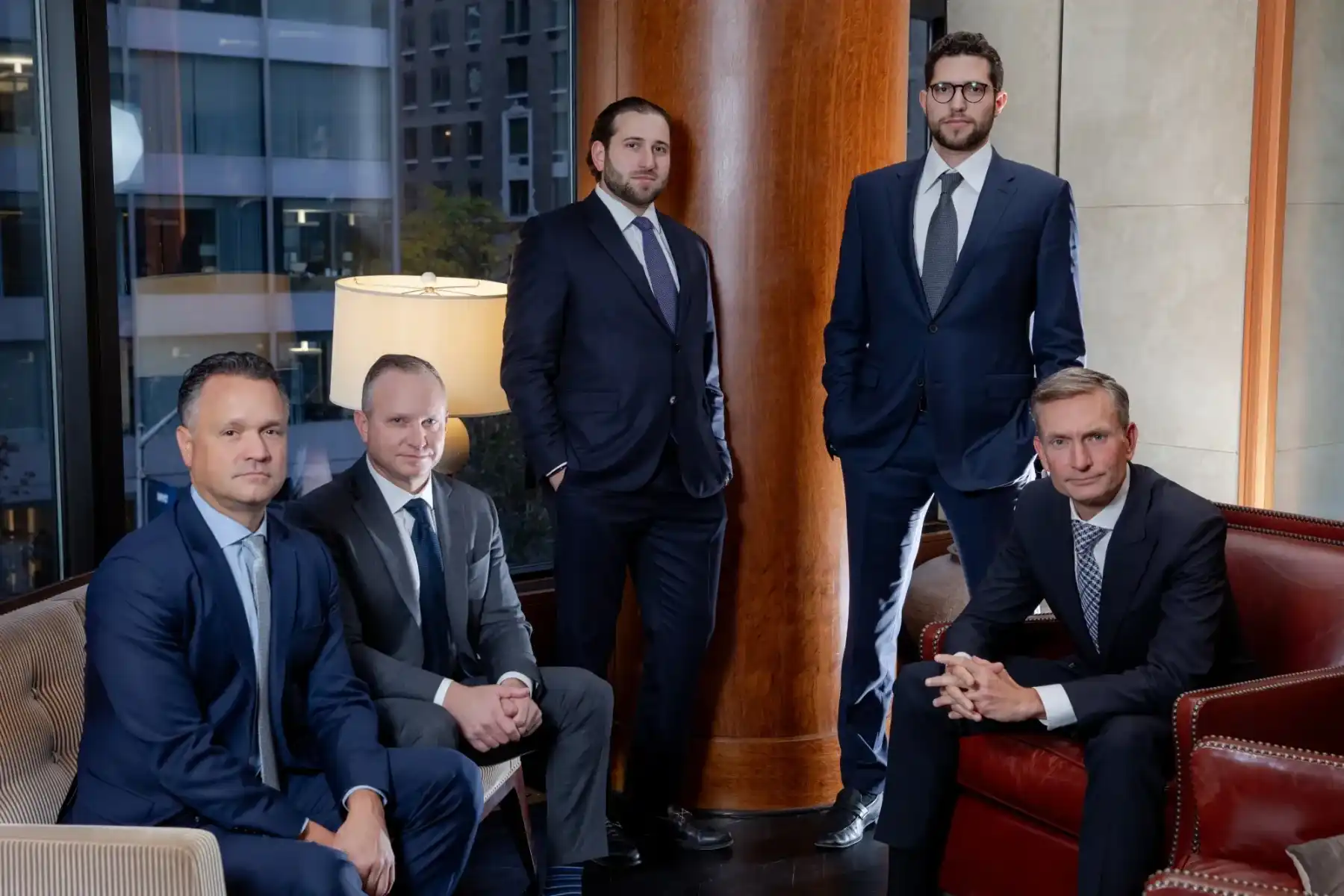
From left to right: Pascal Bandelier, Christian Wall, Kyle Lutnick, Brandon Lutnick, Sage Kelly, photographed at the company's New York office
"Industry titans like Howard, stalwart individuals have been here for 40 years and led the company for 30 years, his departure will inevitably leave a huge void," Kelly said. He serves as co-CEO alongside Pascal Bandelier and Christian Wall, overseeing the company's operations. "But the whole company stepped up and achieved success — credit goes to Brandon and Kyle."
Executives expressed aversion to the notion that "Washington's new relationship helped the company succeed." They stated that Cantor's success was not accidental, but achieved through a streamlined team and benefited from years of active preparation in areas that traditional banks had shunned.
According to sources familiar with the matter, the company's 250 proprietary traders are expected to generate over $1 billion in revenue. Based on Coalition Greenwich's data, each banker contributes around $4 million in revenue, which is about twice as efficient as Wall Street's large institutions.
Cantor's spokesperson declined to comment on the company's financial performance.
This year, Cantor led the industry in U.S. IPO underwriting and ranked fifth in all U.S. equity issuance transactions, surpassing established institutions such as Barclays and Citigroup. The company's trading business has been flourishing, with a clientele mainly from outside the U.S.; furthermore, Cantor is poised to acquire the hedge fund O'Connor from UBS Group by year-end. However, the deal faced last-minute obstacles as the unit suffered losses related to bankrupt auto parts supplier First Brands Group.
Cantor has also recruited bankers to expand into the German market and participate in the wave of U.S. regional bank mergers (there are approximately 4,000 regional banks in the U.S.). Another target market is the Middle East: Cantor has established a banking team in Dubai and is preparing to enter Abu Dhabi, planning to introduce stock sales, trading, and investment banking services to the region.
Most of Cantor's revenue surge comes from cryptocurrency-related transactions, including providing financing services to multibillion-dollar crypto treasury companies; in addition, the company laid the groundwork in its early years for the now thriving areas such as rare earth minerals, quantum computing, robotics, and data centers, which have also yielded substantial returns.
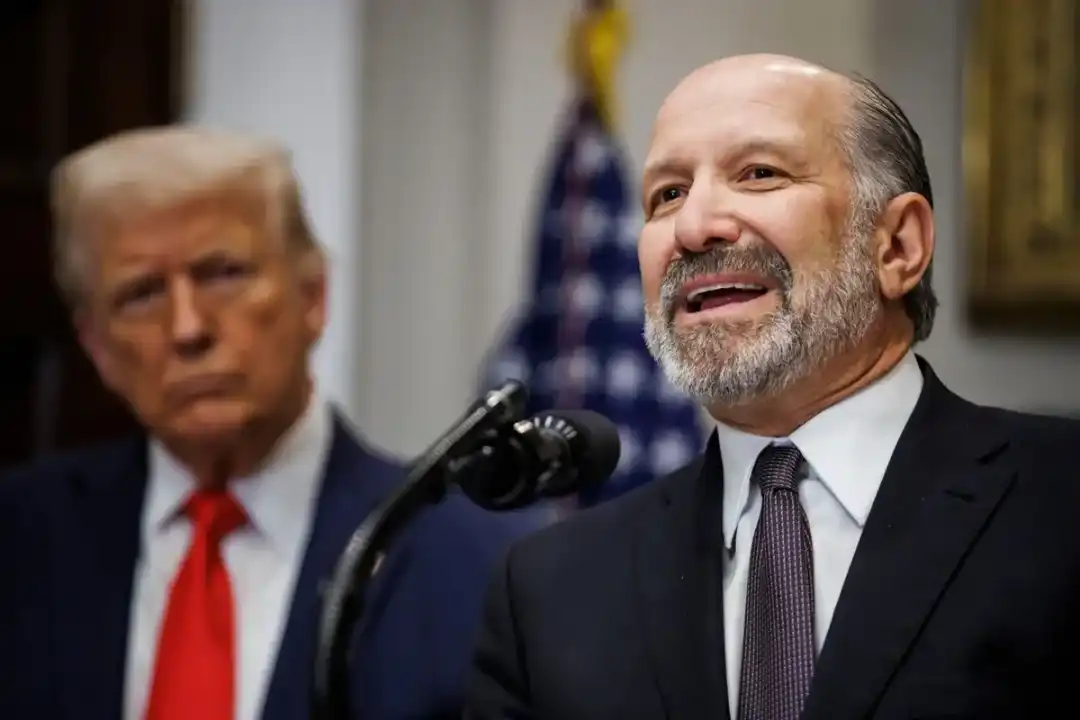
Howard Lutnick joined President Donald Trump's administration earlier this year as Commerce Secretary
"The global top five core themes happen to correspond to our five largest investments over the past three to four years," said the 46-year-old Bandelier, who also serves as head of equities, with the department's revenue expected to double by 2025 from 2008 (its previous best year).
After the Lutnick brothers and their younger siblings took over the majority ownership of the company, this series of successes has attracted wide attention from Wall Street and Washington. Executives have refuted allegations of conflicts of interest, stating that they now operate the company independently of Howard and had already positioned themselves in these inevitably heating-up business areas, with today's profits being a natural result.
「I assure you, we did not get something for nothing,」 Kelly said. 「It's easy for competitors to say that because they are not personally involved in our work every day and do not understand the hardships involved.」
On Tuesday, at the luxurious Ritz-Carlton hotel in Miami Beach, Brandon Lutnick described the busy period the family had just been through at a meeting.
「My brother Kyle and I have always looked forward to taking on these roles, but everything has indeed happened much sooner than we expected,」 said 27-year-old Brandon. He serves as the Chairman and CEO of the holding company, while his 29-year-old brother Kyle serves as Vice Chairman. 「For our company, this year has been a magnificent one.」
The previous evening, Brandon hosted a dinner where he sat next to former presidential cryptocurrency advisor Bo Hines, cryptocurrency exchange founders the Winklevoss brothers, and cryptocurrency advocate and television personality Kevin O'Leary, famous for the show "Shark Tank."
Cantor also partnered with long-time client Tether to launch a stablecoin in the United States; serving as the company's financial advisor (Cantor is also an investor in Tether), assisting in its fundraising. This fundraising could value Tether at up to $500 billion, bringing Cantor billions in profits. Additionally, the Genius Act passed by the Trump administration in July provides a regulatory framework for stablecoins in the United States, benefiting Cantor.
「Long before Howard entered government, we were already involved in the cryptocurrency field,」 Kelly said. 「Long before Howard took office, we had ventured into the tech and industrial sectors, as well as entered the electricity and renewable energy industry.」

Tether CEO Paolo Ardoino and Cantor Chairman Brandon Lutnick at the 2025 Las Vegas Bitcoin Conference
Not everyone believes in Cantor's independence. In August of this year, Democratic Senators Ron Wyden and Elizabeth Warren requested more information, citing reports that Cantor was considering brokering a deal where a hedge fund would profit if U.S. tariffs were lifted. Sources familiar with the matter revealed that while other banks had been involved in such transactions, Cantor, to avoid potential conflicts of interest accusations, not only abandoned the deal but also refused to provide advisory services for the Trump Media Technology Group's Bitcoin asset vault.
「When the son of the Secretary of Commerce takes charge of the Wall Street firm once led by his father, one cannot help but question the propriety of everything,」 Wyden wrote in an email to Bloomberg in August.
However, in today's unprecedented intertwining of politics and business, Cantor did not shy away from interactions with government officials. At a conference in Miami, the company hosted President's son Eric Trump, as well as Texas Senator Ted Cruz—Cruz chairs the committee responsible for reviewing the Department of Commerce led by Howard Lutnick. That evening, Brandon Lutnick hurried to Washington and attended a dinner at the White House with Wall Street titans and his father.
For years, cryptocurrency has been met with skepticism, but early investors believe that the arrival of wealth is only a matter of time.
「One must endure the winter to welcome the spring,」 said 50-year-old Wall. He oversees the company's fixed income business, which launched a service offering billions of dollars in loans collateralized by Bitcoin and completed its first transaction in May. Wall stated that the Trump administration's support for innovation, regulatory clarity, and subsequent institutional adoption are «ushering in a whole new world».
Bandelier noted that the company's success also benefited from the sluggishness of mid-sized U.S. banks. «It's the easiest time to recruit in my career,» he said.
In a sense, Cantor and the cryptocurrency industry have already undergone a transformation, as this year's Miami conference (the third in four years) was the first to be open to the media.
Another milestone was the keynote speech by Tether CEO Paolo Ardoino, delivered before two of the most influential U.S. financial regulatory figures—SEC Chairman Paul Atkins and CFTC Acting Chair Caroline Pham.
During the conference break, these three individuals posed for a photo with Brandon Lutnick and Cantor's General Counsel Stephen Merkel, all smiles.
You may also like

Cyber Taoist Fortune Teller: Fake Taoist, AI Fortune Telling, and Northeastern Metaphysics History

Bloomberg: Stablecoin Payments Emerge as Crypto VC's Newest Favorite Thing
BeatSwap is evolving towards a full-stack Web3 infrastructure, covering the entire lifecycle of IP rights.
BeatSwap, a global Web3 Intellectual Property (IP) infrastructure project, is attempting to overcome the current fragmentation limitations of the Web3 ecosystem, building a full-stack system that covers the entire lifecycle of IP rights.
Currently, most Web3 projects are still in the stage of functional fragmentation, often focusing only on a single aspect, such as IP asset tokenization, transaction functionality, or a simple incentive model. This structural dispersion has become a key bottleneck hindering the industry's scale application.
BeatSwap's approach is more integrated, integrating multiple core modules into the same system, including:
· IP authentication and on-chain registration
· Authorization-based revenue sharing mechanism
· User-engagement-driven incentive system
· Transaction and liquidity infrastructure
Through the above integration, the platform builds an end-to-end closed-loop path, allowing IP rights to complete a full cycle of "creation, use, and monetization" within the same ecosystem.
BeatSwap is not limited to existing crypto users but is attempting to take the global music industry as a starting point, actively creating new market demand. Its core strategies include:
Exploring and incubating music creators (Artist discovery)
Building a fan community
Igniting IP-centric content consumption demand
The current global music industry is valued at around $260 billion, with over 2 billion digital music users. This means that the potential market corresponding to the tokenization and financialization of IP far exceeds the traditional crypto user base.
In this context, BeatSwap positions itself at the intersection of "real-world content demand" and "on-chain infrastructure," attempting to bridge the structural gap between content production and financial flow.
BeatSwap's upcoming core product "Space" is scheduled to launch in the second quarter of 2026. This product is defined as the SocialFi layer in the ecosystem, aiming to directly connect creators with users and achieve deep integration with other platform modules.
Key designs include:
A fan-centric interactive mechanism
Exposure and distribution logic based on $BTX staking
User paths connected to DeFi and liquidity structures
Thus, a complete user behavior loop is formed within the platform: Discovery → Participation → Consumption → Rewards → Trading
$BTX is designed to be a core utility asset within the ecosystem, rather than just a simple incentive token, with its value directly tied to platform activity and IP use cases.
Main features include:
· Yield distribution based on on-chain authorized actions
· Value reflection based on IP usage and user engagement dynamics
· Support for staking and DeFi participation mechanisms
· Value growth driven by ecosystem expansion
With the increased frequency of IP use, the utility and value support of $BTX will enhance simultaneously, helping alleviate the "disconnect between value and utility" issue present in traditional Web3 token models to some extent.
Currently, $BTX has been listed on several mainstream exchanges, including:
Binance Alpha
Gate
MEXC
OKX Boost
As the launch of "Space" approaches, BeatSwap is actively pursuing more exchange listings to further enhance liquidity and global accessibility, laying a foundation for future market expansion.
BeatSwap's goal is no longer limited to the traditional Web3 narrative but aims to target over 2 billion digital music users and a trillion KRW-scale content market.
By integrating content creators, users, capital, and liquidity into a blockchain framework centered around IP rights, BeatSwap is striving to build a next-generation infrastructure focused on "IP tokenization."
BeatSwap integrates IP authentication, authorization distribution, incentive mechanism, transaction system, and market construction to establish a unified structure that bridges the full lifecycle path of IP rights.
With the launch of the Q2 2026 "Space," the project is expected to become a key infrastructure connecting content and finance in the IP-RWA (Real World Assets) track.

Mag 7 Evaporates $2 Trillion | Rewire News Morning Edition

Losing $19K per Coin Mined, Bitcoin Mining Firms Collective AI Defection

Morning Report | Tom Lee predicts that the cryptocurrency winter will end in April; xStocks introduces a new on-chain private equity fund; Sui mainnet upgraded to V1.68.1

Polymarket rules have changed, how should airdrop participants respond?

Crypto ETF Weekly | Last week, the net outflow of Bitcoin spot ETFs in the U.S. was $296 million; the net outflow of Ethereum spot ETFs in the U.S. was $206 million

This Week's Key News Preview | The U.S. Releases March Non-Farm Payroll Data; Polymarket Expands Fee Structure

Slow Down, That's the Answer to the Age of the Agent

From Cash to Cryptocurrency: Moving Towards a Unified Regulatory Path for Illegal Payments
Who will own the most Bitcoin in 2026

A private feud lasting 10 years, if not for OpenAI's "hypocrisy," would not have led to the world's strongest AI company, Anthropic

"Crypto Tsar" steps down: 130 days of political performance come to an end, how much of Trump's crypto promise remains?

From Utopian Narratives to Financial Infrastructure: The "Disenchantment" and Shift of Crypto VC
A decade-long personal feud, if not for OpenAI's "hypocrisy," there would be no globally leading AI company Anthropic

a16z: The True Meaning of Strong Chain Quality, Block Space Should Not Be Monopolized
a16z: The True Meaning of Strong Chain Quality, Block Space Should Not Be Monopolized
Cyber Taoist Fortune Teller: Fake Taoist, AI Fortune Telling, and Northeastern Metaphysics History
Bloomberg: Stablecoin Payments Emerge as Crypto VC's Newest Favorite Thing
BeatSwap is evolving towards a full-stack Web3 infrastructure, covering the entire lifecycle of IP rights.
BeatSwap, a global Web3 Intellectual Property (IP) infrastructure project, is attempting to overcome the current fragmentation limitations of the Web3 ecosystem, building a full-stack system that covers the entire lifecycle of IP rights.
Currently, most Web3 projects are still in the stage of functional fragmentation, often focusing only on a single aspect, such as IP asset tokenization, transaction functionality, or a simple incentive model. This structural dispersion has become a key bottleneck hindering the industry's scale application.
BeatSwap's approach is more integrated, integrating multiple core modules into the same system, including:
· IP authentication and on-chain registration
· Authorization-based revenue sharing mechanism
· User-engagement-driven incentive system
· Transaction and liquidity infrastructure
Through the above integration, the platform builds an end-to-end closed-loop path, allowing IP rights to complete a full cycle of "creation, use, and monetization" within the same ecosystem.
BeatSwap is not limited to existing crypto users but is attempting to take the global music industry as a starting point, actively creating new market demand. Its core strategies include:
Exploring and incubating music creators (Artist discovery)
Building a fan community
Igniting IP-centric content consumption demand
The current global music industry is valued at around $260 billion, with over 2 billion digital music users. This means that the potential market corresponding to the tokenization and financialization of IP far exceeds the traditional crypto user base.
In this context, BeatSwap positions itself at the intersection of "real-world content demand" and "on-chain infrastructure," attempting to bridge the structural gap between content production and financial flow.
BeatSwap's upcoming core product "Space" is scheduled to launch in the second quarter of 2026. This product is defined as the SocialFi layer in the ecosystem, aiming to directly connect creators with users and achieve deep integration with other platform modules.
Key designs include:
A fan-centric interactive mechanism
Exposure and distribution logic based on $BTX staking
User paths connected to DeFi and liquidity structures
Thus, a complete user behavior loop is formed within the platform: Discovery → Participation → Consumption → Rewards → Trading
$BTX is designed to be a core utility asset within the ecosystem, rather than just a simple incentive token, with its value directly tied to platform activity and IP use cases.
Main features include:
· Yield distribution based on on-chain authorized actions
· Value reflection based on IP usage and user engagement dynamics
· Support for staking and DeFi participation mechanisms
· Value growth driven by ecosystem expansion
With the increased frequency of IP use, the utility and value support of $BTX will enhance simultaneously, helping alleviate the "disconnect between value and utility" issue present in traditional Web3 token models to some extent.
Currently, $BTX has been listed on several mainstream exchanges, including:
Binance Alpha
Gate
MEXC
OKX Boost
As the launch of "Space" approaches, BeatSwap is actively pursuing more exchange listings to further enhance liquidity and global accessibility, laying a foundation for future market expansion.
BeatSwap's goal is no longer limited to the traditional Web3 narrative but aims to target over 2 billion digital music users and a trillion KRW-scale content market.
By integrating content creators, users, capital, and liquidity into a blockchain framework centered around IP rights, BeatSwap is striving to build a next-generation infrastructure focused on "IP tokenization."
BeatSwap integrates IP authentication, authorization distribution, incentive mechanism, transaction system, and market construction to establish a unified structure that bridges the full lifecycle path of IP rights.
With the launch of the Q2 2026 "Space," the project is expected to become a key infrastructure connecting content and finance in the IP-RWA (Real World Assets) track.


 App
App