
- Buy Crypto
- Markets
 Futures
- Spot
- Copy Trade
- Earn
- More
GameStop Event Five-Year Anniversary: What Does the Stock Market Need Now?

Original Article Title: 5 Years Post GameStop
Original Article Author: @vladtenev
Translation: Peggy, BlockBeats
Editor's Note:
The GameStop ($GME) trading restriction event on January 28, 2021, remains one of the most controversial and emblematic moments in the US capital markets to date. On that day, several brokerages, including Robinhood, suddenly halted the buying of multiple "meme stocks," including GME and AMC, while allowing selling, triggering a strong backlash from retail investors. It quickly evolved into a public event focusing on market fairness, financial infrastructure, and power structures. Subsequent events included congressional hearings, class-action lawsuits, and a long-term trust crisis surrounding Robinhood, Citadel Securities, and the market-making mechanism.
Five years later, on January 28, 2026, a sensitive milestone, Robinhood CEO Vlad Tenev chose to revisit the past and released a lengthy article to "vindicate" the decisions made that year. This move was clearly not coincidental. On one hand, $GME's stock price saw a modest rebound in mid to late January, accompanied by increased trading volume, reigniting the emotions in the meme stock community. On the other hand, hashtags like #KenGriffinLied on platforms like X resurged among GME/AMC holders, accusing Griffin of perjury during his 2021 congressional testimony.
Simultaneously, Robinhood faced new criticism for some unrelated actions, such as announcing sponsorship of a NASCAR event on January 27, 2026, and offering a 0% borrowing cost for shorting certain stocks, including GME, prompting retail investors to criticize the platform for "once again siding with the shorts." The meme coin craze on platforms like Coinbase referenced the events of 2021, introducing tokens like $coinbase and mentioning similar tokens like "$Robinhood" or "$GME" on Solana.
In this context, Tenev's statement serves as both a memoir-style retrospective and a highly strategic narrative reshaping. He refocuses on technical institutional issues such as "clearinghouse margin requirements" and the "T+2 settlement cycle," attempting to reframe the crisis of 2021 from moral accusations of manipulation and conspiracy to a systemic issue of "outdated financial infrastructure failing under extreme volatility," thereby introducing his advocated solutions: stock tokenization and real-time settlement.
When the power of retail investors, social media mobilization, and high-frequency, complex financial back-end systems collide, who is really hitting the "pause button"? And this time, whether the new infrastructure represented by blockchain and tokenization can truly prevent another 2021 remains to be seen, awaiting answers from the market, regulation, and time.
Original Text:
What happened? And how do we ensure this doesn't happen again?
Five years ago today, several brokerages including Robinhood were forced to halt buying of multiple meme stocks, most notably GameStop. This event became one of the most bizarre and eye-catching market malfunction cases in recent stock market history.
The one-day trading halt was fundamentally due to a convoluted set of risk management rules by clearinghouses, designed to hedge the risk posed by the then U.S. stock T+2 (two-day) settlement cycle. Under these rules, brokerages had to pre-fund a significant amount of cash between meme stock trades and final settlement to mitigate systemic risk.
What happens when slow, antiquated financial infrastructure meets unprecedented trading volume and volatility in a few stocks? Massive margin calls, trading restrictions, and millions of angry users, that's what.
Retail investors looking to buy into GameStop were naturally incensed. To them, Robinhood went from a "hero" to a "villain" in an instant. And at that time, I had just taken over as Robinhood's CEO less than a month earlier, facing the first major crisis of my career.
After a team effort of 72-hour nonstop firefighting, addressing the most pressing issues, and urgently raising over $3 billion to bolster our capital, we finally had a moment to pause and thoroughly analyze this crisis. I made a commitment then: to not only do everything in my power to enhance Robinhood's resilience in similar scenarios but also drive improvements to the entire market structure to prevent this from happening again.
We strongly advocated for real-time settlement in the U.S. stock market. This effort eventually led to the settlement cycle shortening from T+2 to T+1—a reform that can be seen as one of the most significant during SEC Chair Gensler's term, despite ongoing controversies.
But in a world of 24-hour news cycles and markets that operate on "real-time" metrics, T+1 is still far from enough. Especially considering that Friday trading effectively means T+3, and long weekends even mean T+4. Our pursuit of real-time settlement continues, but in the traditional stock market, this path is exceptionally challenging—requiring the coordination of too many entrenched interests burdened by historical legacies. Clearly, we need a fresh approach.
And this is where Tokenization comes in.
Tokenization refers to transforming assets like stocks into tokenized forms existing on a blockchain. Apart from cost reduction, native support for fractionalization, and enabling 24/7 trading, the most crucial aspect is that on-chain stocks can naturally benefit from blockchain's real-time settlement capabilities.
No longer are long settlement cycles a reality, meaning that system risk is significantly reduced, and the pressure on clearinghouses and brokers is alleviated. Clients can truly trade freely in the way they want, at any time.
We have already seen the feasibility of this model in practice. In Europe, Robinhood has launched tokens representing over 2,000 U.S.-listed stocks. These tokens provide European investors with exposure to U.S. stocks and access to dividends. In the coming months, we also plan to unlock 24/7 trading and DeFi access, allowing investors to self-custody stock tokens and explore lending, staking, and other possibilities.
As the advantages become increasingly clear, I believe that the U.S. embracing this technology is only a matter of time. In fact, progress has already been made: several major U.S. exchanges and clearinghouses have recently announced plans to advance stock tokenization.
However, without a clear regulatory framework, these efforts may struggle to materialize. Fortunately, we are entering a crucial window. The current leadership of the SEC is embracing innovation and actively promoting experiments related to tokenization; at the same time, Congress is considering the important crypto legislation known as the "CLARITY Act," which requires the SEC to continue advancing this technological path and establishing modern rules for tokenized stocks. The significance of this legislation is that it can ensure that future SEC administrations do not easily abandon or overturn the progress made to date.
By collaborating with the SEC and advancing reasonable and viable U.S. stock tokenization guidance through the "CLARITY Act," we can collectively ensure that events like the 2021 trading restrictions never happen again.
Let's seize this moment and fully unlock real-time settlement for retail investors.
You may also like

Who is the true winner of the "Tokenization" narrative?

Moss: The Era of AI-Traded by Anyone | Project Introduction

Chip Smuggling Case Exposes Regulatory Loophole | Rewire News Evening Update

How a Structured AI Crypto Trading Bot Won at the WEEX Hackathon
Ritmex demonstrates how disciplined risk control and structured signals can make an AI crypto trading bot more stable and reliable on WEEX, highlighting the importance of combining execution discipline with scalable AI trading systems.

Old Indicator Fails, Three Major New Signals Emerge: BTC True Bottom May Still Be Below $60K

Meeting OpenClaw Founder at a Hackathon: What Else Can Lobsters Do?

Huang Renxun's Latest Podcast Transcript: NVIDIA's Future, Embodied Intelligence and Agent Development, Soaring Demand for Inferencing, and AI's PR Crisis
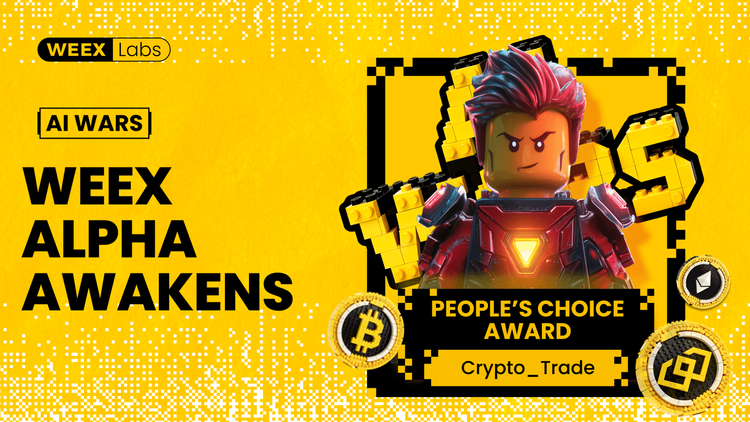
How a Structured AI Crypto Trading Bot Won at the WEEX Hackathon
Crypto_Trade shows how structured inputs and controlled adaptability can build a more stable and reliable AI crypto trading bot within the WEEX AI Trading Hackathon, highlighting a practical path toward scalable AI trading systems.

AI Starts to Devour the Manufacturing Industry | Rewire News Morning Edition

When Scaling Meets Speed, Ethereum Foundation Introduces "Hardness" to Safeguard the Base Layer
Google, Circle, Stripe Flock Together to Let AI Spend Money: Payment Giants' Joys and Worries in 2026 Q1

$100 Billion Factory Purchase: Bezos and Middle Eastern Capital Shift AI Money from Cloud to Shop Floor

Xiaomi and MiniMax both unleash their ultimate moves, signaling the start of the Agent Pricing War.

Predicting markets has taken the spotlight, but the Perp DEX has been quietly waging war on traditional exchanges.

Is the Market Slump Still Making Millions a Day? Is pump.fun's Revenue Real?
Understanding x402 and MPP in One Article: The Two Paths of Agent Payments

Quick Look at the Latest 18 Graduation Projects from Alliance: Who's the Next Pump.fun?

It's not just the prediction market that profits from the Iraq War
Who is the true winner of the "Tokenization" narrative?
Moss: The Era of AI-Traded by Anyone | Project Introduction
Chip Smuggling Case Exposes Regulatory Loophole | Rewire News Evening Update
How a Structured AI Crypto Trading Bot Won at the WEEX Hackathon
Ritmex demonstrates how disciplined risk control and structured signals can make an AI crypto trading bot more stable and reliable on WEEX, highlighting the importance of combining execution discipline with scalable AI trading systems.


 App
App