
Market Resilience Remains Strong, Microsoft's BTC Investment Proposal to Impact Short-Term Trend


Original Article Title: "Frontier Lab Crypto Market Weekly Report | W49"
Original Source: Frontier Lab
Market Overview
Main Market Trends
Market Sentiment and Trends: The market sentiment index rose to 91%, entering extreme greed; although BTC briefly broke through $100,000 on Thursday before pulling back, the overall market resilience remains strong; ETH's strong performance led the entire cryptocurrency market higher, demonstrating ongoing market confidence in major coins.
Fund Flows Analysis: This week, stablecoin market cap continued to grow, with USDT increasing by 1.74% to reach $141 billion, and USDC increasing by 2.03% to $40.2 billion, indicating that new funds are continuously flowing into the crypto market; on-chain data shows frequent large transfers, with clear signs of institutional funds entering the market; OTC premiums are maintained within a reasonable range, indicating a healthy market supply-demand balance.
DeFi Track Performance: The total value locked (TVL) in the DeFi sector surged from $46.8 billion to $53.2 billion, a 13.67% increase; liquidity mining projects performed exceptionally well, mainly benefiting from the rise in underlying asset prices and increased staking rewards; lending protocol activity significantly increased, indicating rising leverage demand; DEX trading volume continued to rise, reflecting increased market activity.
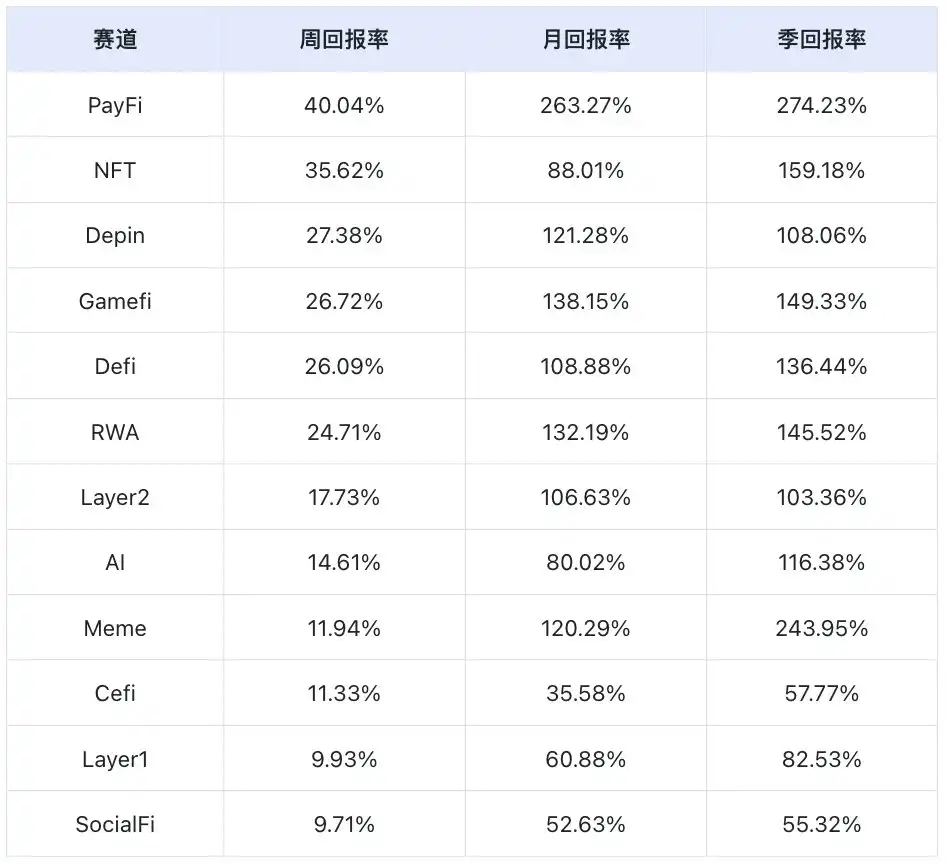
Meme Coin Market: The meme coin sector's performance was relatively subdued this week, with a weekly return rate of only 11.94%; the number of new project launches decreased, and investor interest significantly waned; funds began to shift to projects with practical use cases and strong fundamentals; social media discussion heat decreased, showing a reduced investor risk appetite.
Hot Topics: Layer 1 projects received the highest social media attention, with the PayFi track achieving a weekly return rate of 40.04%; AI Agent projects began to garner a new round of market attention, especially projects on Solana, TON, and Base Chain; high-yield staking products in DeFi projects continued to attract attention; NFT market trading activity slightly rebounded, but overall valuations are still seeking a bottom.
Investment Advice: Investors are advised to maintain a cautious optimistic attitude and focus on the following areas: first, practice good risk management, set reasonable stop-loss levels, and avoid excessive leverage; second, strategically allocate to liquidity mining and AI Agent tracks to seize capital rotation opportunities; third, pay attention to key event impacts, including Microsoft's Bitcoin investment proposal next week (December 11), US CPI data, and the ECB interest rate decision; fourth, maintain sufficient liquidity to withstand potential market fluctuations, and adopt a phased position-building strategy to avoid chasing highs.
Market Sentiment Index Analysis
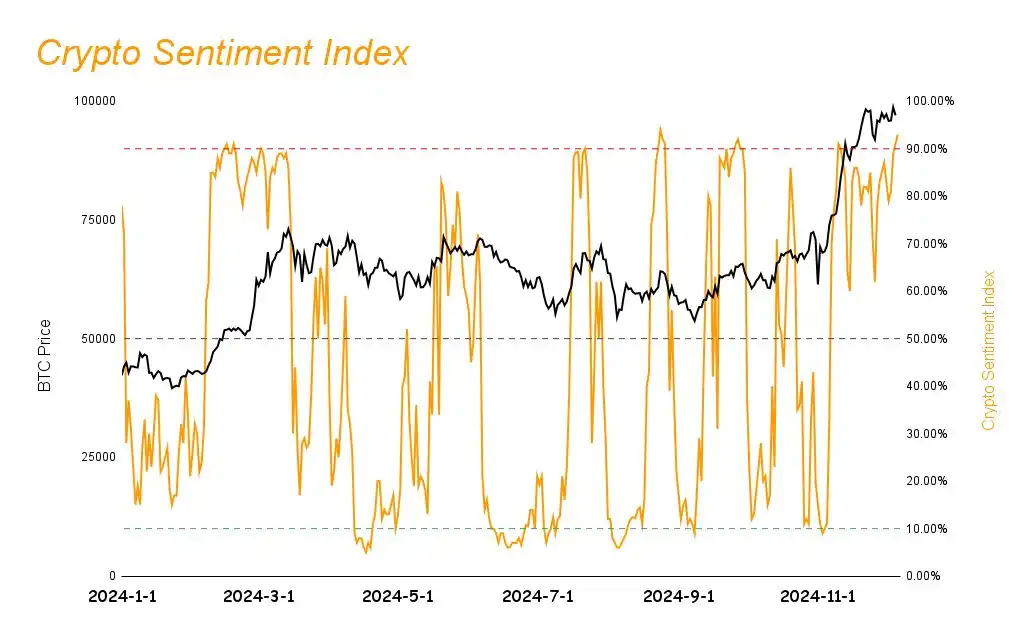
The market sentiment index has risen to 91%, a significant increase from last week's 83%, indicating that the market sentiment is in an extreme greed stage.
Altcoins showed a similar upward trending pattern to the overall market this week, with ETH performing strongly. Following ETH's lead, Altcoins experienced a general uptrend this week. After the rise in ETH's price, various public chain projects drove projects within their respective ecosystems to rise. The market generally expects a fund rotation to occur next, holding more confidence in Altcoins' future trend for this week.
BTC's price briefly exceeded $100,000 on Thursday before experiencing some subsequent declines. Despite this, the market sentiment remains in an extreme greed stage, with a potential for a correction in the future. Investors need to be cautious and manage risks.
Overall Market Trend Overview
· The cryptocurrency market experienced an oscillating upward trend this week, with the sentiment index still in the greed stage.
· Defi-related crypto projects performed well, indicating the market's continued focus on increasing underlying yields.
· AI Agent projects are gradually attracting market attention. Influenced by the traditional AI market, there may be investment opportunities in the next two weeks.
· The Meme track continued to lag this week, failing to attract more market attention.
· Various public chain projects saw a widespread increase following ETH's rise.
Hot Track
Tron Ecosystem
This week, as the TRX token price saw a significant increase, Tron experienced very high market activity. With funds continuously flowing into the market and Tron being the primary trading chain for USDT, on-chain activity on Tron saw a substantial increase this week.
Tron On-chain Data
· TVL: Tron's TVL rose rapidly this week, ranking first among all major public chains. TVL increased from last week's $7.97 billion to the current $9.32 billion, a growth of 16.93%. This indicates that funds are actively flowing into the Tron network.
· Active Accounts: The number of active accounts on the Tron blockchain saw a significant increase this week, with the total reaching 3.6725 million. This marks an 18.06% increase from the previous week, demonstrating a high growth rate and indicating a very active Tron blockchain.
· USDT Weekly Transaction Volume: The weekly transaction volume of USDT on the Tron blockchain reached $131.4 billion this week, showing a 16.23% increase from the previous week. The growing USDT transaction volume on Tron indicates a continuous expansion of on-chain transactions, reflecting increased activity on the Tron blockchain.
· Defi Project TVL Growth: In the Tron ecosystem, TVL is mainly composed of Justlend and SUN, which belong to lending and stablecoin exchange, token mining, and autonomous integrated projects. This week, TVL experienced rapid growth, with increases of 55.34% and 39.49% for Justlend and SUN, respectively. These numbers reveal that funds within the Tron ecosystem are actively flowing into Defi projects.
To determine whether a public blockchain is favored by the market, the most direct criterion is the fluctuation of its TVL. Based on the data above, we can see that the Tron blockchain is currently experiencing rapid development. Due to the significant price increase of TRX this week, the underlying assets of the TRX ecosystem are appreciating, and Tron's special position as the primary chain for USDT trading has attracted numerous on-chain users to participate, driving the overall development of the Tron ecosystem.
AI Agent
At the end of last year, following the introduction of AI concepts into the crypto market, the AI track, as a point of convergence with the traditional world, has been a hotspot in the crypto market. Since the launch of the first AI Agent token, GOAT, in October of this year, AI Agent Memes quickly became a new focus of the market. Following GOAT, AI Agent Meme tokens like ACT emerged, leading the market at that time. Subsequently, investors shifted their focus to AI Agent token launch platforms, with projects such as Virtuals Protocol and vvaifu.fun quickly gaining popularity and starting to develop towards the foundational infrastructure of AI Agents. This has led to the emergence of three sub-tracks in the AI Agent track: AI Agent Meme coins, AI Agent issuance platforms, and AI Agent underlying infrastructure.
Due to the varying levels of support for the AI Agent track project across different chains, the current stage of the AI Agent project is mainly developing on Solana, Ton, and Base chains. At present, hundreds of AI Agent Meme tokens are issued daily, making it too difficult for investors to pinpoint a project to invest in. Therefore, some investors in the market have shifted their focus to the launch platform of AI Agent Meme tokens. In Solana chain, the main platform is vvaifu.fun; in Base chain, it's primarily Virtuals Protocol and AI Agent Layer; and in Ton chain, the main one is Clanker. Over the past two weeks, VVAIFU, VIRTUAL, and CLANKER have seen rapid price increases, forming a certain market capitalization.
Among them, VVAIFU mainly trades on Raydium and is listed on CEXs like MEXC and Gate; VIRTUAL has high trading volume on DEXs like Uniswap and Cake, and is listed on CEXs including Gate, Bybit, Bitgit, MEXC, and other second-tier exchanges; CLANKER has high trading volume on Uniswap and is listed on CEXs like Gate, Bitgit, MEXC, and others. From the situation of these tokens being listed on exchanges, it is evident that none of them are listed on top-tier exchanges currently. However, considering the cases of ACT, GOAT, and ANON in the AI Agent Meme space being listed on top-tier exchanges such as Binance, OKX, and Huobi, the AI Agent token launch platform projects are bound to be listed on major exchanges sooner or later, making it still an early stage for these projects, worthy of investment.
This Wednesday, OpenAI announced the start of a 12-day period where each workday will feature a live demonstration of a new product or prototype, with some major new products unveiled. This move has sparked speculation in the AI field. Since the release of ChatGPT last year, OpenAI has emerged as a leader in the AI industry, with every action and statement affecting the development of AI projects. This impact is magnified, especially within the crypto market. For AI projects in the crypto market, OpenAI's move is sure to refocus market attention on the AI track during the event. If the overall crypto market does not experience significant turbulence during this period, the next 10 days could see a decent increase in AI-related projects. Therefore, investors should pay more attention to AI-related projects in the short term, as investment opportunities may arise.
Traditional AI Projects in the Crypto Market
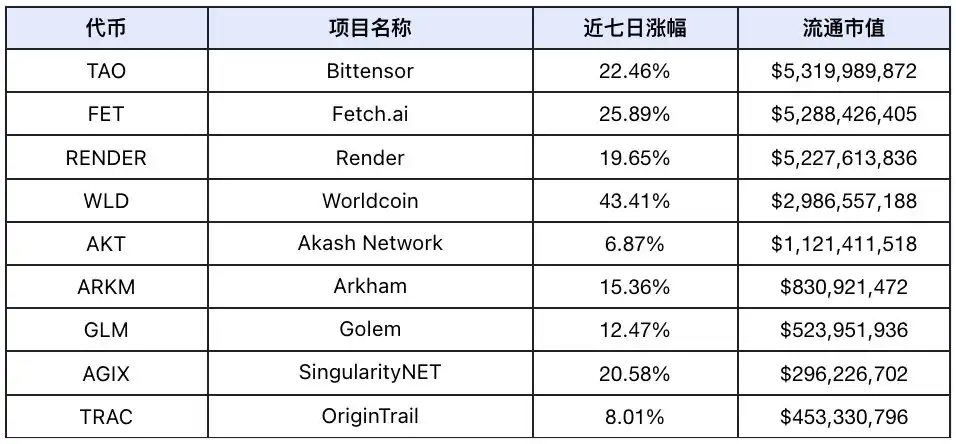
DeFi Track
TVL Growth Ranking
Top 5 projects by TVL growth in the past week in the market (excluding projects with smaller TVL, with a threshold of 30 million USD or more), data source: Defilama

BounceBit (BB): (Recommendation Score: 4 stars)
Project Introduction: BounceBit is a re-staking base layer in the Bitcoin ecosystem. In its design, it collaborates deeply with Binance to architect CeDeFi components with high yields; additionally, it builds the BounceBit Chain for creating a specific use case for Restaking.
Latest Development: This week, BounceBit has increased the staking interest rates for various tokens, with USDT reaching a 30-day APY of 35.45%, BTC reaching a 30-day APY of 39.85%, BNB reaching a 30-day APY of 25.91%, and ETH reaching a 30-day APY of 30.57%, attracting a large number of users to stake their assets in BounceBit for staking participation.
Astherus (Not Yet Launched): (Recommendation Score: 3 stars)
Project Introduction: Astherus is a liquidity hub for staking assets, supporting Liquidity Staking Tokens (LST) and Liquidity Re-staking Tokens (LRT). Users' assets can not only earn staking APR but can also be used for spot and derivatives trading, stablecoin yields, and other profit strategies.
Latest Development: This week, Astherus has partnered with Movement Labs, which can be integrated into the Movement Network chain in the future. Additionally, Binance Labs announced an investment in Astherus this week, indicating institutional optimism about Astherus's future development. Furthermore, Astherus held an event this week where users staking with USDF, asUSDF, and asBTC can earn 5 times the AU points.
Stake DAO (SDT): (Recommendation Score: 3 stars)
Project Introduction: Stake DAO is a decentralized asset management platform that provides users with simplified access to various yield strategies, staking, trading, and metrics on a single dashboard.
Latest Developments: The various product yields on Stake DAO have seen a significant increase this week, with sdToken offering users annualized APYs of 20.46% for CRV, 28.78% for CAKE, 89.35% for PENDLE, 102.16% for FXN, 94.75% for BAL, and 64.92% for FXS. The highest annualized APY provided to users in the market strategy can reach up to 152%. This has attracted a large number of users to participate in Stake DAO.
Flexa (Unreleased): (Recommendation Score: 2 stars)
Project Introduction: Flexa is dedicated to advancing the natural acceptance of cryptocurrency in merchant settlement systems and enabling users to use their digital assets in the real world through its payment network.
Latest Developments: Flexa has recently made significant progress in offline development, allowing users to make payments at thousands of Flexa-supported stores and restaurants in the US using Flexa's app, bridging the offline physical payment channels. This week, through the integration of Zashi-Flexa, users can use ZEC in their everyday spending, facilitating ZEC holders to use Flexa for offline consumption.
SaucerSwap (SAUCE): (Recommendation Score: 3 stars)
Project Introduction: SaucerSwap is a decentralized exchange based on the Hedera chain, which not only supports regular trading functions but also introduces the SAUCE Pro service, providing advanced features to users through the SaucerSwap protocol token SAUCE as a monthly subscription fee.
Latest Developments: This week, the HBAR token saw a significant increase, driving the activity on the Hedera chain. As the largest DEX on the Hedera chain, SaucerSwap has attracted a large number of users to participate in trading on the Hedera chain. This week, SaucerSwap conducted a $33,000 SAUCE token buyback, raising the APY for users staking SAUCE to 9.9%. SaucerSwap also launched the Epoch 28 event this week, providing 157,441.90 HBAR as a reward to SaucerSwap V2 liquidity providers and additional rewards in the HLQT token for participants providing liquidity for HLQT. As the largest DEX in the Hedera ecosystem, SaucerSwap handles almost all DEX trading volume in the Hedera ecosystem. With the continuous rise in on-chain transactions this week, more and more Hedera chain users are entering SaucerSwap to participate in trading.
In conclusion, we can see that this week the projects with the fastest TVL growth are mainly focused on the Liquidity Staking Track (LRT).
Track Overall Performance
Stablecoin Market Cap Steadily Growing: USDT increased from last week's $138.6 billion to $141 billion, a growth rate of 1.74%, while USDC increased from last week's $39.4 billion to $40.2 billion, a growth rate of 2.03%. It can be seen that this week, both the non-U.S.-dominated market USDT and the U.S.-dominated market USDC have experienced growth, indicating that the entire market is still seeing continuous inflows of funds.
Liquidity Gradually Increasing: The risk-free arbitrage rate in traditional markets has been continuously decreasing due to interest rate cuts, while the arbitrage rate of on-chain Defi projects has been increasing continuously due to the rising value of cryptocurrency assets. Returning to Defi would be a very good choice.
Defi TVL by Track (Data Source: https://defillama.com/categories)
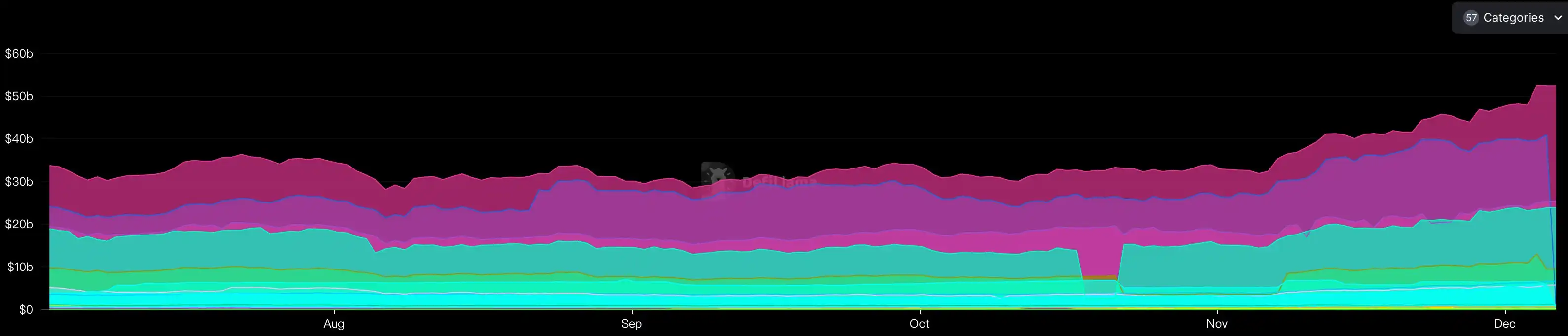
· Funding Situation: The TVL of Defi projects increased from last week's $46.8 billion to the current $53.2 billion, with new funds reaching 13.67%. This week's growth rate is much higher than the previous weeks, maintaining a continuous upward trend for nearly two months, proving that funds continue to enter Defi projects.
In-Depth Analysis
Upsurge Drivers: This week, after a pullback, the price of BTC rose again, with ETH's performance this week slightly stronger than BTC's. ETH's price saw a significant increase this week. Both BTC and ETH maintained a strong growth trend this week, and market investors have a more optimistic view of the future price trends of BTC and ETH, hence holding more firmly. With ETH's price remaining strong recently, various Defi projects have increased their APY due to the rise in the underlying asset, leading investors to actively participate in various Defi projects to increase their earnings while holding the original assets.
Growth Leaders: For DeFi projects, TVL growth is one of the key indicators to evaluate their performance. By analyzing this week's TVL growth ranking, we can see that projects in the Liquidity Staking Track stood out. This week, the prices of major underlying assets on various public chains rose significantly, boosting the confidence of holders and encouraging them to increase their returns through various investment activities while holding their assets. In this context, liquidity staking projects have become key. The core of liquidity staking is to increase the yield by releasing liquidity without changing the quantity of the user's underlying assets. The effective operation of this mechanism depends on the rise in the price of the underlying assets. With the rise in ETH's price, it is expected that the prices of various public chains in the crypto market will also rise, thereby driving the growth of their corresponding liquidity staking projects. This trend indicates that liquidity staking projects are not only competitive in the current market environment but will also continue to play a crucial role in future market fluctuations. Therefore, investors should focus more on various public chain liquidity staking track projects in their recent investments.
Other Track Performance
Public Chains
Top 5 Market Public Chain TVL Growth in the Past Week (excluding smaller TVL chains), data source: Defilama
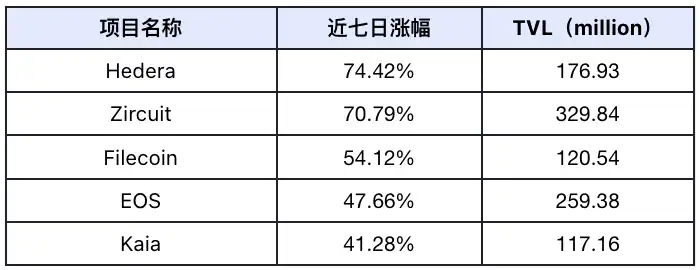
Hedera: Recently, Hedera's token HBAR has seen a significant increase in value. This is because WisdomTree and 21Shares have applied for ETFs for a series of altcoins including SOL, XRP, HBAR, LTC, among others. HBAR has the lowest market capitalization among these tokens. Additionally, its founder is associated with the Trump series, riding on the same concept as XRP and ADA, leading the market to believe that its current market value is severely undervalued. At the same time, Hedera focuses heavily on on-chain development, driving AI, payments, and IoT on its blockchain. The largest project in the Hedera ecosystem, SaucerSwap, saw a rapid increase in TVL this week, driving the overall TVL of Hedera up.
Zircuit: This week, Zircuit's token ZRC was listed on the Korean exchange Coinone and received support from Crypto.com, allowing users to directly purchase ZRC on its app. Through a partnership with Elara, ZRC can be used as collateral on Elara to borrow WETH, WBTC, USDT, or USDC, expanding ZRC's use cases. Additionally, ZRC has gained support from Kelp DAO, with the Kelp DAO's yield pool set on Zircuit. Users participating can receive an additional 2x Zircuit points. On the launch day, Zircuit attracted $1 million in ETH to its on-chain liquidity.
Filecoin: Filecoin has entered a price recovery mode this week, with the FIL token rising by 44.36%. Among various older public chains, Filecoin is at the forefront in terms of price increase. The rapid rise in token price attracted users holding FIL tokens to participate in Filecoin's on-chain staking activities. The two largest projects on the Filecoin chain are GLIF and Parasail, both based on FIL for the LST and LRT projects, with growth rates of 36.75% and 40.78%, respectively, driving the TVL of Filecoin up.
EOS: Recently, EOS has started participating in BTC-L2, creating the exSat Network, which has attracted a wave of traffic. At the same time, EOS is now focusing on on-chain ecosystem development, announcing a key focus on Gamefi, AI, and DeFi projects on EOS. This week, EOS saw a very rapid price increase, with a surge of 68.7%, attracting many on-chain users to participate in activities on the EOS chain. The top three projects with the biggest price increases on EOS this week are: EOS REX, DefiBox, EOS RAM, which are respectively lending and DEX projects on the chain.
Kaia: This week, Kaia launched Kaia Portal v1.3, which supports a lending protocol in conjunction with a DEX by introducing Avalon Labs' liquidity pool enhancement. They also started on-chain activities, rewarding staking users who participated in Epoch 1 of Kaia with 12.5 million KAIA tokens in the Epoch 1 reward pool, with an expected 50%+ annualized APY for users. Moreover, they committed to adding another 12.5 million KAIA tokens as a reward when Kaia's TVL exceeds $150 million. These incentive activities have significantly increased user participation in Epoch 1 activities on Kaia.
Top Gainers Overview
Top 5 gainers in market token prices in the past week (excluding tokens with very low trading volumes and meme coins), data source: Coinmarketcap
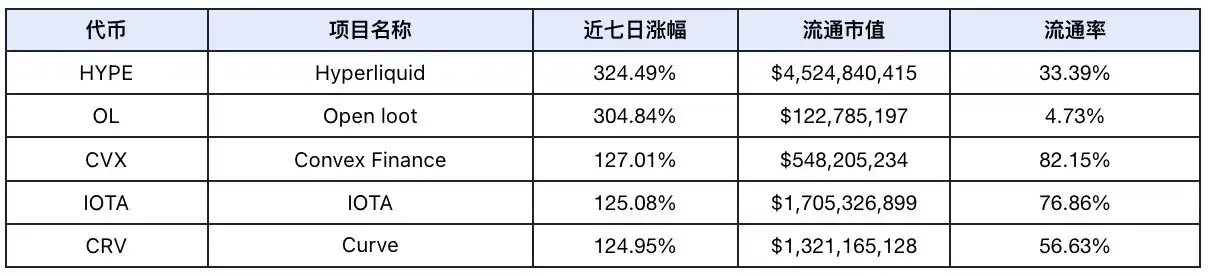
This week's top gainers list has a sector-focused feature, with most of the rising tokens belonging to the public chain track.
HYPE: Hyperliquid is a decentralized perpetual contract exchange aimed at providing high performance and user-friendly trading experience. This week, prices across the entire crypto market experienced varying degrees of increases, and on-chain user participation in on-chain trading activities was very high. Particularly, decentralized perpetual contract exchanges were preferred by on-chain users to maximize profits through contract trading. Hyperliquid, as the most popular decentralized perpetual contract exchange at present, has surpassed all other on-chain decentralized perpetual contract exchanges in terms of trading volume, with daily trading volume reaching $8.5 billion.
OL: Open Loot is a Web3 game platform developed by Big Time Studios, aiming to provide a comprehensive solution for game developers and players to simplify blockchain game development and user experience. This week, the Big Time token saw a significant price increase of 59.8%. As the game platform developed by Big Time, OL also saw an increase this week. Additionally, the Gamefi track has not gained much market attention in this cycle and has been rather flat. After Ethereum's rise, funds began to rotate into the Gamefi track.
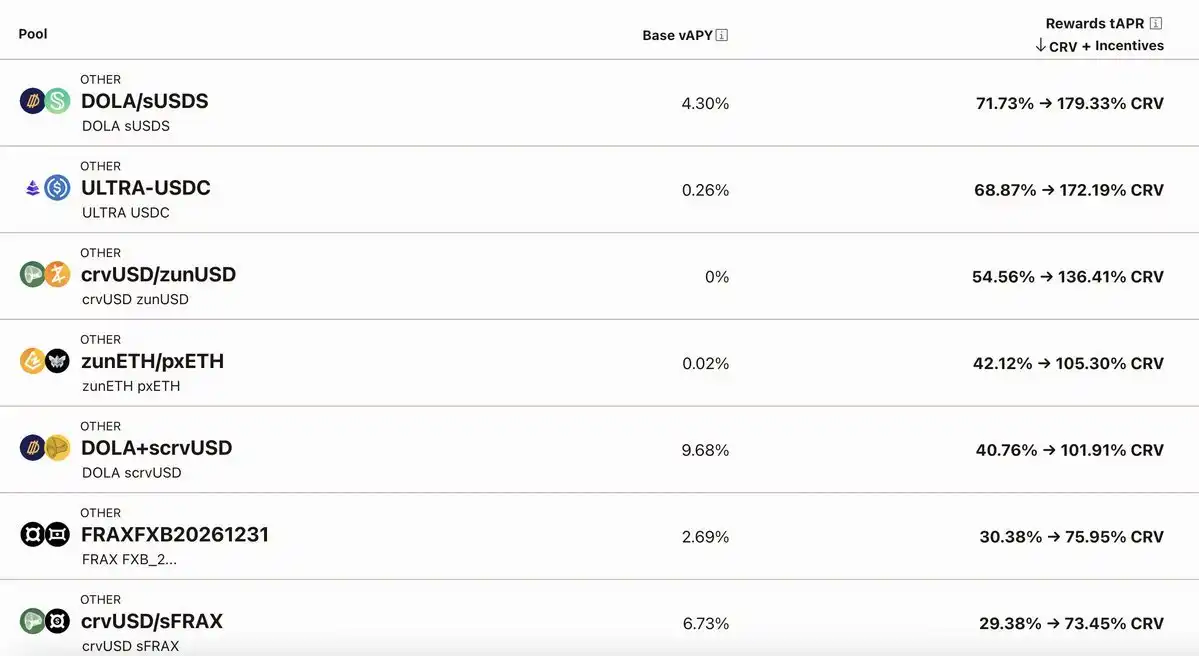
CVX: Convex Finance is a decentralized finance protocol built on the Ethereum blockchain, aiming to optimize the yield of the Curve protocol and introduce liquidity mining rewards. This week, Curve's stablecoin yield saw a significant increase, with the annualized yield of some pools rising to over 100%, attracting a large number of users to participate in arbitrage. Convex Finance, as an enhanced yield project based on Curve, was also influenced by the increase in CRV and followed the upward trend of CRV.
IOTA: IOTA is a distributed ledger technology designed for the Internet of Things (IoT) ecosystem, with its core innovation being the use of a directed acyclic graph (DAG) data structure called Tangle. This week, IOTA started voting on the Rebase proposal, which includes Move-based smart contracts, full decentralization, staking, enhanced tokenomics, and other content, marking a significant advancement for IOTA's future development.
CRV: Curve is a decentralized exchange and an exchange pool protocol built on Ethereum, providing stablecoin trading with low slippage (high depth). This week, Curve's stablecoin yield saw a significant increase, with the annualized yield of some pools rising to over 100%. Additionally, due to the positive market trading sentiment this week, a large number of on-chain arbitrageurs were attracted to enter Curve.
Social Media Highlights
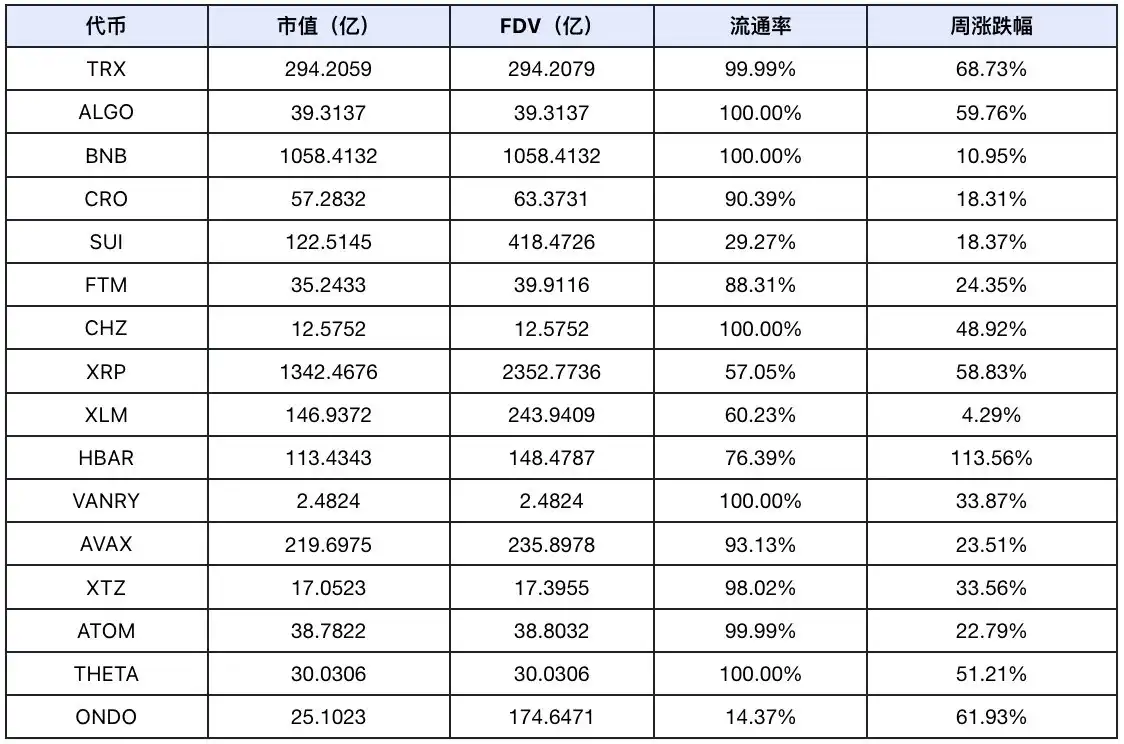
Based on the data from LunarCrush's top five daily growth and Scopechat's top five AI scores, the statistical data for this week (11.30-12.6) is as follows:
The most frequently mentioned topic is L1s, and the tokens listed are as follows (excluding tokens with excessively low trading volume and meme coins):
Data Source: Lunarcrush and Scopechat
According to data analysis, this week saw the highest social media attention on Layer 1 blockchain projects, generally showing an upward trend and performing better than BTC and ETH. Within various public chain ecosystems, Defi projects continued to be hot this week as the rising prices of underlying assets in each public chain drove up the APY of various Defi projects, resulting in an increase in TVL and trading volume for these projects. This phenomenon reflects investors' optimistic sentiment about the future market conditions.
Market Theme Overview
Data Source: SoSoValue
Based on weekly return rate statistics, the PayFi track performed the best, while the SocialFi track performed the worst.
PayFi Track: In the PayFi track, XRP, BCH, and XLM have a relatively large share, accounting for 71.81%, 8.29%, and 10.09%, respectively, totaling 90.19%. This week, XRP and BCH showed very strong performance, with gains of 58.83% and 21.36%, respectively. Although other projects have a small share, their gains were significant this week, making the entire PayFi sector stand out.
SocialFi Track: The absolute mainstay of the SocialFi track is still TON, accounting for 88.91% of the SocialFi track's market value. The weekly increase was very limited at 4.82%, resulting in the poorest performance in the SocialFi track. This indicates that the market funds have not given sufficient attention to the SocialFi track recently, and there has not been a significant inflow of funds into the SocialFi track during fund rotation.
Next Week's Crypto Major Events Preview
· Wednesday (December 11): Microsoft December Shareholders' Meeting to Consider Bitcoin Investment Proposal, Bank of Canada Interest Rate Decision, U.S. November End-of-Quarter CPI YoY
· Thursday (December 12): European Central Bank Deposit Facility Rate, 3rd Taipei Blockchain Week, U.S. Initial Jobless Claims for the Current Week
Next Week Outlook
On Wednesday this week, Federal Reserve Chairman Powell stated in an interview at the overnight DealBook/Summit conference that Bitcoin is not a rival to the U.S. dollar but rather to gold. Additionally, Trump's nomination of cryptocurrency-friendly Paul Atkins as SEC chairman was seen as a significant positive, leading Bitcoin's price to break through $100,000. Although there was a subsequent decline, this action fueled optimism in the crypto market. Next week, whether Microsoft's December shareholders' meeting approves the Bitcoin investment proposal will significantly affect the short-term market trend. The announcement of the U.S. November End-of-Quarter CPI YoY is considered an important indicator of whether the Federal Reserve will continue to cut interest rates in December. Therefore, it is expected that next week, the Crypto market will be significantly influenced by macroeconomic data and Microsoft's vote, likely showing a volatile trend. Investors should maintain a cautious attitude.
Projects in the DeFi space, especially liquidity staking protocols, yield farming pools, and DEXes, performed well this week. This was mainly due to the benefit these projects derived from the price increase of the underlying assets. As a result, the arbitrage rate of DeFi projects gradually increased along with the value of the crypto assets, expecting to continue attracting a large number of investors seeking higher yield opportunities. DEX projects serve as the primary venue for on-chain activities and naturally became a rapidly growing sector on-chain amidst rising asset prices and overall market enthusiasm.
The AI Agent track projects are currently in the early stages, primarily focused on the Solana, Ton, and Base chains. The current hype revolves around two main types of projects: meme coin projects linked to the AI concept and token launch platforms for AI Agents. For regular investors, the probability of hitting a successful meme coin investment is extremely low. Therefore, the focus should be on AI Agent token launch platform projects, similar to meme launch platforms like Pump.fun. It is crucial to monitor whether the platform's daily token issuance is increasing and if transaction volume is growing positively.
You may also like

Galaxy Deep Dive: Is the Bitcoin Four-Year Cycle Still Valid?

Value Distribution of Stablecoins

On the day of SpaceX's IPO, the first real test of the three perpetual mechanisms

Claude enforces "facial recognition for household registration," starting in July, no ID card means no access?

After 18 years, blockchain has finally started to head towards the main channel

SpaceX IPO, Nvidia, and Bitcoin: Why Traders Are Watching More Than Just Crypto in 2026

Paul Graham: How to Make a Billion Dollars

If the AI bubble has already burst, who will truly remain?

Morning Report | Prediction market platforms like Kalshi and Polymarket jointly sue Kentucky over 14.25% trading tax; Bridgewater founder discusses decision-making in the AI era: principled thinking should run parallel to AI, human insight remains irre...
What is the connection between Huang Zheng of Pinduoduo and blockchain?

The other side of Musk's trillion-dollar fortune: 85% cannot be sold
The U.S. government prohibits foreigners from using Fable 5, Anthropic issues a rebuttal

Citibank releases "2030 Asset Tokenization Market Outlook": 6 major trends may create a $8.2 trillion market
The trillion-dollar valuation test: Are the three major super IPOs a celebration for tech stocks or a nightmare for the crypto market?
Morning Report | Digital Asset completes $355 million financing led by a16z Crypto; Meta completes operational separation from Manus

a16z Crypto Partner: Cash flow is the moat

Cryptocurrency market makers collectively seek change as it becomes increasingly difficult to make money

How TradeXYZ, xStocks, and Alpaca break down the SpaceX IPO into three different strategies
Galaxy Deep Dive: Is the Bitcoin Four-Year Cycle Still Valid?
Value Distribution of Stablecoins
On the day of SpaceX's IPO, the first real test of the three perpetual mechanisms
Claude enforces "facial recognition for household registration," starting in July, no ID card means no access?
After 18 years, blockchain has finally started to head towards the main channel
SpaceX IPO, Nvidia, and Bitcoin: Why Traders Are Watching More Than Just Crypto in 2026


