
 Buy Crypto
- Markets
 Futures
- Spot
- Copy Trade
- Earn
- More
Pacifica Transaction Tutorial: Weekly 10 Million Point Reward, How Beginners Can Seize Early Bird Bonus

The rise of Perp DEX is unstoppable. Following Hyperliquid's lead in seizing the market, a group of emerging decentralized exchanges have also begun to make their mark. This year, Aster, backed by CZ and Yzi Labs, went live and started a trading competition, with its trading volume surpassing Hyperliquid at one point. Equally noteworthy is Pacifica, founded in January by three founders including former FTX COO Constance Wang—the project has made rapid progress, launching its testnet in just two months and officially mainnet on June 10th.
Currently, Pacifica has 30,000 active users, with a seven-day trading volume reaching as high as 59 billion USD. While Pacifica has developed rapidly, there is still significant room for growth in trading volume compared to current leaders like Lighter and Hyperliquid. Furthermore, since October 30th, the platform's standard points issuance has increased twentyfold, with the current total supply of points exceeding 135 million. For Pacifica, which has not yet issued coins, the attractiveness of the points activity to users is self-evident.
This article has compiled a registration and trading tutorial for Pacifica. The points activity was launched less than six months ago and is still in its early stages. If you also wish to participate in this points feast, please continue reading below.
1. Open the Pacifica website and complete registration and wallet linking
Pacifica Website: https://app.pacifica.fi/ 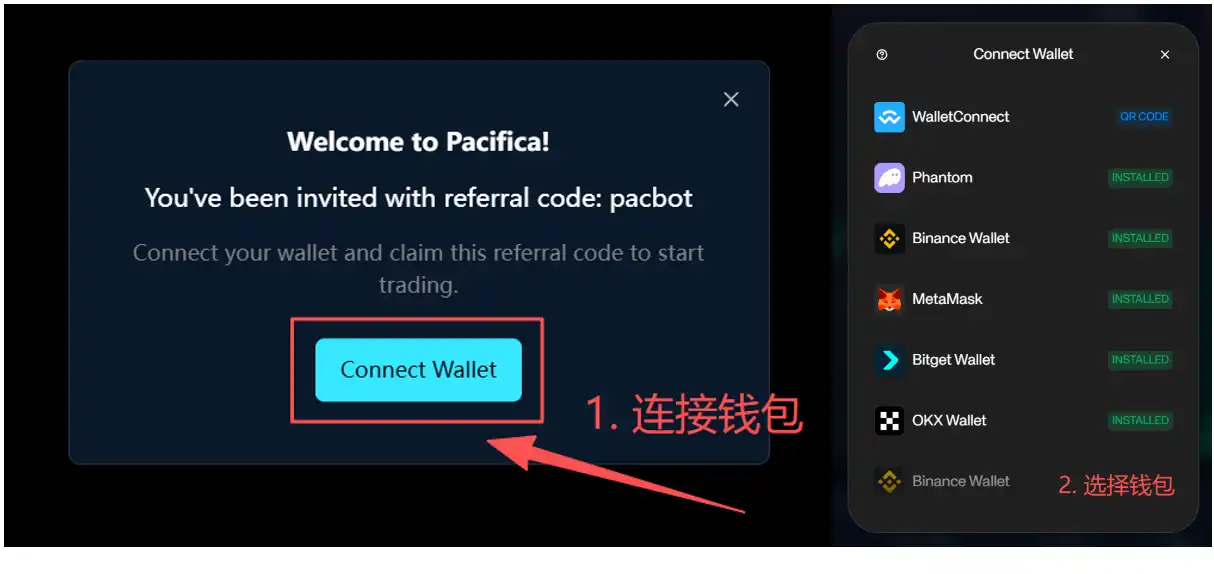
After linking your wallet, there will be 2-3 confirmations, follow the prompts to confirm.
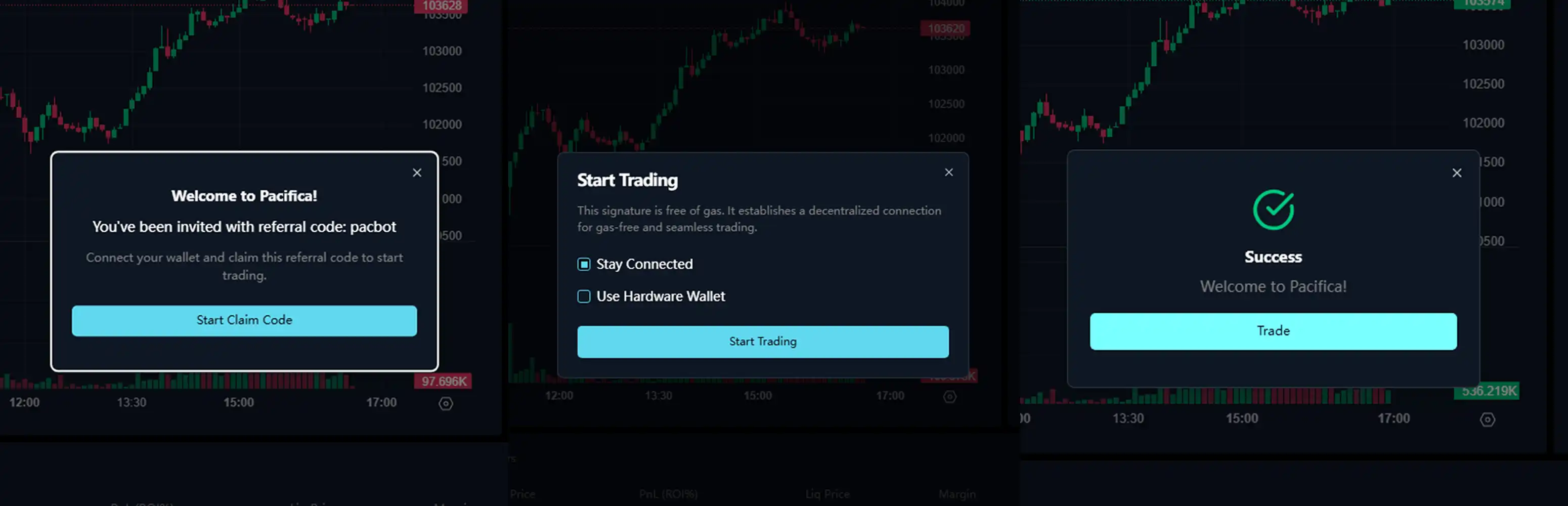
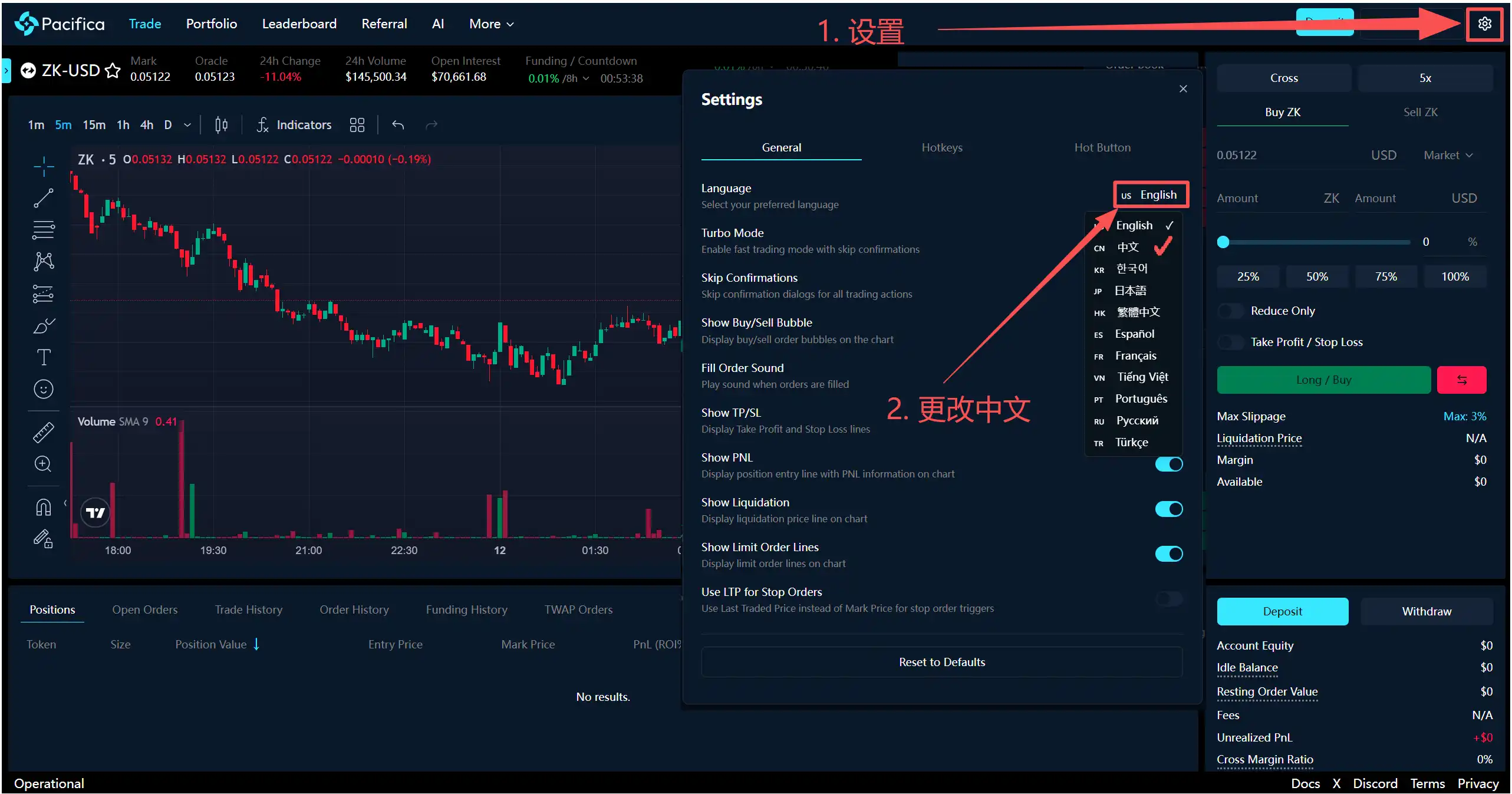
2. Set Language
The website currently supports multiple languages. If you are a Chinese user, click on "Chinese" or "Traditional Chinese"
If you prefer an English page, you can skip this step.
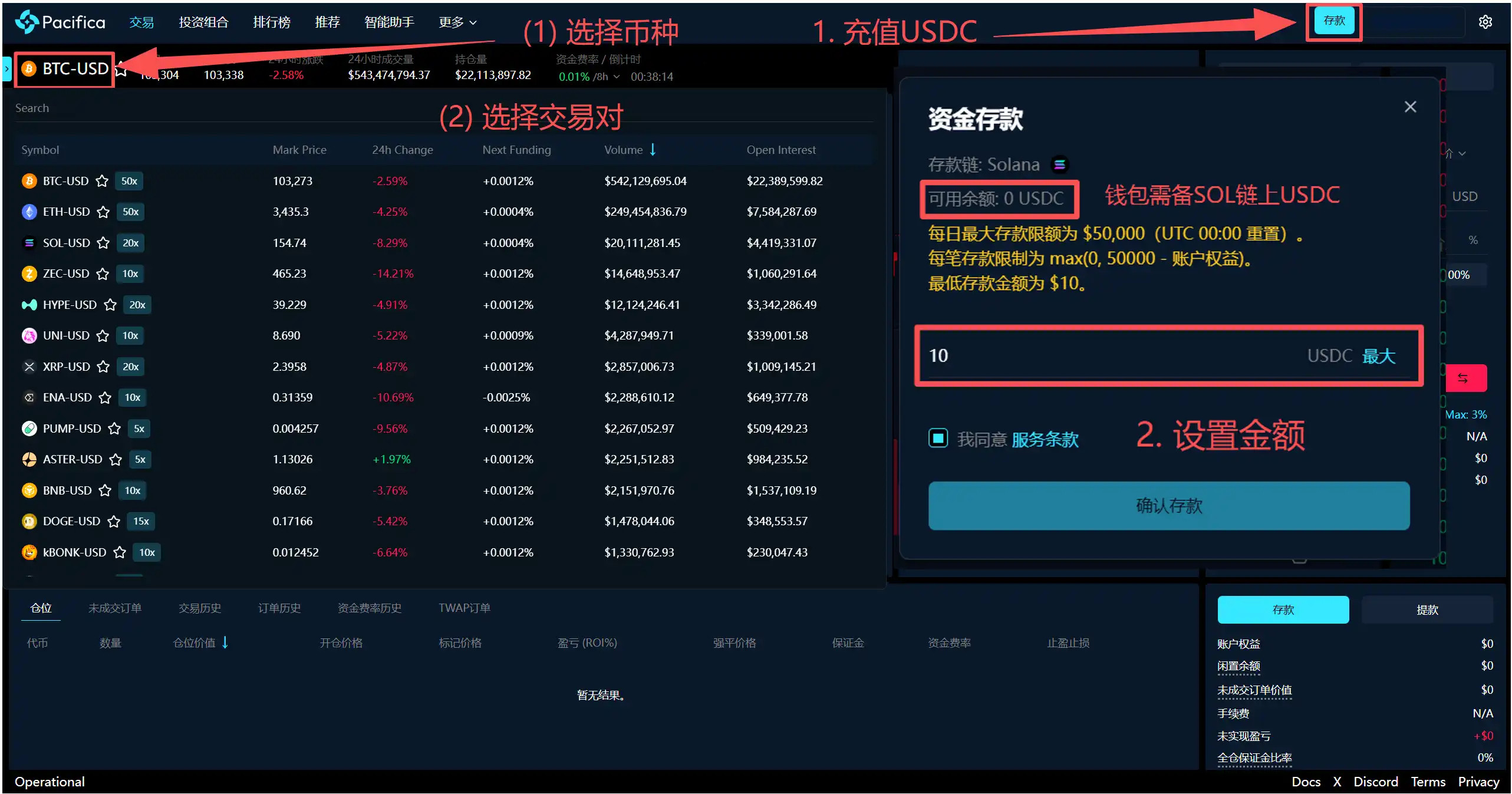
3. Deposit USDC and Select the Currency for Trading
Pacifica is built on Solana, so when depositing funds, you need to choose Solana's USDC on-chain and double-check the wallet address for on-chain transfers.
4. Initiate Your First Trade (Using BTC as an Example)
After completing the deposit, you can choose the cryptocurrency you want to trade in the top left corner. Currently, Pacifica supports most mainstream tokens and is continuously listing new tokens.
Based on the example in the image:
- Set the leverage multiplier (beginners are advised to use low leverage, avoid high leverage)
- Trading direction: Long/Short
- Opening amount/Market order
- Quantity of the trading asset
- Click "Confirm" to place the order
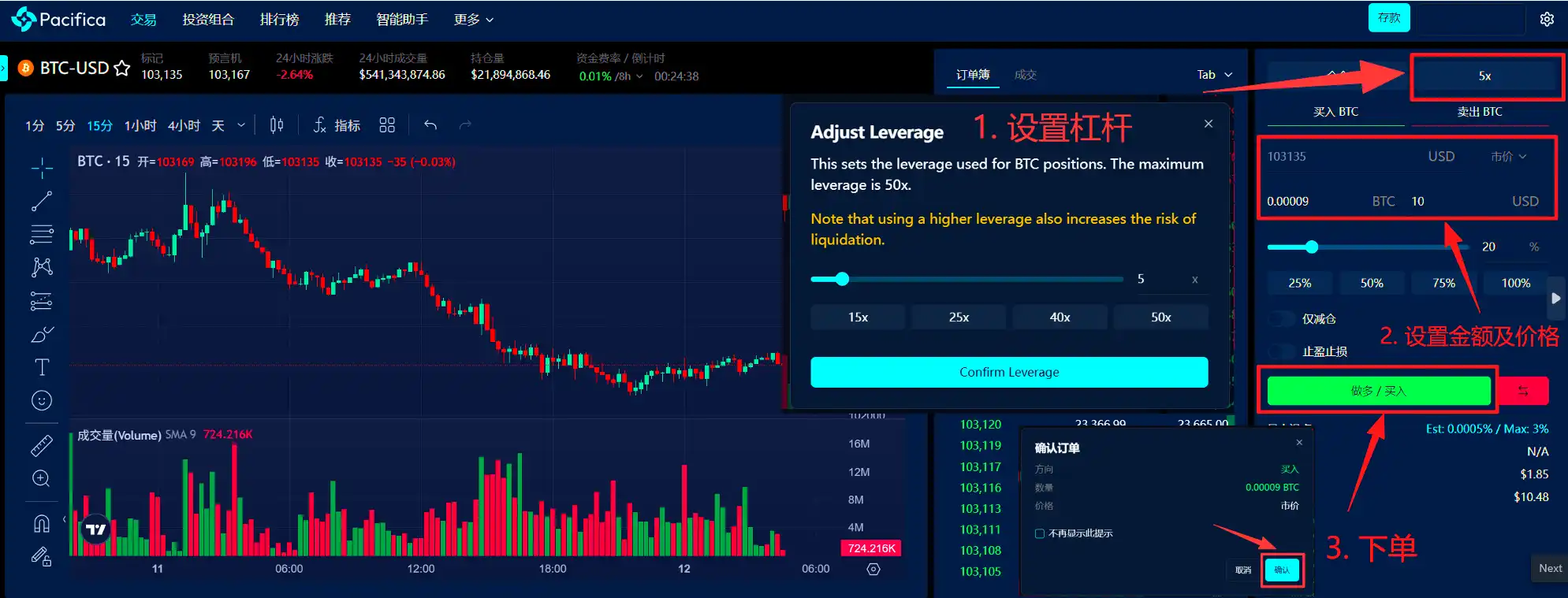
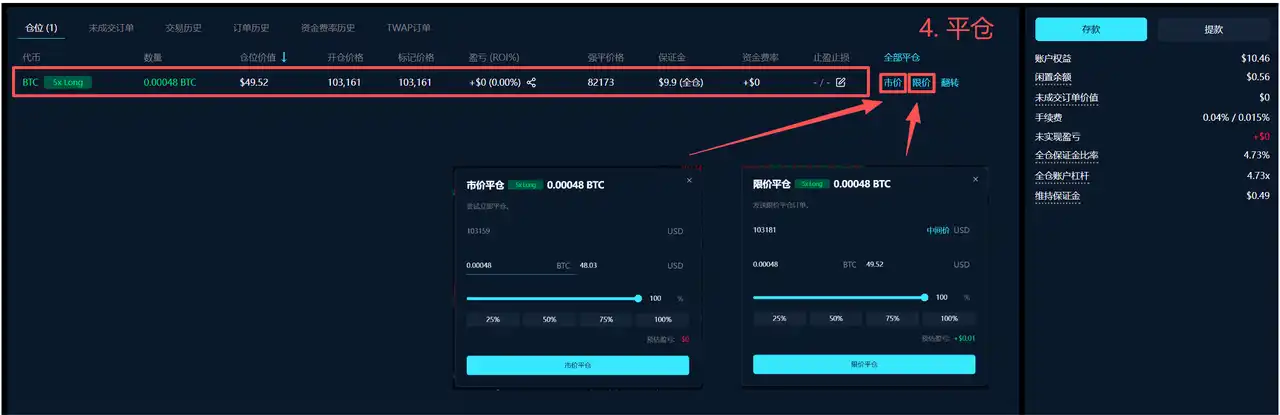
5. After placing an order, if you want to close the position or set a limit order to close, please refer to the following steps.
Finally, a reminder to everyone, this tutorial is designed to earn points through multiple means, contract trading can be addictive, so resist FOMO.
Pacifica's points program will launch on September 4, 2025, with a weekly snapshot every Thursday at 00:00 UTC. Distribution will be completed within 24 hours and will be allocated to eligible active users. The specific distribution formula is not yet public, mostly based on the total platform trading volume. Currently, 10,000,000 points are distributed weekly to trading users (previously 500,000 points, increased 20 times on October 30), distributed based on the total number of users and trading volume for the week, making point acquisition dynamic.
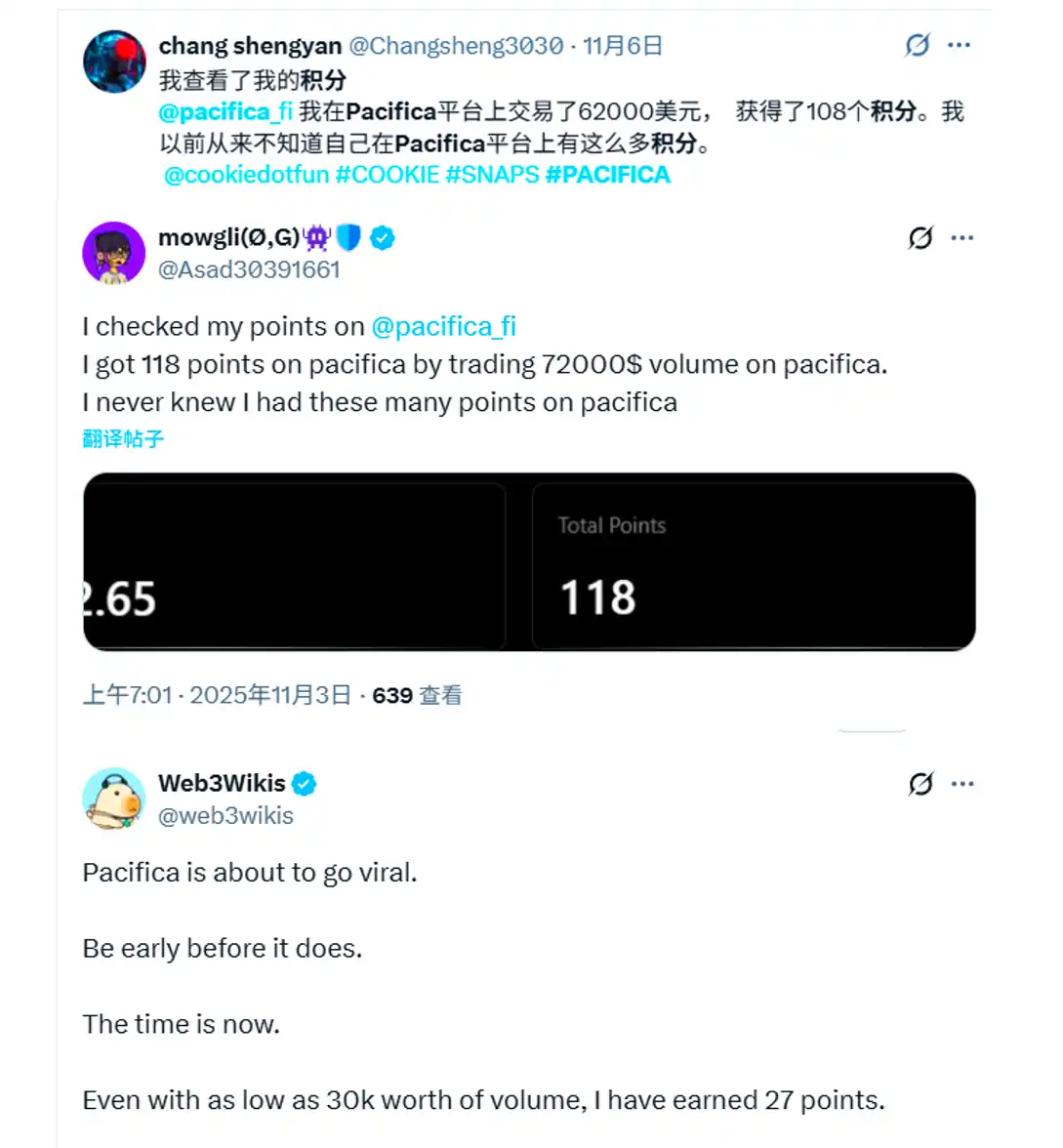
Based on data feedback from multiple traders online from November to the present month, an average trading volume of approximately $600 to $1000 can earn 1 point. Similarly, to reduce wear and tear, in terms of trading pairs, you can choose some low-volatility coins with low funding rates.
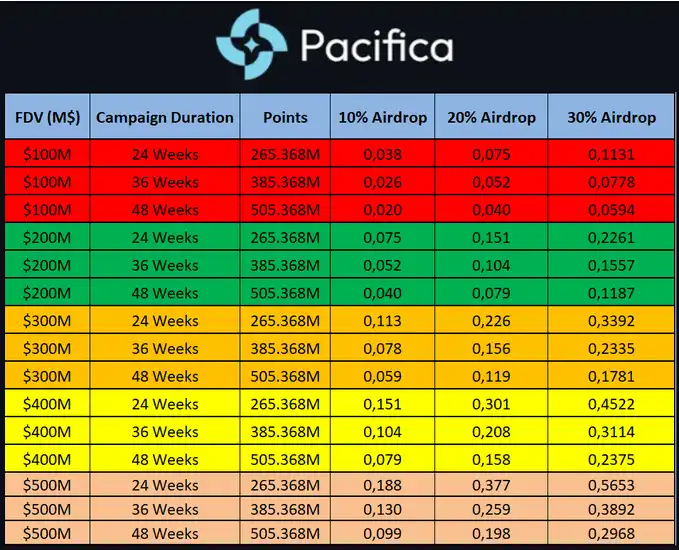
It is important to note that associating Pacifica points with token value is still a community speculation based on industry experience, and no official rules have been provided. However, based on the usual practices of past projects and community speculations, the community generally associates points with tokens. Under this speculative premise, the community has derived a widely circulated valuation logic, with the core formula being: Individual point price = (Fully Diluted Valuation FDV of the project × Token Airdrop Ratio) / Total Points Issued in the Point Program.
Application of this formula relies on several core variables: firstly, an estimate of the project's FDV; secondly, an assumption about the airdrop's proportion of total supply; and thirdly, the most variable factor—an estimate of the total period for point issuance (usually assumed to be 24, 36, or 48 months). The table below will show different scenarios of point price estimation based on these variables for reference:
You may also like

Tiger Research: What AI services do cryptocurrency companies offer?

The war not only drives up oil prices but also causes Circle's stock price to soar

When agents become consumers, who will rewrite the underlying logic of internet commerce?

AI Agents in Action Summit: March 31, Hong Kong Cyberport, focusing on the deep waters of AI implementation

29 Days In, What Are America’s Options on Iran?

Flash Crash Down 97%+ with Ongoing Unlocking, WLD Completes $65 Million Off-chain Funding: Who Is Still Buying?

Bitcoin for Real Estate? Fannie Mae Teams Up with Coinbase to Launch Crypto Mortgage
Tether Hires Big Four Auditor, USDT Enters First Attestation Phase

Google AI Paper Destroys $900B Storage Stock, Accused of Faking Experiment
Evaporate $2 Trillion, U.S. Stocks See Worst Start in 4 Years, Why is the Market Bearish?

The speed at which AI discovers vulnerabilities has surpassed the speed at which it patches vulnerabilities.

AI Crypto Trading Bot Explained: Aurora's Multi-Factor Strategy in WEEX Hackathon
Aurora demonstrates how structured, multi-agent AI Trading systems can deliver more adaptive and resilient performance in the WEEX AI Trading Hackathon.

Cyber Taoist Fortune Teller: Fake Taoist, AI Fortune Telling, and Northeastern Metaphysics History

Bloomberg: Stablecoin Payments Emerge as Crypto VC's Newest Favorite Thing
BeatSwap is evolving towards a full-stack Web3 infrastructure, covering the entire lifecycle of IP rights.
BeatSwap, a global Web3 Intellectual Property (IP) infrastructure project, is attempting to overcome the current fragmentation limitations of the Web3 ecosystem, building a full-stack system that covers the entire lifecycle of IP rights.
Currently, most Web3 projects are still in the stage of functional fragmentation, often focusing only on a single aspect, such as IP asset tokenization, transaction functionality, or a simple incentive model. This structural dispersion has become a key bottleneck hindering the industry's scale application.
BeatSwap's approach is more integrated, integrating multiple core modules into the same system, including:
· IP authentication and on-chain registration
· Authorization-based revenue sharing mechanism
· User-engagement-driven incentive system
· Transaction and liquidity infrastructure
Through the above integration, the platform builds an end-to-end closed-loop path, allowing IP rights to complete a full cycle of "creation, use, and monetization" within the same ecosystem.
BeatSwap is not limited to existing crypto users but is attempting to take the global music industry as a starting point, actively creating new market demand. Its core strategies include:
Exploring and incubating music creators (Artist discovery)
Building a fan community
Igniting IP-centric content consumption demand
The current global music industry is valued at around $260 billion, with over 2 billion digital music users. This means that the potential market corresponding to the tokenization and financialization of IP far exceeds the traditional crypto user base.
In this context, BeatSwap positions itself at the intersection of "real-world content demand" and "on-chain infrastructure," attempting to bridge the structural gap between content production and financial flow.
BeatSwap's upcoming core product "Space" is scheduled to launch in the second quarter of 2026. This product is defined as the SocialFi layer in the ecosystem, aiming to directly connect creators with users and achieve deep integration with other platform modules.
Key designs include:
A fan-centric interactive mechanism
Exposure and distribution logic based on $BTX staking
User paths connected to DeFi and liquidity structures
Thus, a complete user behavior loop is formed within the platform: Discovery → Participation → Consumption → Rewards → Trading
$BTX is designed to be a core utility asset within the ecosystem, rather than just a simple incentive token, with its value directly tied to platform activity and IP use cases.
Main features include:
· Yield distribution based on on-chain authorized actions
· Value reflection based on IP usage and user engagement dynamics
· Support for staking and DeFi participation mechanisms
· Value growth driven by ecosystem expansion
With the increased frequency of IP use, the utility and value support of $BTX will enhance simultaneously, helping alleviate the "disconnect between value and utility" issue present in traditional Web3 token models to some extent.
Currently, $BTX has been listed on several mainstream exchanges, including:
Binance Alpha
Gate
MEXC
OKX Boost
As the launch of "Space" approaches, BeatSwap is actively pursuing more exchange listings to further enhance liquidity and global accessibility, laying a foundation for future market expansion.
BeatSwap's goal is no longer limited to the traditional Web3 narrative but aims to target over 2 billion digital music users and a trillion KRW-scale content market.
By integrating content creators, users, capital, and liquidity into a blockchain framework centered around IP rights, BeatSwap is striving to build a next-generation infrastructure focused on "IP tokenization."
BeatSwap integrates IP authentication, authorization distribution, incentive mechanism, transaction system, and market construction to establish a unified structure that bridges the full lifecycle path of IP rights.
With the launch of the Q2 2026 "Space," the project is expected to become a key infrastructure connecting content and finance in the IP-RWA (Real World Assets) track.

Mag 7 Evaporates $2 Trillion | Rewire News Morning Edition

Losing $19K per Coin Mined, Bitcoin Mining Firms Collective AI Defection



 App
App