
- Buy Crypto
- Markets
 Futures
- Spot
- Copy Trade
- Earn
- More
The Trump Family's WLFI Project Launches Lending Platform, USD1 Utility Milestone?

Original Title: "DeFi Platforms Also 'Undergo Metamorphosis': Why Did Trump's WLFI Put on the National Bank Coat?"
Original Author: Sanqing, Foresight News
On January 12, a Trump family member project, World Liberty Financial (WLFI), launched the lending platform World Liberty Markets.
Previously, on January 7, WLFI announced that its subsidiary, WLTC Holdings LLC, had submitted an application to the Office of the Comptroller of the Currency (OCC) to establish World Liberty Trust Company, National Association (WLTC), a national trust bank designed for stablecoin operations.
WLFI's USD-pegged stablecoin USD1 achieved a circulating supply of over $3.4 billion within a year (CoinMarketCap data), becoming one of the fastest-growing USD-pegged stablecoins.
Through the federal regulatory system and the liquidity lending market, WLFI is not only seeking applications for USD1 but also attempting to bridge the gap between TradFi and DeFi.
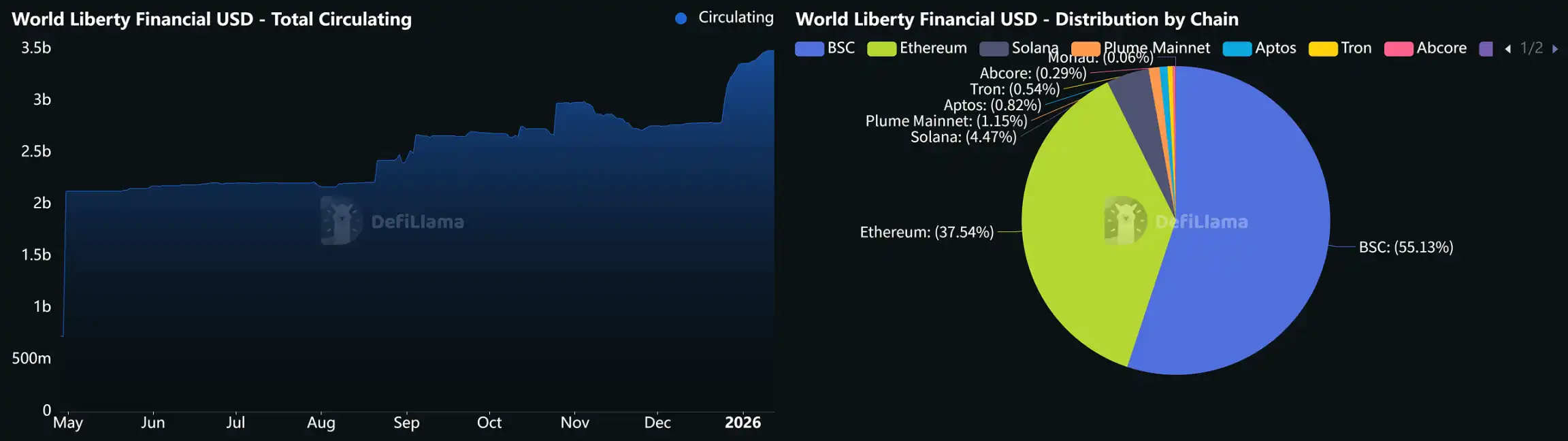
USD1 Total Market Value Curve and Chain Distribution | Source: DeFiLlama
DeFi Lending Platform World Liberty Markets: Practical Landing of USD1
Five days after submitting the licensing application, WLFI's launch of World Liberty Markets marked the entry of its DeFi business into the operational stage. The platform, built on the Dolomite protocol, initially debuted on Ethereum and showed an intention for multi-chain expansion.
World Liberty Markets is positioned as a lending market revolving around USD1. Users can not only deposit assets on the platform to earn interest but also use their held assets as collateral to borrow other tokens.
The lending asset system is centered around USD1 while also accommodating various collaterals such as ETH, USDC, USDT, WLFI, cbBTC, covering mainstream crypto assets and protocol-native tokens. This platform structure caters to both the demand for USD1 stability and provides the liquidity foundation for its presence in DeFi.
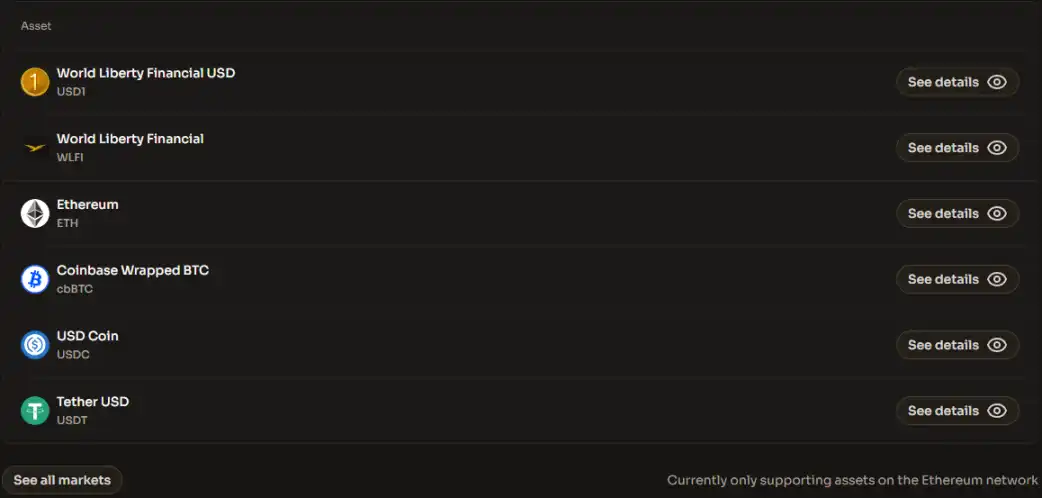
Supported Currencies on WLFI Markets | Image Source: WLFI Website
On the governance side, WLFI token holders have proposal and voting rights, allowing them to make decisions on key matters such as adding new collateral assets, adjusting interest rate parameters, or setting user incentives.
Immediately after the platform's launch, it triggered a market response. Dolomite, as the provider of the underlying protocol architecture, saw its native token DOLO rise by 71.9% on the same day.
Additionally, WLFI also launched early incentive activities to attract initial users by increasing the USD1 deposit yield. According to the WLFI Markets page, the USD1 lending incentive feature is provided by Merkle, with the annualized interest rate updating in real time.
While the regulatory application is still under review, the launch of World Liberty Markets has allowed WLFI to advance its business scenarios. Regardless of the final outcome of the license, USD1 has begun to transition from a concept issuance to on-chain lending use, truly entering the race to compete with the mainstream DeFi ecosystem.
National Trust Bank Charter Application: Stablecoin Business Moving Towards Regulatory Compliance
Through its intended subsidiary World Liberty Trust Company (WLTC), WLFI aims to obtain a national trust bank charter issued by the OCC. If approved, this means that the operation of USD1 will transition from a third-party collaborative model to a federally regulated "full-stack" model.
The envisioned scope of WLTC's business includes directly handling the minting and burning of USD1 without relying on external intermediaries; providing direct exchange services between the US dollar and USD1; and offering regulated custody services for assets like USD1, gradually replacing third-party service providers like BitGo.
The significance of this charter goes far beyond business integration. Obtaining OCC approval means the project is entering a federally regulated system, with profound implications for user trust and institutional adoption.
Currently, Binance has been deeply involved in the creation of USD1 and has added trading pairs, while Coinbase has also listed the asset. This regulatory endorsement can further reduce user concerns, and by embracing federal regulation directly, WLFI can better comply with regulatory requirements such as the GENIUS Act.
The WLFI team also aims to block any potential conflicts of interest through the architecture design. To address potential political scrutiny, WLFI CEO Zach Witkoff stated that the trust company's architecture is designed to avoid conflicts, with neither Trump nor his family members serving as executives or exercising daily control.
Meanwhile, USD1 has been gradually gaining more institutional support, demonstrating its increasing penetration in the industry. Abu Dhabi investment firm MGX previously used USD1 to purchase $2 billion worth of Binance shares, a transaction that also served as a significant external endorsement.
Despite rapid progress, WLFI still faces multiple uncertainties. The OCC's discussion on conflicts of interest during the approval process will be a focal point. While Zach Witkoff emphasizes that the Trump family does not hold executive positions and has no voting rights, the approval of the application remains uncertain in the current highly politically charged environment.
Additionally, although USD1 has grown rapidly, there remains a significant gap in liquidity depth and use cases compared to the two leading stablecoins, USDT and USDC. To further expand, WLFI needs to prove that its advantage lies not only in compliance narratives and endorsements but also in providing a technology experience, capital efficiency, and DeFi composability that are at least equivalent to, if not better than, mainstream products.
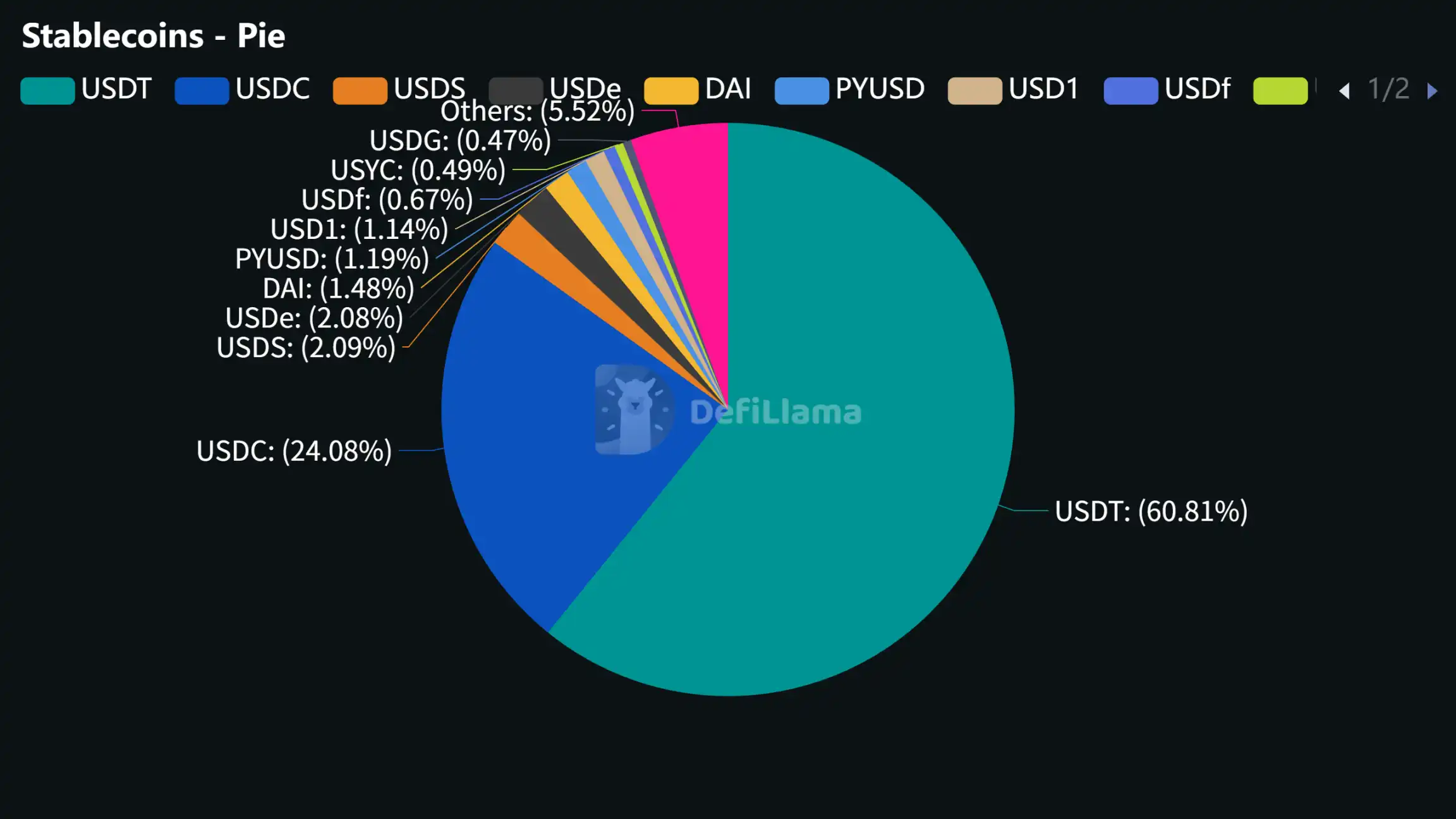
Stablecoin Market Cap Share | Source: DeFiLlama
Relationship Between Licensing and DeFi Lending: Indirect but Strategically Complementary
As the OCC gradually approves companies including Circle, Ripple, BitGo, Paxos, and Fidelity for similar licenses, a regulated cryptocurrency banking system is taking shape.
There is no direct regulatory linkage between the national trust bank license and DeFi lending, but there is a significant indirect boost.
Enhancing USD1's credibility and liquidity in DeFi. The federal regulatory identity endorses USD1, attracting more funds into liquidity pools, thus enhancing the depth and stability of the lending market.
Bridging TradFi and DeFi. The license's fiat onramp reduces user barriers, facilitating traditional users' participation in DeFi lending.
Building a truly closed-loop business ecosystem. In the future, WLFI plans to launch a mobile app, USD1 debit card, and RWA integration (such as tokenized real estate as collateral), all of which will benefit from regulatory clarity and credit endorsement.
You may also like

Business Opportunities of Tokenized Stocks
In-depth research report on the Resolv protocol hacking incident, who is the final payer?

Crypto Market Sees Large Liquidations: $272 Million in Long Positions Affected
Key Takeaways In the last 24 hours, $272 million worth of contracts were liquidated across the entire crypto…

Whale Increases BTC Shorts and Bets on Crude Oil: A Strategic Crypto Move
Key Takeaways A prominent whale, known as “UnRektCapital,” has strategically escalated its short position in Bitcoin while simultaneously…

Hackers in Brazil Use Fake Google Play Store to Steal Cryptocurrency
Key Takeaways Hackers in Brazil are exploiting fake Google Play Store pages to spread Android malware. Infected devices…

Exchanging 200,000 for nearly 100 million, DeFi stablecoins face another attack

The underlying business agreement of the trillion-dollar Agent economy: Understanding ERC-8183, it's not just about payments, but the future

When Wall Street's ETH begins to "yield": Looking at the asset properties of Ethereum from BlackRock's ETHB
The Power of Agency: The Agentic Wallet and the Next Decade of Wallets

Understanding x402 and MPP in One Article: Two Routes for Agent Payments

Particle Founder: The entrepreneurial insights I have gained the most from in the past year

Huang Renxun's latest podcast transcript: The future of Nvidia, the development of embodied intelligence and agents, the explosion of inference demand, and the public relations crisis of artificial intelligence

OKX Ventures Research Report: AI Agent Economic Infrastructure Research Report (Part 1)

The migration of settlement rights: B18 and the institutional starting point of on-chain banks

From Tencent and Circle: Looking at the Simple and Difficult Questions of Investment

The second half of stablecoins no longer belongs to the crypto circle

Cursor "Shell" Kimi Controversy Reversed: From Copyright Infringement Allegations to Authorized Collaboration, China's Open Source Model Once Again Becomes a Global AI Foundation

The Real Reason Tokens Don't Sell: 90% of Crypto Projects Overlook Investor Relations
Business Opportunities of Tokenized Stocks
In-depth research report on the Resolv protocol hacking incident, who is the final payer?
Crypto Market Sees Large Liquidations: $272 Million in Long Positions Affected
Key Takeaways In the last 24 hours, $272 million worth of contracts were liquidated across the entire crypto…
Whale Increases BTC Shorts and Bets on Crude Oil: A Strategic Crypto Move
Key Takeaways A prominent whale, known as “UnRektCapital,” has strategically escalated its short position in Bitcoin while simultaneously…
Hackers in Brazil Use Fake Google Play Store to Steal Cryptocurrency
Key Takeaways Hackers in Brazil are exploiting fake Google Play Store pages to spread Android malware. Infected devices…


 App
App