
- Buy Crypto
- Markets
 Futures
- Spot
- Copy Trade
- Earn
- More
Vitalik Advocates for Anonymous Voting in Ethereum’s Governance — A Solution to Attacks?

Key Takeaways
- Vitalik Buterin proposes a two-layer governance framework utilizing anonymous voting to address collusion and capture attacks, marking a shift from his previous stance.
- The model separates accountability from preference-setting, employing prediction markets and MACI technology to enhance decentralization.
- This proposal comes in the wake of governance challenges in decentralized social platforms, such as Farcaster’s failure to sustain growth.
- Buterin’s new direction includes adopting a creator DAO model, emphasizing content quality over popularity in governance structures.
WEEX Crypto News, 2026-02-02 15:20:17
In a groundbreaking proposal, Ethereum co-founder Vitalik Buterin has ventured a significant shift in decentralized governance by introducing a two-layer framework incorporating anonymous voting systems. This move stands in stark contrast to his prior stance, put forth in 2024, which criticized the veil of anonymity in the crypto realm. This reversal signals a calculated attempt to curtail governance attacks, including collusion and capture threats, which presently plague many decentralized platforms.
The Two-Layer Governance Framework: Breaking it Down
The crux of Buterin’s innovation is a two-layer structure that distinctly separates the functionality of accountability from preference-setting. The accountability layer is characterized by a prediction market model which fosters transparency and holds participants liable for their decisions. Meanwhile, the preference-setting layer is designed to encourage decentralization and intrinsic motivation, largely through non-financialized mechanisms facilitated by Minimum Anti-Collusion Infrastructure (MACI) technology. This ensures that participants’ preferences are expressed without the risk of collusion.
In his comprehensive post, Buterin elaborates that the accountability component acts as a “decentralized executive,” a notion grounded in a system where skin in the game translates as the closest attainable form of credible accountability. This layer works by allowing market dynamics to dictate participant responsibilities rather than concentrated executive power. Conversely, the preference layer operates independently of token-based mechanics, circumventing the possibility of dominance by affluent participants who could otherwise leverage financial clout to monopolize control with a 51% stake.
Predicting a Better Future: The Role of Prediction Markets
Prediction markets emerge as pivotal in this redesigned governance model, serving as the executive arm that assigns accountability based on collective insights rather than centralized command. Despite skepticism voiced by some about the absence of major prediction markets on Ethereum’s own blockchain — a criticism noting their current prominence on other platforms — Buterin maintains optimism regarding their potential. He argues that in a permissive system, prediction markets offer a robust framework for aligning action with decentralization principles.
This framework harnesses MACI technology to mitigate coordination risks, promising a preference-setting environment resistant to manipulation. This technology’s incorporation underscores Buterin’s vision of decentralized platforms maintaining structural integrity without succumbing to exploitative practices.
Reversing the Anti-Anonymity Position of 2024
Buterin’s current paradigm shift marks a stark departure from his earlier position as articulated in August 2024, wherein he extolled the virtues of identity frameworks over anonymity in decentralized systems. He previously argued these frameworks were essential for preventing systems from devolving back into centralized governance structures. However, experiences from the crypto climate, notably the controversies and governance shortcomings of platforms like BitClout, appear to have fueled a reconsideration. These experiences underline the inadequacies of non-anonymous structures that failed to deliver on decentralization’s promise of an egalitarian decision-making environment.
At the time, critics like blockchain technologist Vinay Gupta lambasted the anti-anonymity stance, warning against the potential erosion of crypto’s foundational self-sovereignty due to enforced identity frameworks. The ensuing societal implications, Gupta predicted, would demand heightened surveillance and contribute to a scenario where entitlements and exclusions become the norm rather than the exception.
Creator DAOs: A Fresh Perspective on Governance Models
Buterin’s proposition extends beyond just anonymous voting. He envisions a novel governance model through creator DAOs, drawing inspiration from initiatives like the Protocol Guild. These decentralized autonomous organizations would function on a membership basis determined through anonymous voting, nurturing communities bonded by focused interests rather than mass appeal. The strategic selection of initial members prioritizes alignment with specific objectives or themes, ensuring coherence in governance and content production.
In this model, Buterin criticizes existing creator platforms such as Zora and BitClout, highlighting their predisposition to elevate individuals with pre-established social statuses rather than nurturing nascent talent. Instead, he champions a system akin to Substack’s success, emphasizing curation and quality over speculative popularity.
Token speculators in this creator DAO ecosystem engage in predicting which creators ascend within these high-value DAOs, with successful predictions resulting in coin burn events funded by DAO proceeds. This mechanism not only reduces speculative volatility but also reinforces content quality as the defining success metric.
Surviving the Struggles: What Lies Ahead?
Buterin’s emphasis on creator-driven governance models comes at a critical time when numerous decentralized social platforms, such as Farcaster, face existential challenges. Farcaster’s inability to secure sustainable growth despite significant investment underscores the importance of adaptive governance structures that can uphold the ethos of decentralization while enabling innovation and growth.
With strategic shifts like introducing anonymous voting and creator DAOs, Vitalik Buterin’s evolving vision for Ethereum’s governance structures marks a transformative potential in shaping the broader blockchain and decentralized application landscapes. While critics may question the feasibility of these new models, their implementation could redefine the boundaries of accountability and decentralization, making crypto systems more robust and entrenched against governance attacks.
As decentralized platforms venture further into this novel territory, the world watches to see whether these proposed frameworks will solidify Ethereum’s status as a bastion of sustainable, equitable governance.
FAQs
How does anonymous voting help in Ethereum’s governance?
Anonymous voting aids in Ethereum’s governance by reducing risks of collusion and capture attacks. It ensures that voting power cannot be easily manipulated by wealthy participants consolidating influence, thereby fostering a fair and decentralized decision-making process.
What is the significance of prediction markets in this new governance model?
Prediction markets are pivotal in the governance model as they act as a decentralized executive arm, assigning accountability through collective insights rather than centralized authorities. They offer a system where actions are aligned with decentralization principles based on market dynamics.
How has Vitalik Buterin’s stance on anonymity changed since 2024?
In 2024, Buterin advocated against anonymity, favoring identity frameworks to prevent centralized control. His current stance embraces anonymity to protect against collusion, indicating a strategic pivot influenced by past governance failures in decentralized systems.
What role do creator DAOs play in Buterin’s governance proposal?
Creator DAOs function by fostering governance models based on quality and aligned interests rather than mass appeal. They aim to craft decentralized communities focused on specific themes, ensuring coherent governance and content integrity without succumbing to speculative volatility.
Why are traditional token-based governance models seen as insufficient?
Traditional token-based models are seen as inadequate due to their susceptibility to manipulation by affluent participants who can exercise disproportionate control. Anonymous voting and non-token-based mechanisms are proposed to ensure diversified and genuine participation in governance processes.
You may also like

Old Indicator Fails, Three Major New Signals Emerge: BTC True Bottom May Still Be Below $60K

Meeting OpenClaw Founder at a Hackathon: What Else Can Lobsters Do?

Huang Renxun's Latest Podcast Transcript: NVIDIA's Future, Embodied Intelligence and Agent Development, Soaring Demand for Inferencing, and AI's PR Crisis
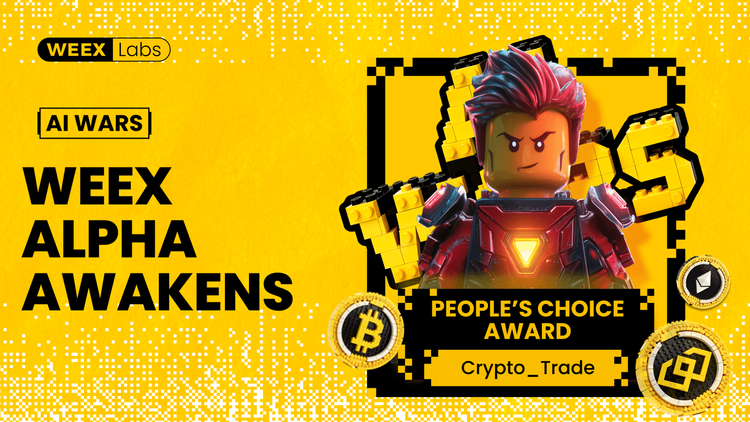
How a Structured AI Crypto Trading Bot Won at the WEEX Hackathon
Crypto_Trade shows how structured inputs and controlled adaptability can build a more stable and reliable AI crypto trading bot within the WEEX AI Trading Hackathon, highlighting a practical path toward scalable AI trading systems.

AI Starts to Devour the Manufacturing Industry | Rewire News Morning Edition

When Scaling Meets Speed, Ethereum Foundation Introduces "Hardness" to Safeguard the Base Layer
Google, Circle, Stripe Flock Together to Let AI Spend Money: Payment Giants' Joys and Worries in 2026 Q1

$100 Billion Factory Purchase: Bezos and Middle Eastern Capital Shift AI Money from Cloud to Shop Floor

Xiaomi and MiniMax both unleash their ultimate moves, signaling the start of the Agent Pricing War.

Predicting markets has taken the spotlight, but the Perp DEX has been quietly waging war on traditional exchanges.

Is the Market Slump Still Making Millions a Day? Is pump.fun's Revenue Real?

Understanding x402 and MPP in One Article: The Two Paths of Agent Payments

Quick Look at the Latest 18 Graduation Projects from Alliance: Who's the Next Pump.fun?

It's not just the prediction market that profits from the Iraq War

The "bank card" of AI has caught the attention of the giants
Morning News | U.S. SEC approves tokenized trading on Nasdaq; Animoca Brands announces investment in AVAX tokens; Algorand Foundation completes strategic integration

$70 trillion wealth transfer, the financial gateway is being rewritten | Interview with Robinhood CEO Vlad Tenev
Whale Opens 20x Oil Short on Hyperliquid With 5.6M USDC at Risk
Key Takeaways A significant leveraged short position on crude oil has been initiated on Hyperliquid using 5.6 million…
Old Indicator Fails, Three Major New Signals Emerge: BTC True Bottom May Still Be Below $60K
Meeting OpenClaw Founder at a Hackathon: What Else Can Lobsters Do?
Huang Renxun's Latest Podcast Transcript: NVIDIA's Future, Embodied Intelligence and Agent Development, Soaring Demand for Inferencing, and AI's PR Crisis
How a Structured AI Crypto Trading Bot Won at the WEEX Hackathon
Crypto_Trade shows how structured inputs and controlled adaptability can build a more stable and reliable AI crypto trading bot within the WEEX AI Trading Hackathon, highlighting a practical path toward scalable AI trading systems.


 App
App