

What Is AIO Crypto and How Does AIO Work?

Most crypto trading bots are dumb. They scrape messy data, lag, and repeat the same mistakes. Why? Raw, unstructured information. Imagine cooking a gourmet meal with ingredients still in the packaging, no labels, no recipe. That's AI trading today.
Enter AIO Crypto (also called OlaXBT). It's not just another token — it's infrastructure built for autonomous AI agents. Think of it as an operating system for trading bots. Instead of cleaning up messy data, AIO hands agents ready-to-use intelligence through structured feeds and modular "skills." Faster decisions, smarter strategies, trades that actually make sense.
If you've been asking "what is AIO Crypto" or wondering about the AIO token, you're in the right place. Let's break it down.
What Is AIO Crypto?
AIO Crypto is a decentralized platform that provides real-time, structured data feeds for AI-powered trading agents. It’s built for autonomous systems — not humans clicking buttons. The platform offers something called the Datalayer Nexus Skills API, which is basically a toolkit of pre-built intelligence modules. An AI agent can call on these “skills” to analyze markets, track whale wallets, read news sentiment, and even execute trades — all without a human telling it what to do next.
The native token, AIO token (ticker: OLAXBT on BSC), powers everything. Agents use it to pay for API access, get priority queuing, tip good trading signals, and settle transactions between each other. It’s a small economy for machines.
How Does AIO Crypto Work?
You don’t need to be a blockchain engineer to get this. Here’s the simple version.
Most trading bots today have to scrape data from multiple sources — DEXs, CEXs, Twitter, news sites — then clean it, format it, and finally analyze it. That’s slow and messy.
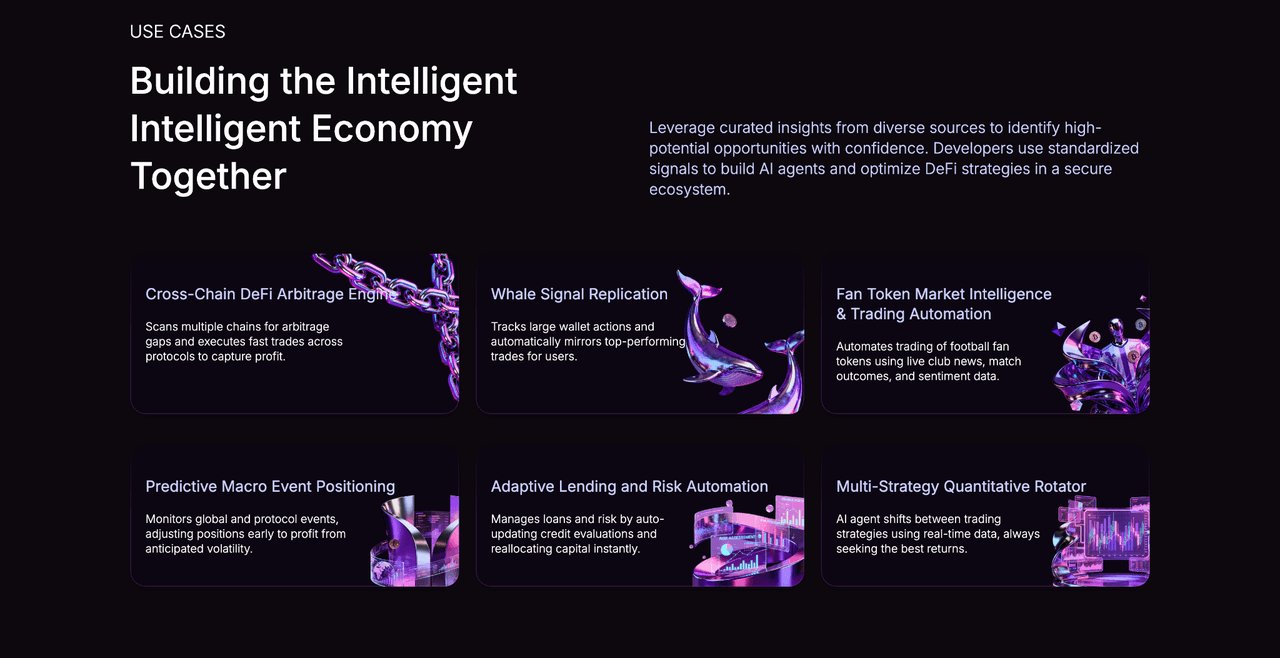
AIO flips the script. It pre-processes all that data into clean, standardized formats. Then it packages intelligence into what they call “Skills.” There are 13 core skills right now. Some examples:
- AIO Assistant → Generates actual trading signals and market analysis.
- Ask Nexus → AI-powered reasoning on macro trends or technical questions.
- News API → Real-time news with sentiment scores (bullish or bearish?).
- KOL API → Tracks what influencers are saying.
- Smart Money Tracking → Follows whale wallets and detects divergences.
- Liquidations Data → Shows where leveraged traders are getting wrecked.
An AI agent can call any of these skills on demand. It’s like giving your bot a library of superpowers.
Behind the scenes, the agent authenticates using wallet signatures (EIP-191 standard). It requests a nonce, signs it, gets a JWT token, and then accesses the API. Private keys never get exposed — secure enough for autonomous systems.
The AIO Token: What Can You Actually Do With It?
The AIO token (OLAXBT) runs on Binance Smart Chain. It’s not a meme coin. It has real utility inside the ecosystem.
Here’s what the AIO token is used for:
- Pay for API access – Agents spend tokens to call premium skills like Ask Nexus or Smart Money Tracking.
- Priority queuing – Busy network? Pay more tokens to get ahead in line.
- Agent-to-agent payments – One AI agent can pay another for a trading signal or a completed task.
- Tipping – Reward agents or developers who produce high-quality signals.
- Settlement – Decentralized trade settlement between autonomous agents.
In short, the AIO token turns the platform into a self-running economy where machines pay machines. No humans needed in the loop.
Why Should You Care About AIO Crypto Right Now?
You might be thinking: “Okay, cool tech, but why does this matter for me?”
Here’s the deal. The next phase of crypto isn’t about better charts or faster blockchains. It’s about autonomous agents — AI systems that trade, analyze, and optimize without you staring at a screen 24/7.
AIO Crypto is positioning itself as the data backbone for that future. Instead of every developer reinventing the wheel, they can plug into AIO’s skills and focus on strategy. That’s a massive time-saver.
For traders, this means you could eventually deploy your own AI agent that watches markets, spots opportunities, and trades for you while you sleep. For developers, it’s a ready-made infrastructure layer. For token holders, it’s early access to a platform that could grow with the AI agent economy.
AIO Crypto vs. Other AI Trading Platforms
What makes AIO different? Most “AI crypto” projects are just ChatGPT wrappers with a token slapped on. AIO is built from the ground up for agent-to-agent interaction, not human chat.
- Hyperbolic focuses on AI compute markets.
- Fetch.ai builds multi-agent systems for logistics and mobility.
- AIO Crypto focuses specifically on trading data and execution for financial agents.
It’s narrower in scope but deeper in functionality for traders. That focus could be its strength — or its limit if the market moves elsewhere.
Final Take: Is AIO Crypto Worth Watching?
AI agents trading autonomously isn't sci-fi anymore. It's happening now, and platforms like AIO Crypto are building the infrastructure to make it work at scale. The AIO token has real utility — not just governance fluff. The Skills API saves developers months of data cleaning, and the agent-first design (not human-first UI) is refreshingly different.
That said, it's early. There's risk, missing documentation, and no guarantee agents will choose this over building their own. If you're a developer building trading bots, check out AIO. If you're an investor, treat it as high-risk, high-upside. And if you're just curious — now you know what AIO Crypto is and why people are talking.
Ready to trade AIO? WEEX offers zero fees, instant execution, and the security you need. Sign up on WEEX Now and Start Trading!
FAQ
What is AIO Crypto in simple terms?
AIO Crypto is a platform that gives AI trading bots clean, real-time data and pre-built analysis tools — so they can trade smarter without you doing all the heavy lifting.
What is the AIO token used for?
The AIO token (OLAXBT) is used to pay for API access, priority features, agent-to-agent payments, tipping signals, and settling trades within the ecosystem.
What are the 13 Skills in AIO Crypto?
They include AIO Assistant, Ask Nexus, News API, KOL API, Technical Indicators (VWAP, MFI, CVD), Smart Money Tracking, Liquidations Data, Market Overview, and more — all pre-built intelligence modules agents can call on demand.
Is AIO Crypto legit?
The project has functional APIs and documented mechanics, but it’s still early-stage with limited public documentation. Always do your own research and never invest more than you can afford to lose.
You may also like
PEPE vs BONK: Which Meme Coin Is Leading?
There’s no clear winner—each leads in different ways. PEPE benefits from deeper liquidity and stronger market momentum, while BONK gains from ecosystem integration and community-driven growth.
If capital and trading activity dominate, PEPE leads. If narrative and adoption drive the cycle, BONK has the edge.

ARB vs OP : Which Layer 2 Will Dominate in 2026?
There likely won’t be a single winner by 2026. ARB leads in liquidity and DeFi depth, while OP focuses on ecosystem expansion through its Superchain strategy.
If the market favors capital efficiency, ARB has the edge. If network growth and narrative dominate, OP could pull ahead.
Solana vs Ethereum: High-Speed Blockchain or Ecosystem Giant?
Solana is a fast, low-fee blockchain focused on performance, while Ethereum is a leading smart contract ecosystem focused on security, decentralization, and long-term network effects.

ROAF vs ROAR: Which Has More Potential in 2026?
ROAF vs ROAR breakdown. One is narrative-driven. The other claims asset structure. Neither is backed by real oil. Read this before you buy.
DOGE vs SHIB: The Meme Coin Battle Between Stability and Explosive Growth
Dogecoin (DOGE) and Shiba Inu (SHIB) represent two different paths in the meme coin sector.
DOGE is the original meme coin, valued for its strong liquidity, long market history, and stable position across multiple crypto cycles. It behaves more like a sentiment-driven, large-cap asset with relatively smoother price movements.
SHIB, on the other hand, is a newer, ecosystem-focused token built on Ethereum, expanding through initiatives like Shibarium and DeFi products. Its price action is more volatile and heavily driven by narrative and ecosystem developments.
In simple terms:
DOGE = stability, liquidity, and mature meme assetSHIB = higher risk, higher volatility, and ecosystem growth potentialOverall, DOGE is typically preferred for more stable trading exposure, while SHIB attracts traders seeking aggressive, high-risk opportunities tied to narrative momentum.

MIRROR USDT Premiere on WEEX: Mirror (MIRROR) Listing
WEEX Exchange is thrilled to announce the exclusive premiere listing of Mirror (MIRROR) Coin, marking the world’s first…
NOT Token Price: Is Notcoin Cheap or Still Risky?
Track the NOT token price, Notcoin market cap, supply, chart risks, TON ecosystem catalysts, and whether NOT can recover.

Sandisk Stock: Why SNDK Is Surging and What Investors Should Watch
Sandisk stock has soared on AI storage demand, NAND pricing, and strong earnings. Here is what SNDK investors should watch next
Can Global Overwatch Protocol (GOP) Coin Reach $1? Full Guide 2026
Can GOP realistically hit $1?

What Is Middle Eastern Gas Reserve (MEGR) Coin?
Is MEGR crypto really backed by 1.42 Tcm gas? We break down MEGR tokenomics, roadmap risks, and how to verify claims before buying. No fluff.
AMD Stock in May: Is the AI Rally Still Worth Chasing?
AMD stock is trading near record levels after strong AI demand. Review Q1 2026 earnings, valuation, analyst targets, and major risks.
Introducing Circle Internet Group Tokenized Stock (Ondo) ($CRCLon): Onchain Circle Exposure and Price Prediction
CRCLon is Ondo's tokenized Circle stock wrapper, drawing attention with onchain equity access, fast narrative rotation, and direct exposure to the CRCL story.

Introducing Billions Network ($BILL): Human and AI Verification Infrastructure and Price Prediction
Billions Network is a human-and-AI trust layer drawing attention after its token launch, live exchange trading, and utility-driven identity narrative.
Is Billions Network (BILL) a Good Investment in May 2026?
Billions Network (BILL) has caught the eye of many crypto investors this May 2026, with its recent price…

BILL Crypto Airdrop: Unlock 30,000 USDT Rewards and Zero-Fee Trading
Billions Network’s BILL token is making waves in the crypto space with its latest airdrop event, offering participants…

What is Apple (APPLE) Coin?
Apple (APPLE) recently became a trending topic in the crypto community following its listing on WEEX Exchange. This…

WEEX Futures Unveils BILL USDT for Billions Network (BILL) Coin
WEEX Exchange is thrilled to announce the listing of the BILL USDT perpetual contract, opening new trading opportunities…

Billions Network (BILL) Coin Price Prediction & Forecasts for May 2026: Surging 36% – Can It Hold the Momentum?
Billions Network (BILL) Coin has been turning heads in the crypto space with its impressive 35.96% surge over…
PEPE vs BONK: Which Meme Coin Is Leading?
There’s no clear winner—each leads in different ways. PEPE benefits from deeper liquidity and stronger market momentum, while BONK gains from ecosystem integration and community-driven growth.
If capital and trading activity dominate, PEPE leads. If narrative and adoption drive the cycle, BONK has the edge.
ARB vs OP : Which Layer 2 Will Dominate in 2026?
There likely won’t be a single winner by 2026. ARB leads in liquidity and DeFi depth, while OP focuses on ecosystem expansion through its Superchain strategy.
If the market favors capital efficiency, ARB has the edge. If network growth and narrative dominate, OP could pull ahead.
Solana vs Ethereum: High-Speed Blockchain or Ecosystem Giant?
Solana is a fast, low-fee blockchain focused on performance, while Ethereum is a leading smart contract ecosystem focused on security, decentralization, and long-term network effects.
ROAF vs ROAR: Which Has More Potential in 2026?
ROAF vs ROAR breakdown. One is narrative-driven. The other claims asset structure. Neither is backed by real oil. Read this before you buy.
DOGE vs SHIB: The Meme Coin Battle Between Stability and Explosive Growth
Dogecoin (DOGE) and Shiba Inu (SHIB) represent two different paths in the meme coin sector.
DOGE is the original meme coin, valued for its strong liquidity, long market history, and stable position across multiple crypto cycles. It behaves more like a sentiment-driven, large-cap asset with relatively smoother price movements.
SHIB, on the other hand, is a newer, ecosystem-focused token built on Ethereum, expanding through initiatives like Shibarium and DeFi products. Its price action is more volatile and heavily driven by narrative and ecosystem developments.
In simple terms:
DOGE = stability, liquidity, and mature meme assetSHIB = higher risk, higher volatility, and ecosystem growth potentialOverall, DOGE is typically preferred for more stable trading exposure, while SHIB attracts traders seeking aggressive, high-risk opportunities tied to narrative momentum.
MIRROR USDT Premiere on WEEX: Mirror (MIRROR) Listing
WEEX Exchange is thrilled to announce the exclusive premiere listing of Mirror (MIRROR) Coin, marking the world’s first…


