
Apple Stock: John Ternus's First Big Product Bet Is a $1,999 Foldable iPhone

 Prefer us on Google


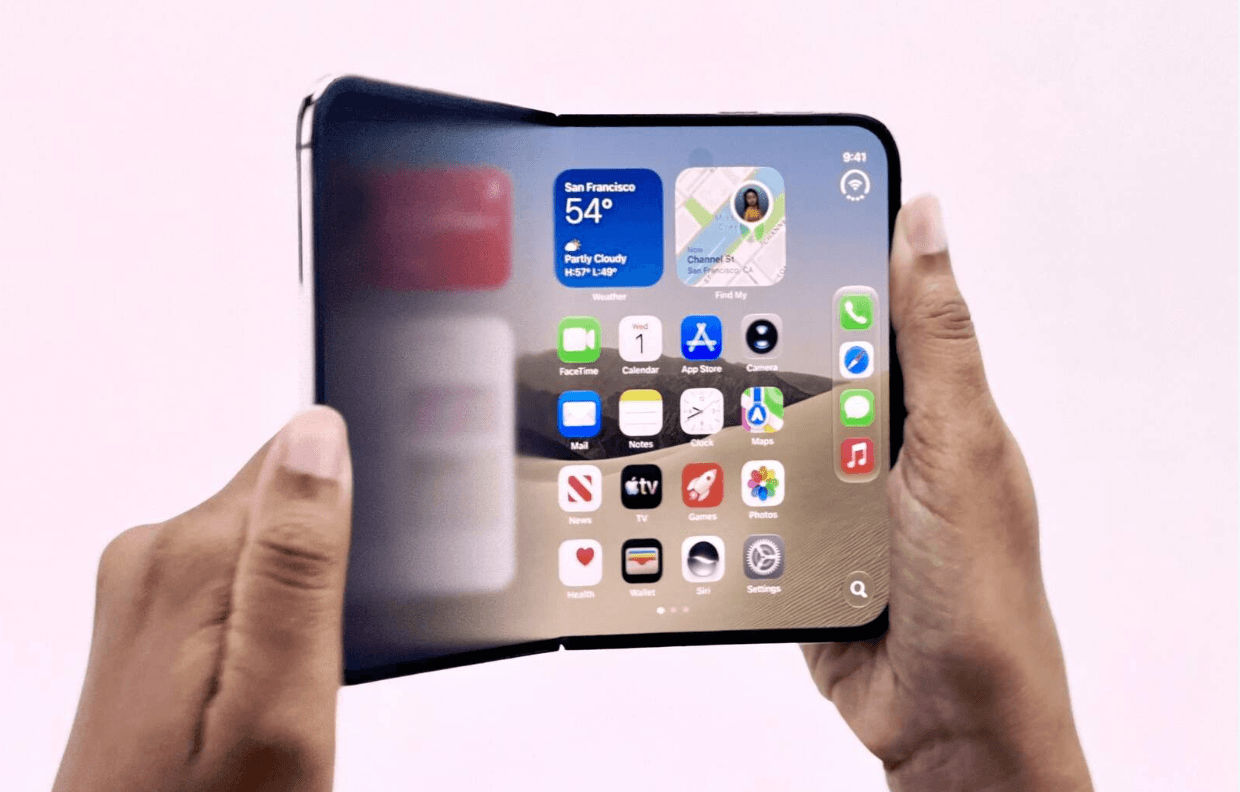
Apple stock fell 1.17% today as John Ternus held his first annual product event since becoming CEO, unveiling the company's long-rumored foldable iPhone, the iPhone Duo, priced at $1,999 and set to hit stores October 23. Apple stock's decline on a day the company revealed its biggest hardware bet in years isn't necessarily a verdict on the product itself. It's a signal worth examining alongside everything else riding on this specific launch, at this specific moment in Ternus's tenure.
What today's event actually represents requires looking past the foldable phone as a standalone product and into what it needs to accomplish for a new CEO facing a very specific cost problem inherited from his predecessor, and what that means for Apple stock going forward.
Why This Event Mattered More Than A Typical Product Cycle
Every Apple product event gets covered as a major moment, but today's carried a different kind of weight. This was Ternus's first turn running the show since taking over as CEO, and CNBC's own coverage framed it directly: "Ternus helming Apple means a return to focus on hardware innovation," according to one analyst's assessment published ahead of the event. Ternus spent more than two decades inside Apple's hardware engineering organization before becoming CEO, and today's foldable phone reveal was the first real, public test of what that background actually translates into now that he's setting the agenda rather than executing someone else's.
A foldable iPhone has been rumored and anticipated for years, which means today wasn't really about whether Apple could build one. It was about whether Ternus's Apple would ship it at a moment, and a price point, that actually addresses the specific pressure the company is under, rather than simply checking a long awaited box.

The Specific Cost Problem This Product Needs To Solve
Tim Cook, in comments that landed alongside today's coverage, described the current memory pricing environment in stark terms, calling it a "hundred year flood" in memory costs and confirming that Apple had "reluctantly raised prices" in response. That's not incidental background noise to today's launch. It's the direct financial pressure the iPhone Duo's pricing and margin structure now has to answer for.
A $1,999 starting price, reportedly reaching as high as $2,400 for higher configurations, gives Apple meaningfully more room to absorb elevated component costs than its standard iPhone lineup does. Positioning the foldable as a premium, higher margin product rather than a mainstream replacement is a deliberate way to let the device carry some of the memory cost burden that's currently squeezing margins across the rest of the lineup. Whether that pricing strategy actually works depends on demand holding up at that price level, which is a genuinely open question rather than a foregone conclusion, especially with rivals having already shipped their own foldable devices at lower price points.
Why The Stock Fell On Launch Day Despite Strong Underlying Demand Signals
The market's muted to negative reaction today doesn't line up neatly with Apple's broader demand picture heading into the event. Benzinga's reporting noted Apple has been bucking a broader smartphone chip slump, with iPhone 17 Pro demand powering gains in Apple's global smartphone chipset market share during the second quarter, even as competitors including Qualcomm and MediaTek faced headwinds. That's a genuinely strong signal about existing product demand landing just before a stock decline on the day of the company's biggest announcement of the year.
Part of the explanation sits in how markets tend to treat "sell the news" moments after a long-anticipated product finally ships. A foldable iPhone has been expected and speculated about for years, and once the actual price and ship date are confirmed rather than rumored, some of the anticipatory value already priced into the stock gets realized and taken profit on, regardless of whether the product itself disappoints. Investor's Business Daily's coverage also pointed to broader market pressure the same day, with the Dow falling amid rising oil prices, a macro backdrop that pulled on most stocks simultaneously rather than reflecting a judgment specific to Apple's event.
-- Price
What Wall Street Is Actually Signaling Beneath The Daily Move
Beneath today's single day decline, the more forward-looking signals are mixed rather than uniformly bearish. CNBC's options desk reported traders positioning bullishly on Apple, a signal that typically reflects expectations for the weeks and months ahead rather than reaction to a single day's headline. TradingView's technical readings show a similar split: a sell signal for today specifically, but buy signals on both the one week and one month timeframes, suggesting the near-term dip is being read by at least some technical models as noise within a broader uptrend rather than a genuine trend reversal.
Deepwater analyst Gene Munster added a specific, relevant data point to this picture: Apple's recent price increases have not budged retention rates. That detail matters directly for evaluating the iPhone Duo's $1,999 price tag, since it suggests Apple's customer base has so far tolerated rising prices without meaningfully churning away, a track record that gives the company more room to test a premium foldable price point than it might have going into this launch with a customer base more sensitive to cost.
What Would Actually Determine Whether This Bet Pays Off
Rather than treating today's stock movement as a verdict, it's more useful to identify what specifically needs to happen for the iPhone Duo to accomplish what it's actually being asked to do. Sell through at the $1,999 to $2,400 price range needs to prove strong enough to meaningfully offset the memory cost pressure Cook described, rather than becoming a niche product that generates headlines without moving Apple's overall margin profile. The October 23 launch date gives a specific, dated checkpoint for early demand signals, well before Apple's October 29 earnings report offers the first real data on how the device is actually selling. And Ternus's broader hardware first approach, the thing his backers argue makes him suited to lead Apple now, needs this specific product to succeed publicly, since a first major launch stumbling would complicate the case that a hardware engineer was the right choice to lead the company through its next phase.
None of these questions get resolved by a single day's 1.17% decline. They get resolved over the coming weeks, as pre-orders, early reviews, and eventually October's earnings report start providing the concrete data that today's launch day price action can't.
Trade AAPL Directly on WEEX Stock Spot 2.0
For traders looking to position around the iPhone Duo launch and Apple's next earnings report directly, AAPL is available on WEEX through Stock Spot 2.0, giving traders a way to access the AAPLUSDT trading pair with USDT, starting from as little as 5 USDT, without needing to open a separate brokerage account. Trading on WEEX is backed by a publicly disclosed 1,000 BTC protection fund, giving traders a verifiable layer of security when navigating a stock whose near-term direction depends on how sell through data unfolds over the coming weeks.
This matters specifically for a stock like Apple, where a single dated product launch can move sentiment sharply in either direction well before the underlying sell through data actually confirms whether that sentiment was justified. Having direct access to the trading pair means a trader can act on Apple-specific developments, pre-order data, early reviews, or the October 29 earnings report, as they land, rather than waiting on brokerage settlement times. AAPLUSDT is live on WEEX, with both spot and futures products available on the same platform.
Conclusion
Apple stock's 1.17% decline on the day John Ternus unveiled the iPhone Duo reflects a mix of sell the news profit taking and a broader market pullback tied to rising oil prices, rather than a clear verdict on the foldable phone itself. The product's $1,999 to $2,400 pricing is a deliberate answer to the memory cost pressure Tim Cook described as a "hundred year flood," positioning the device as a margin supporting premium offering rather than a mainstream replacement. Wall Street's forward looking signals, bullish options positioning and buy rated one week and one month technical readings, suggest today's dip is being read as short-term noise rather than a trend change, but whether Ternus's first major product bet actually pays off will depend on real sell-through data that won't be available until closer to Apple's October 29 earnings report.
FAQ
1. Why did Apple stock fall on the day it announced the iPhone Duo?
The decline reflects a mix of factors, including sell the news profit taking after years of foldable iPhone anticipation, and a broader market pullback tied to rising oil prices that pulled the Dow lower the same day.
2. How much does the iPhone Duo cost and when does it launch?
The iPhone Duo starts at $1,999, with higher configurations reportedly reaching up to $2,400, and is set to hit stores October 23, 2026.
3. Why is the iPhone Duo's price relevant to Apple's memory cost problem?
Tim Cook described current memory pricing as a "hundred year flood," and pricing the foldable as a premium product gives Apple more room to absorb elevated component costs without pressuring margins across its standard iPhone lineup.
4. Is Wall Street bullish or bearish on Apple heading into the foldable launch?
Signals are mixed but lean forward looking positive: options traders were positioned bullishly, and technical readings showed buy signals on both one week and one month timeframes despite a sell signal for the specific launch day.
5. When will there be real data on how the iPhone Duo is selling?
Apple's next earnings report is scheduled for October 29, 2026, which will arrive shortly after the October 23 launch date and provide the first concrete sell through data.
This content is provided for general informational purposes only and doesn't constitute financial, investment, legal, or tax advice. Any events, rewards, online promotions, or related information mentioned herein should not be considered a recommendation, solicitation, or invitation to purchase, sell, trade, or otherwise deal in any crypto assets. Crypto assets are highly volatile and may result in loss. The availability of WEEX services, products, and related events may vary by region. You are responsible for ensuring that your participation is in accordance with applicable local laws and regulations.
You may also like

$LAPTOP Price: What 36 Months of Token Unlocks Could Mean Going Forward

Arc Public Mainnet Launches on September 16, Fees in USDC

BCA Macro Outlook: How Much Longer Can U.S. Stocks Rise? The AI Investment Cycle May Only Have Completed Two-Thirds

Changes in Traffic on Kyiv Bridges During Air Alerts

The Era of AI Spending Money... Will Stablecoins Become the Payment Network for the 'Agent Economy'?
UBS Says 'Gold Prices Have Fully Priced in the Fed'

Qianwen Unveils New AI Glasses N1 with Iris Payment Feature, Pricing Expected to be Lower than S1

Drone Nearly Strikes Zelensky's Plane During Takeoff from Moldova

DSRV Integrates Canton Coin Custody Service

Solana’s 300ms speed boost to outrun trading bots might come with a hidden cost

It looks like a stock and trades like a stock, but it isn’t actually a stock – what is it?

Changelly review 2026: fees, limits, KYC and exchange rates

Residency in Paraguay: the hidden cost of the new exit door for Brazilians
Monero: How the Most Private Cryptocurrency Works and Its Investment Significance
Egypt: Bitcoin Usage Soars as the Pound Collapses
Bitcoin, Yen, and Debt: Scott Bessent Challenges Traders Worldwide

EDX Markets Integrates Fireblocks Network Link
Bitcoin ETFs Surge Strongly, Reducing Annual Deficit to $1 Billion

Has AI Just Made Scientists Obsolete by Stealing Their Work?

ARM Mortgages Gain Ground as 30-Year Fixed Rate Rises to 6.85%

Has GPT Really Solved a 90-Year-Old Million-Dollar Math Puzzle?

Retail Sells More Bitcoin, Dormant Coins of OG Bitcoiners Start to Move
Bitcoin SOPR Exceeds 1 for Three Weeks, Trend Reversal Conditions Needed

Bitcoin just hit a decade-low S&P 500 correlation, but the daily data tells a different story
"All Assets on Chain" - SBI Group Executives Discuss Financial Vision
Copper Prices Soar Amid U.S. Demand and Chilean Supply Constraints

Record Low Hash Price Changes Mining Economics for 2026 – BitPlanet

Agility's Survival Ledger: $300 Million Orders and $1.78 Million Revenue, Where is the Commercialization of Humanoid Robots Stuck?
What is scalping and swing trading? The trading minute

What is Kaspa (KAS)? The Mechanism of BlockDAG that Recovered a $1 Billion Scale
$LAPTOP Price: What 36 Months of Token Unlocks Could Mean Going Forward
Arc Public Mainnet Launches on September 16, Fees in USDC
BCA Macro Outlook: How Much Longer Can U.S. Stocks Rise? The AI Investment Cycle May Only Have Completed Two-Thirds
Changes in Traffic on Kyiv Bridges During Air Alerts
The Era of AI Spending Money... Will Stablecoins Become the Payment Network for the 'Agent Economy'?
UBS Says 'Gold Prices Have Fully Priced in the Fed'
Contents
Latest articles




Latest coin listings on WEEX


