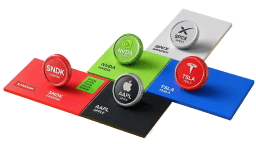
Coinbase files to bring stock perpetuals to the US

 Prefer us on Google


Coinbase has filed two SEC notice registrations dated Sept. 1 as it works to bring single-stock perpetual contracts to the United States through its regulated derivatives exchange and brokerage.
Summary
- Coinbase Derivatives filed Form 1-N to register as a security futures exchange.
- Coinbase Financial Markets submitted Form BD-N as a limited-purpose security futures broker-dealer.
- The filings do not provide a launch date, a list of supported stocks, or proposed leverage limits.
- Single-stock futures fall under the joint oversight of the SEC and CFTC.
Coinbase said in a Sep. 3 post on X that it is working to offer single-stock perpetual contracts in the United States after submitting SEC notice registrations for two of its regulated derivatives businesses.
"We're working to bring single stock perps to the US," the company said.
The attached documents show that Coinbase Derivatives, LLC filed Form 1-N, while Coinbase Financial Markets, Inc. submitted Form BD-N. Both notices carry a Sept. 1 filing date.
According to the company, it plans to work with the Securities and Exchange Commission and the Commodity Futures Trading Commission as it brings more financial products into the U.S. market. Coinbase did not announce when trading could start or identify which listed companies could serve as the underlying assets.
You might also like: Coinbase launches 10x crypto futures in Canada
Coinbase filings establish a dual SEC-CFTC route
Under SEC rules, Form 1-N allows an exchange regulated by the CFTC to register with the SEC for the sole purpose of trading security futures products. Coinbase Derivatives has operated as a CFTC-designated contract market since 2020, according to the company's regulatory disclosures.
The SEC's Form 1-N instructions state that the notice supplies the agency with information about the exchange's ownership, operations, rules, trading systems and disciplinary procedures. Filing the document does not turn Coinbase Derivatives into a general-purpose stock exchange such as Nasdaq or the New York Stock Exchange.
For the brokerage side, SEC Form BD-N allows an eligible CFTC registrant to register as a broker-dealer solely for trading security futures. SEC rules require the applicant to be registered with the CFTC as either a futures commission merchant or an introducing broker and to hold membership in the National Futures Association or another qualifying association.
Coinbase Financial Markets is already registered as a futures commission merchant with the CFTC. Its new notice would support customer access to security futures listed through the affiliated Coinbase Derivatives exchange.
According to the CFTC, futures on individual securities and narrow-based stock indexes are classified as security futures products. Such contracts carry features of both securities and futures, placing them under the joint authority of the SEC and CFTC.
The two filings therefore cover distinct functions: Coinbase Derivatives would provide the market where contracts are listed, while Coinbase Financial Markets would serve as the regulated intermediary for customers. Neither document shown in the announcement contains contract terms nor confirms final clearance for a commercial rollout.
Single-stock perpetuals would extend an existing overseas product
Coinbase launched stock perpetual futures for eligible customers outside the United States in March, according to the company's International Exchange announcement. U.S. persons were expressly barred from using the service.
The initial international selection provided synthetic exposure to Apple, Microsoft, Alphabet, Amazon, Nvidia, Meta, and Tesla. Coinbase also listed contracts tied to the SPY and QQQ exchange-traded funds, which track the S&P 500 and Nasdaq-100, respectively.
According to Coinbase, the international single-stock contracts traded continuously, including during weekends, and initially offered leverage of up to 10 times. ETF perpetuals provided leverage of up to 20 times, while positions were settled in USDC and could be cross-margined with other spot and perpetual holdings.
Perpetual futures differ from standard futures because they have no fixed expiration date. Coinbase's international products use a funding mechanism to keep contract prices near the value of their reference assets, allowing traders to maintain leveraged long or short exposure without purchasing the underlying shares.
Terms used outside the United States should not be treated as confirmed specifications for the proposed U.S. products. Coinbase has not said whether its domestic contracts would trade around the clock, settle in USDC, or carry the same leverage limits. The company also has not confirmed whether its first U.S. lineup would match the seven technology stocks offered internationally.
For American traders, the proposed contracts would provide derivatives exposure rather than ownership of the referenced shares. Coinbase's international product description says stock perpetual holders do not receive shareholder rights associated with the underlying securities, such as voting rights.
Coinbase has expanded regulated derivatives access
The registration notices follow several additions to Coinbase's derivatives business during 2026. In May, CFTC staff granted Coinbase Financial Markets regulatory relief connected to eligible U.S. institutions accessing certain derivatives listed on Deribit, the offshore platform Coinbase acquired.
In June, crypto.news reported US approval for Coinbase to provide access to global crypto perpetual futures. Chief Executive Brian Armstrong said at the time that years of regulatory work were needed to create a compliant route for U.S. customers into a market that had largely operated overseas.
Coinbase has also moved into additional national markets. On Sept. 2, the company launched 23 futures for eligible Canadian investors, covering perpetual and dated contracts tied to Bitcoin, Ether, Solana and 20 other crypto assets. Supported Canadian products offer leverage of up to 10 times.
Company market data showed Coinbase Derivatives with about $1.75 billion in 24-hour volume as of Sept. 3, compared with approximately $9.7 billion on Coinbase International Exchange. Coinbase's figures cover each venue's full derivatives activity and do not isolate trading in stock perpetuals.
-- Price
Perpetual contracts remain contested in the US
Coinbase's stock-product plan arrives while U.S. courts and regulators are still considering how some perpetual contracts should be classified. In June, CME Group sued the CFTC over the regulator's treatment of crypto perpetuals offered through platforms including Coinbase and Kalshi.
According to CME's complaint, perpetual contracts fit the definition of swaps under the Dodd-Frank Act and should not be regulated as ordinary futures. The exchange operator accused the CFTC of departing from its past approach and bypassing procedures required for swap products.
The CFTC rejected CME's position and called the case "frivolous," according to court coverage of the dispute. No final ruling has invalidated the regulator's existing route for crypto perpetual contracts.
CFTC officials have separately identified leverage, funding-rate volatility, manipulation, and price convergence as possible risks in perpetual markets. In a June 2025 address, then-Acting Chair Caroline Pham said some commenters questioned whether contracts without an expiry could perform the risk-management and price-discovery roles associated with traditional futures.
Stock perpetuals can present additional trading-hour concerns because the contracts may remain active while the exchanges listing their reference shares are closed. Coinbase's international risk disclosure warns that equity perpetuals involve liquidity, execution and price-volatility risks, particularly outside regular stock-market hours.
The Sept. 1 notices do not state whether the U.S. contracts would operate continuously or pause when the underlying equity markets close. Coinbase also has not disclosed proposed funding calculations, position limits, margin requirements, clearing arrangements or safeguards for periods when fresh stock prices are unavailable.
Read more: CLARITY Act could take Wyoming crypto rules nationwide
This content is provided for general informational purposes only and doesn't constitute financial, investment, legal, or tax advice. Any events, rewards, online promotions, or related information mentioned herein should not be considered a recommendation, solicitation, or invitation to purchase, sell, trade, or otherwise deal in any crypto assets. Crypto assets are highly volatile and may result in loss. The availability of WEEX services, products, and related events may vary by region. You are responsible for ensuring that your participation is in accordance with applicable local laws and regulations.
You may also like

OpenAI Releases GPT-6 Astra: The Closest AI Model Yet to AGI

Meta Invests $18 Billion in AI to Guess Your Age from Photos

Revolut hit by Washington crypto boom illusion, exposing massive two-tier banking system
Wall Street is buying privacy while centralized exchanges are delisting it

Chainlink Partners with Swift Bottomline to Support Cross-Chain Payments

HTX DAO Launches $10M Genesis Program to Propel the Crypto-AI Convergence and Advance Financial Freedom

Bahrain Leads the Race for Stablecoins in the Middle East, But Where Are the Coins?

Behind the $399 Machine Duck Sales Boom: How Shenzhen Became the 'Hardware Base' for Physical AI?
Bitcoin Golden Cross Approaches: The 12 Previous Instances That Call for Caution

Tether’s USDT0 launches on Stellar with cross-chain liquidity

XRP Ledger tested by BIS researchers for data checks

2026's Most Wild DeFi Yield Strategies: No Betting on Explosive Growth, Just Harvesting On-Chain Speculation Fees
Taiwan's Financial Supervisory Commission to Implement Virtual Asset Regulations by Q1 Next Year
Interview with Waterdrop Capital CEO Dashan: AI in One Hand and Crypto in the Other, the Oil and Gold of This Era
Countdown to Arc Mainnet: Where Will the First Batch of Traffic Flow?

Russian Crypto Trading Awaiting Central Bank Guidelines, Expected to Be Ready by December
Rain contract exploit drains $1.1M from card users
How Uniswap's Fee Switch Redefined Revenue

Arbitrum Nova Migration Window Ends, Transitioning to Minimal Maintenance Mode
Debt Expansion and Currency Shuffle: The Biggest Beta Opportunity in the Crypto Market According to Hayes
Sui Chain DeFi Protocol Full Sail Announces Liquidation: $91,000 Lost Due to Attack on Oracle Switchboard
G20 Supports Regulatory Path for Digital Assets, Strengthens Anti-Money Laundering Enforcement Requirements

Jupiter Launches Universal Deposit, Supporting Multi-Chain Asset Cross-Chain Exchange for USDC

Leverage, Ferraris, and the Law of Attraction: Carl Moon’s "First Life" | WE TALK by WEEX
From a supermarket clerk in Northern Europe to a trader, racer, and musician who dictates his own destiny, Carl Moon’s story isn’t a simple get-rich-quick fantasy. It’s a long-term, self-driven game of goals, discipline, and risk control.
Coldcard Wave 3 Attackers Transfer Stolen Funds for the First Time, Some Assets Converted to ETH
Three Public Chains Halt Operations in Four Days: Who Has the Power to Press the Pause Button?
Kraken IPO delayed until Q2 2027: report

Goldman Sachs, BofA and 19 Other Banks Plan U.S. Dollar Stablecoin Launch
Saudi Arabia Confirms Death of Two Filipino Sailors in Iranian Attack on Oil Tanker

Tracking Cryptocurrency May Be Included in Exporters' Currency Revenue Control
OpenAI Releases GPT-6 Astra: The Closest AI Model Yet to AGI
Meta Invests $18 Billion in AI to Guess Your Age from Photos
Revolut hit by Washington crypto boom illusion, exposing massive two-tier banking system
Wall Street is buying privacy while centralized exchanges are delisting it
Chainlink Partners with Swift Bottomline to Support Cross-Chain Payments
HTX DAO Launches $10M Genesis Program to Propel the Crypto-AI Convergence and Advance Financial Freedom