
Airdrop Farming: How to Farm Crypto Airdrops the Right Way

 Prefer us on Google


Airdrop farming is the practice of actively using crypto projects — testing apps, providing liquidity, bridging assets, or otherwise interacting with a protocol — in the hope of qualifying for a future airdrop of that project's token. An airdrop is a distribution of free tokens, often used by new projects to reward early users and decentralise ownership. "Farming" simply means doing the qualifying activity deliberately and consistently.
Why projects run airdrops
New protocols airdrop tokens for practical reasons: to attract early users, to bootstrap a community, to decentralise governance, and to reward the people who used the product before it was well known. For users, airdrops have occasionally been meaningful — which is exactly why "farming" them became popular. It is important to keep expectations realistic, though: many airdrops are modest, some never happen, and eligibility rules are set by the project, not the farmer.
How airdrop farming works
The general idea is to be a genuine, active user of a protocol that has not yet launched a token. Common qualifying activities include:
- Using a testnet — trying features before mainnet launch.
- Providing liquidity or making swaps on a decentralised exchange.
- Bridging assets between networks.
- Holding or staking specific assets.
- On-chain activity — a consistent history of real transactions.
Projects usually reward organic behaviour and try to filter out artificial farming. That means quality and genuine usage tend to matter more than raw volume.
Doing it "the right way"
Sustainable airdrop farming looks a lot like being a normal, curious user rather than gaming a system:
- Focus on protocols you actually find useful — you keep the value of the product even if no token ever arrives.
- Be consistent over time rather than rushing a burst of activity right before a snapshot.
- Spread activity naturally — many projects penalise obvious "sybil" behaviour (one person running many wallets to multiply rewards).
- Track your costs. Gas fees, bridging fees and capital tied up in liquidity are real expenses that can outweigh any eventual reward.
An unhurried, cost-aware approach echoes the discipline of strategies like dollar cost averaging (DCA): steady, planned participation rather than reacting to hype.
Common types of airdrops
Not all airdrops work the same way, and knowing the type helps set expectations. Retroactive airdrops reward people who used a protocol before it announced any token. Task-based airdrops ask users to complete specific actions, such as testing a feature or joining a campaign. Holder airdrops distribute tokens to those who hold or stake a particular asset at a snapshot date. Understanding which type a project is likely to run helps you judge whether genuine, ongoing use is worthwhile — or whether the effort and cost outweigh any realistic reward.
The risks — read this part carefully
Airdrop farming carries real risks that are easy to overlook amid the excitement:
- Scams and fake airdrops. Fraudulent "claim" sites ask you to connect a wallet and sign a malicious transaction that drains your funds. Never sign a transaction you do not understand, and never share your seed phrase.
- Smart-contract risk. Interacting with new, unaudited protocols can expose funds to bugs or exploits.
- No guarantee. There is no promise of a token, and eligibility criteria can change or exclude you after the fact.
- Cost overruns. Fees and locked capital can exceed any reward.
- Tax and reporting. In many jurisdictions, received tokens may be taxable — check your local rules.
Because the airdrop landscape shifts constantly, treat this as a general framework rather than a fixed playbook, and verify a project through its official channels before interacting.
Staying safe
A few habits reduce most of the danger: bookmark official URLs and ignore links sent in DMs; consider a separate wallet for experimentation; revoke token approvals you no longer use; and confirm token contract addresses from the project's own documentation. Security is the part of airdrop farming that never goes out of date.
Key takeaways
- Airdrop farming means using protocols to potentially qualify for future token distributions.
- Genuine, consistent usage tends to be rewarded more than artificial activity.
- There is no guaranteed payout — treat any reward as a bonus, not a plan.
- Scams, smart-contract risk and hidden costs are the main dangers; security discipline is essential.
This article is for educational and informational purposes only and does not constitute investment, financial, or trading advice, nor a recommendation to participate in any specific airdrop. Crypto assets are volatile and airdrop farming carries real risks, including total loss. Always do your own research and verify projects through official sources before interacting.
Disclaimer: This content is provided for general branding and informational purposes only and doesn't constitute financial, investment, legal, or tax advice. Any events, rewards, online events, or related information mentioned herein should not be considered a recommendation, solicitation, or invitation to purchase, sell, trade, or otherwise deal in any crypto assets or to use any services. Crypto assets are highly volatile and may result in loss. WEEX services and online events may not be available in all regions and are subject to applicable laws, regulations, and eligibility requirements. You are responsible for ensuring that your use of WEEX services complies with local laws and for carefully assessing the risks before participating in any crypto-related activities.
You may also like

Gold Price Outlook 2026: Third-Party Analyst Scenarios (Maintained, Educational)
Silver Price Outlook 2026: Third-Party Analyst Scenarios (Maintained, Educational)
How to Buy Bitcoin in Brazil: A Step by Step Guide for Beginners

Dolar Crypto in Argentina: How to Use Stablecoins for Dollar Exposure and Buy Bitcoin
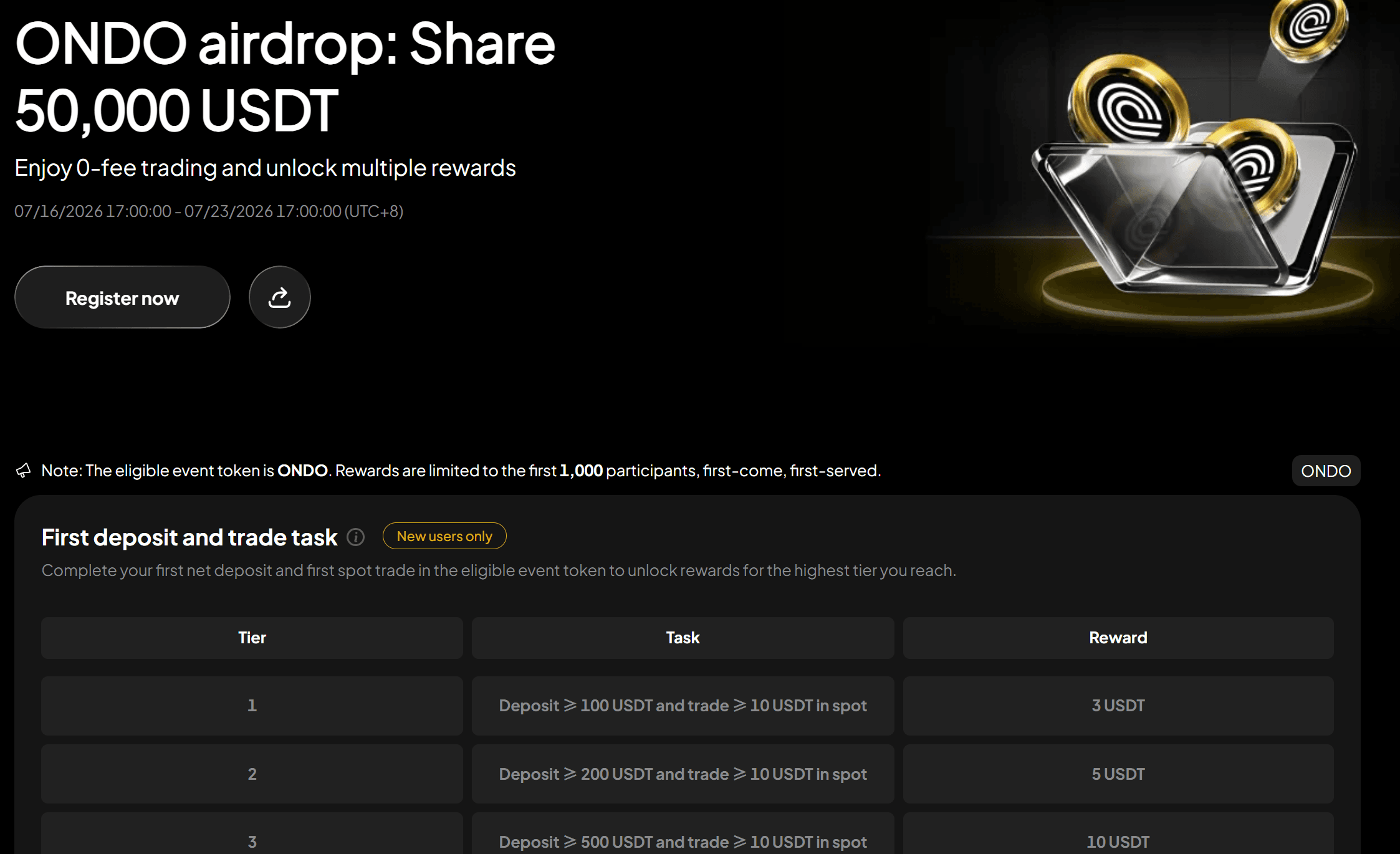
Claim ONDO Airdrop Rewards: Complete Tasks and Share 50,000 USDT
Claim ONDO Airdrop rewards on WEEX and share 50,000 USDT. Learn how to join, complete trading tasks, earn bonuses, and trade ONDO/USDT during the event.
Japan's Crypto Regulation Basics: The FSA, JVCEA, and User Protections

How Overseas Crypto Exchanges Work for Japan Residents (and the Risks)
Modelo 721 Explained: Declaring Foreign Crypto Holdings in Spain
DEX vs CEX for Perpetuals: Trading Perps On-Chain vs on an Exchange
What Is an On-Chain Order Book? How Order-Book DEXs Work
What Is a Perp DEX? Perpetual Futures on Decentralized Exchanges
Italy Crypto Tax 2026: The Capital Gains Rate Rises to 33%
Support and Resistance: How to Identify Key Levels on the Chart

Supply and Demand Zones: A Smart-Money Trading Guide
Price Action Trading: Reading Raw Market Behavior

Head and Shoulders Pattern: How to Spot and Trade It

Classic Chart Patterns: Triangles, Double Tops/Bottoms and Flags
What Is a Moving Average (MA)? Types and How to Read Them
What Is Elliott Wave Theory? A Beginner's Guide to Counting Waves
What Is Fibonacci Retracement? How to Draw and Use It
What Is the Ichimoku Cloud? A Beginner's Guide to Reading It
What Is the VIX (Fear Index)? How to Read It and Its Link to Crypto
What Is Dow Theory? The Six Principles Explained
What Is a Death Cross? Understanding the Bearish Signal
What Is a Golden Cross? A Beginner's Guide to the Bullish Signal
MiCA Regulation: What Changes for Polish Crypto Investors
Open Interest: What It Means in Futures Trading
Call vs Put Options: What They Are and How They Differ
What Are Sakata's Five Methods? Classic Candlestick Patterns Explained
What Is the FOMC? Meeting Schedule and Why Crypto Reacts
Gold Price Outlook 2026: Third-Party Analyst Scenarios (Maintained, Educational)
Silver Price Outlook 2026: Third-Party Analyst Scenarios (Maintained, Educational)
How to Buy Bitcoin in Brazil: A Step by Step Guide for Beginners
Dolar Crypto in Argentina: How to Use Stablecoins for Dollar Exposure and Buy Bitcoin
Claim ONDO Airdrop Rewards: Complete Tasks and Share 50,000 USDT
Claim ONDO Airdrop rewards on WEEX and share 50,000 USDT. Learn how to join, complete trading tasks, earn bonuses, and trade ONDO/USDT during the event.
Japan's Crypto Regulation Basics: The FSA, JVCEA, and User Protections





