
DEX vs CEX for Perpetuals: Trading Perps On-Chain vs on an Exchange

 Prefer us on Google


Perpetual futures can be traded in two fundamentally different places: on a centralized exchange (CEX), through an account you fund and an operator that runs the market, or on a perp DEX, where trading happens on-chain through smart contracts and a self-custody wallet. This article compares the two specifically for perpetuals. For the broader, spot-level comparison of the two exchange types, see the general guide, the difference between a DEX and a CEX. This is educational and neutral; it does not recommend either model or any specific venue.
The one difference everything flows from: custody
On a CEX you deposit collateral into an account the exchange controls; the exchange holds the keys and records your balance internally. On a perp DEX you keep your assets in your own wallet and post them to a protocol only as needed. Almost every other difference below is a consequence of this split between custodial and non-custodial.
How they compare on the things that matter for perps
- Access and onboarding. A CEX typically requires an account and identity verification (KYC). A perp DEX is usually permissionless — connect a wallet and trade — with no account to open.
- The funding and liquidation machinery. Both models use the same core perpetual mechanics: a funding rate to anchor the contract to spot, and a liquidation engine to close under-margined positions. On a CEX this is run by the operator's risk system; on a perp DEX it is executed by smart contracts and keepers, transparently on-chain.
- Liquidity and execution. Large centralized venues have historically carried the deepest perpetual liquidity, which can mean tighter spreads and less slippage on big orders. On-chain liquidity has grown quickly, especially on order-book perp DEXs — the mechanism explained in What Is an On-Chain Order Book?. Liquidity varies venue by venue in both categories, so this is a general tendency, not a rule.
- Listing speed and range. Permissionless or fast-listing venues can offer markets on new assets quickly. Both centralized and decentralized venues compete on how fast and how broadly they list perpetual markets.
- Fees. Both models charge trading fees and both involve funding payments between longs and shorts. On-chain trading also incurs network (gas) costs. Fee schedules differ from venue to venue and change over time, so compare current published fees rather than assuming one category is always cheaper.
The risk trade-off
The models fail in different ways, and understanding that is the point of comparing them:
- CEX risk is counterparty and custodial. You are trusting the operator to hold funds safely, run the market fairly and stay solvent. If it fails, you are exposed as a creditor.
- DEX risk is technical and self-directed. Smart-contract bugs, oracle failures and thin liquidity are the hazards, and because it is non-custodial, a lost key or a malicious signature is unrecoverable — there is no support desk.
- Leverage risk is identical in both. A perpetual is a leveraged instrument wherever you trade it; the same adverse move that produces an outsized gain can liquidate your entire margin. This danger comes from the instrument, not the venue type.
Which suits which trader?
There is no universal answer, and this article deliberately does not pick one. As a neutral framing: the centralized model tends to appeal to traders who value deep liquidity, familiar interfaces, fiat on-ramps and customer support, and who accept custodial trust in exchange. The decentralized model tends to appeal to traders who prioritise self-custody, permissionless access and on-chain transparency, and who are comfortable managing wallet and smart-contract risk themselves. Many active traders use both. The right choice depends on your own priorities, jurisdiction and risk tolerance.
WEEX is a centralized exchange that offers perpetual futures; on it, the instrument is traded through your exchange account rather than a self-custody wallet. That is a description of the CEX model, not a comparison of any specific decentralized venue.
Key takeaways
- The core difference is custody: CEX = custodial account; perp DEX = non-custodial, on-chain.
- Both share the same perpetual mechanics (funding, liquidation), run by an operator on a CEX and by smart contracts on a DEX.
- CEXs have tended to offer the deepest liquidity; on-chain liquidity is growing fast — but it varies venue by venue.
- The models carry different risks (custodial/counterparty vs. technical/self-directed), while leverage risk is the same in both.
New to the instrument itself? Start with perpetual contracts, then read What Is a Perp DEX?.
This article is for educational and informational purposes only and does not constitute investment, financial, legal or tax advice, nor an endorsement of any exchange or trading model. Cryptocurrency perpetual futures with leverage carry a high level of risk, including the total loss of your collateral. Always do your own research.
Disclaimer: This content is provided for general branding and informational purposes only and doesn't constitute financial, investment, legal, or tax advice. Any events, rewards, online events, or related information mentioned herein should not be considered a recommendation, solicitation, or invitation to purchase, sell, trade, or otherwise deal in any crypto assets or to use any services. Crypto assets are highly volatile and may result in loss. WEEX services and online events may not be available in all regions and are subject to applicable laws, regulations, and eligibility requirements. You are responsible for ensuring that your use of WEEX services complies with local laws and for carefully assessing the risks before participating in any crypto-related activities.
You may also like

Gold Price Outlook 2026: Third-Party Analyst Scenarios (Maintained, Educational)

Silver Price Outlook 2026: Third-Party Analyst Scenarios (Maintained, Educational)
How to Buy Bitcoin in Brazil: A Step by Step Guide for Beginners

Dolar Crypto in Argentina: How to Use Stablecoins for Dollar Exposure and Buy Bitcoin
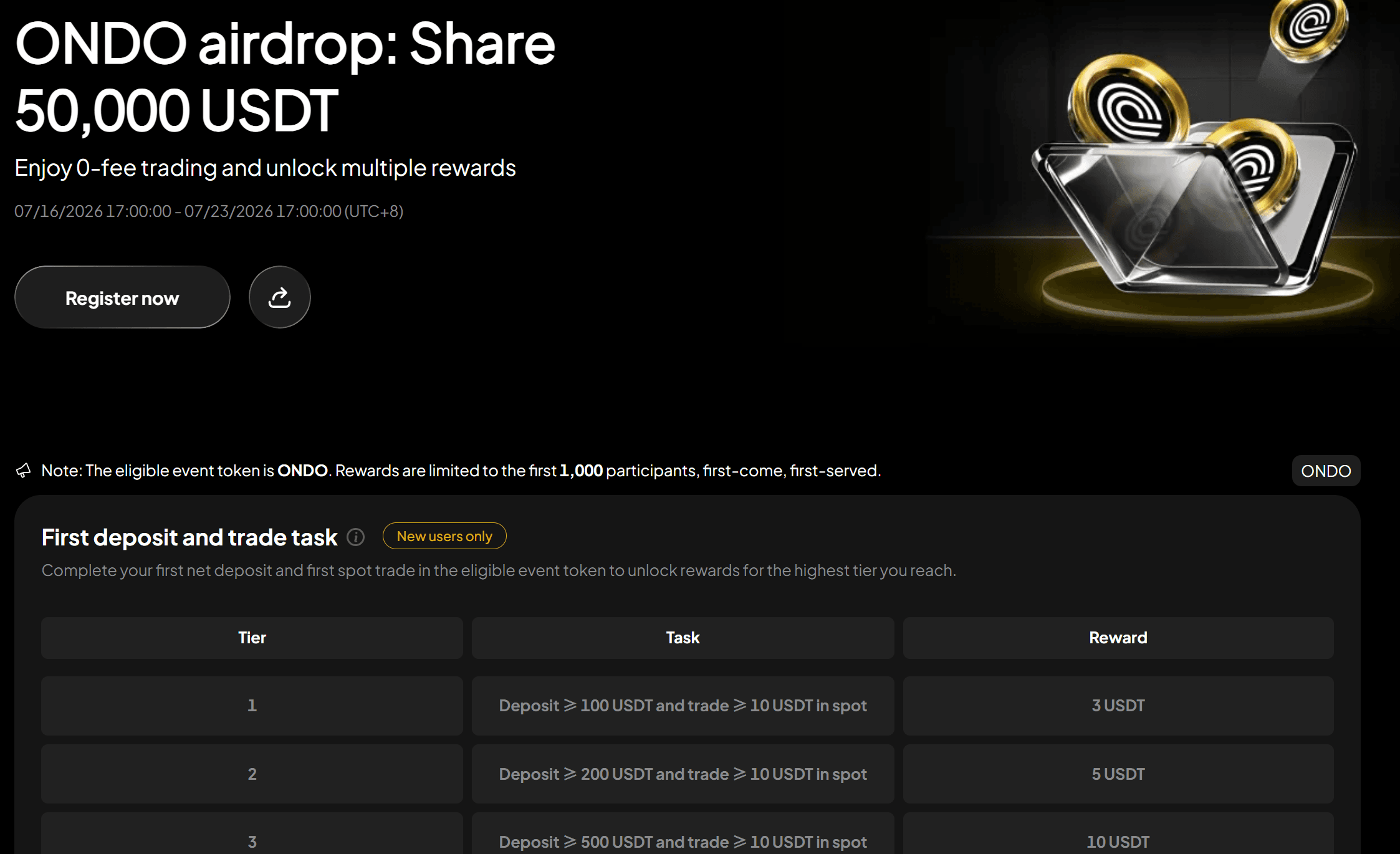
Claim ONDO Airdrop Rewards: Complete Tasks and Share 50,000 USDT
Claim ONDO Airdrop rewards on WEEX and share 50,000 USDT. Learn how to join, complete trading tasks, earn bonuses, and trade ONDO/USDT during the event.
Japan's Crypto Regulation Basics: The FSA, JVCEA, and User Protections

How Overseas Crypto Exchanges Work for Japan Residents (and the Risks)
Modelo 721 Explained: Declaring Foreign Crypto Holdings in Spain
What Is an On-Chain Order Book? How Order-Book DEXs Work
What Is a Perp DEX? Perpetual Futures on Decentralized Exchanges
Italy Crypto Tax 2026: The Capital Gains Rate Rises to 33%
Support and Resistance: How to Identify Key Levels on the Chart

Supply and Demand Zones: A Smart-Money Trading Guide
Price Action Trading: Reading Raw Market Behavior

Head and Shoulders Pattern: How to Spot and Trade It

Classic Chart Patterns: Triangles, Double Tops/Bottoms and Flags
Airdrop Farming: How to Farm Crypto Airdrops the Right Way
What Is a Moving Average (MA)? Types and How to Read Them
What Is Elliott Wave Theory? A Beginner's Guide to Counting Waves
What Is Fibonacci Retracement? How to Draw and Use It
What Is the Ichimoku Cloud? A Beginner's Guide to Reading It
What Is the VIX (Fear Index)? How to Read It and Its Link to Crypto
What Is Dow Theory? The Six Principles Explained
What Is a Death Cross? Understanding the Bearish Signal
What Is a Golden Cross? A Beginner's Guide to the Bullish Signal
MiCA Regulation: What Changes for Polish Crypto Investors
Open Interest: What It Means in Futures Trading
Call vs Put Options: What They Are and How They Differ
What Are Sakata's Five Methods? Classic Candlestick Patterns Explained

What Is the FOMC? Meeting Schedule and Why Crypto Reacts
Gold Price Outlook 2026: Third-Party Analyst Scenarios (Maintained, Educational)
Silver Price Outlook 2026: Third-Party Analyst Scenarios (Maintained, Educational)
How to Buy Bitcoin in Brazil: A Step by Step Guide for Beginners
Dolar Crypto in Argentina: How to Use Stablecoins for Dollar Exposure and Buy Bitcoin
Claim ONDO Airdrop Rewards: Complete Tasks and Share 50,000 USDT
Claim ONDO Airdrop rewards on WEEX and share 50,000 USDT. Learn how to join, complete trading tasks, earn bonuses, and trade ONDO/USDT during the event.
Japan's Crypto Regulation Basics: The FSA, JVCEA, and User Protections





