
PCE: What It Is and Why the Fed Watches It

 Prefer us on Google


PCE (Personal Consumption Expenditures) is an indicator that measures household spending on goods and services and, in its price version (the PCE Price Index), the change in prices of what people actually buy. It is best known as the Federal Reserve's preferred inflation gauge (the US central bank).
How the PCE Works
Like the CPI, the PCE Price Index measures inflation, but with some methodological differences:
- Broader coverage — it includes a wider range of spending, including outlays made on households' behalf (for example, certain healthcare costs).
- More frequently updated weights — the basket adapts faster to changes in spending habits (the "substitution effect"), as consumers shift toward cheaper alternatives.
- Core PCE — as with the CPI, a version excluding energy and food is considered more stable and indicative of the underlying trend.
For these reasons, the PCE can show slightly different inflation than the CPI. Up-to-date values are published by the relevant official statistical bodies.
Why the PCE Moves Markets
Because the Federal Reserve uses core PCE as its main reference for its inflation target, this reading weighs heavily on expectations for US interest rates. Higher or lower rates influence the dollar, equities, bonds, and risk appetite across global markets, crypto included.
A PCE reading above or below expectations can therefore trigger market moves, just like the CPI. Many participants follow both to get a fuller picture of inflation.
Note: the PCE is macroeconomic context, not a trading signal. No single data point alone determines the direction of prices.
FAQ
Q. What's the difference between PCE and CPI? A. Both measure inflation, but PCE has broader coverage and updates basket weights faster. The Fed favors core PCE; the CPI is more cited by the media.
Q. What is core PCE? A. The PCE Price Index excluding energy and food, seen as more representative of the underlying inflation trend.
Q. Why does the Fed prefer PCE? A. For its broader coverage and better reflection of changing spending habits; it uses it as the reference for its inflation target.
Q. Does PCE matter for crypto investors? A. Yes, indirectly: it influences US rate expectations, which affect risk appetite and therefore crypto assets too.
This article is for information and education only and is not financial or investment advice. It guarantees no market outcome.
This article is for general information only and is not financial or investment advice.
Disclaimer: This content is provided for general branding and informational purposes only and doesn't constitute financial, investment, legal, or tax advice. Any events, rewards, online events, or related information mentioned herein should not be considered a recommendation, solicitation, or invitation to purchase, sell, trade, or otherwise deal in any crypto assets or to use any services. Crypto assets are highly volatile and may result in loss. WEEX services and online events may not be available in all regions and are subject to applicable laws, regulations, and eligibility requirements. You are responsible for ensuring that your use of WEEX services complies with local laws and for carefully assessing the risks before participating in any crypto-related activities.
You may also like

Gold Price Outlook 2026: Third-Party Analyst Scenarios (Maintained, Educational)

Silver Price Outlook 2026: Third-Party Analyst Scenarios (Maintained, Educational)
How to Buy Bitcoin in Brazil: A Step by Step Guide for Beginners

Dolar Crypto in Argentina: How to Use Stablecoins for Dollar Exposure and Buy Bitcoin
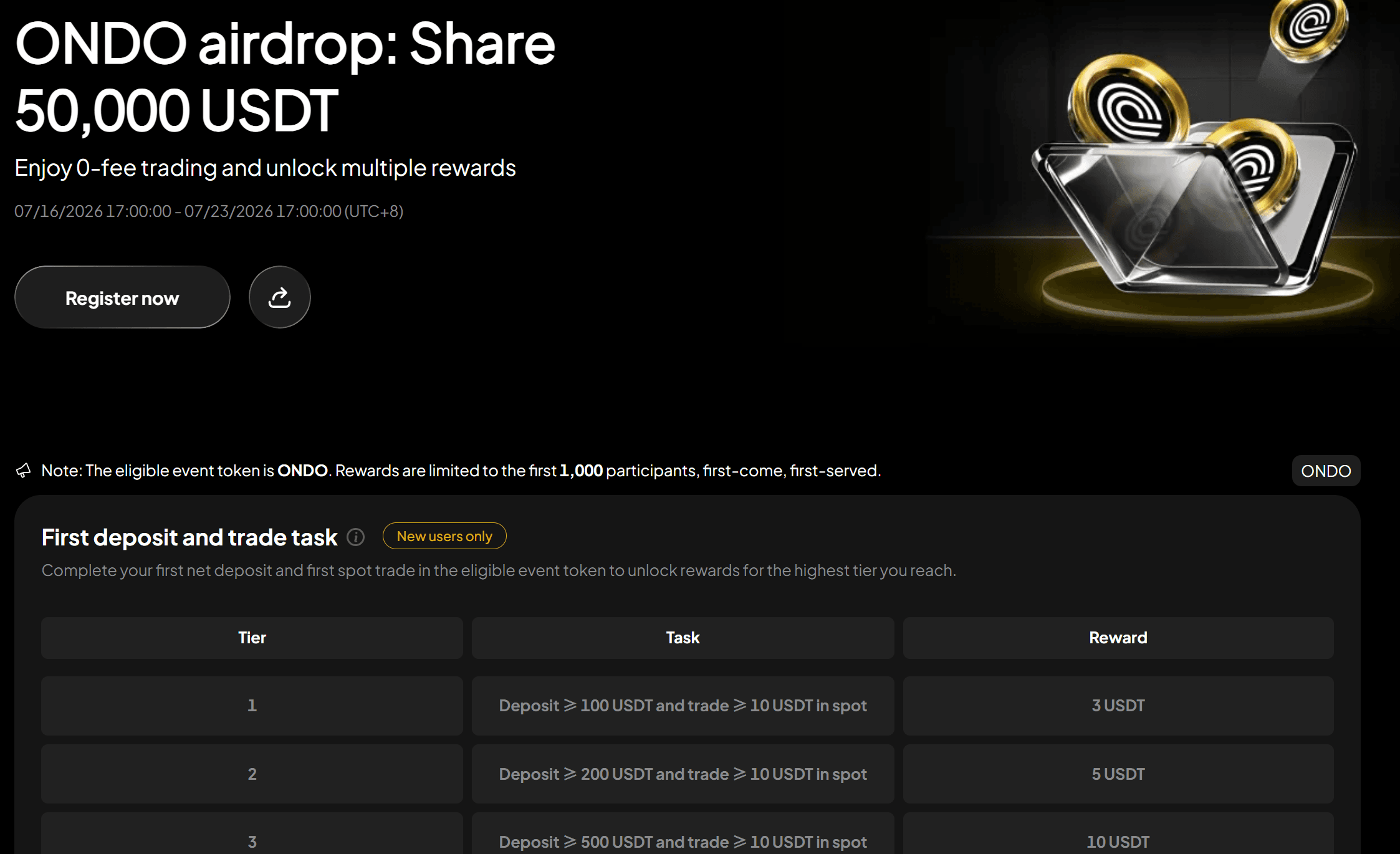
Claim ONDO Airdrop Rewards: Complete Tasks and Share 50,000 USDT
Claim ONDO Airdrop rewards on WEEX and share 50,000 USDT. Learn how to join, complete trading tasks, earn bonuses, and trade ONDO/USDT during the event.
Japan's Crypto Regulation Basics: The FSA, JVCEA, and User Protections

How Overseas Crypto Exchanges Work for Japan Residents (and the Risks)
Modelo 721 Explained: Declaring Foreign Crypto Holdings in Spain
DEX vs CEX for Perpetuals: Trading Perps On-Chain vs on an Exchange
What Is an On-Chain Order Book? How Order-Book DEXs Work
What Is a Perp DEX? Perpetual Futures on Decentralized Exchanges
Italy Crypto Tax 2026: The Capital Gains Rate Rises to 33%
Support and Resistance: How to Identify Key Levels on the Chart

Supply and Demand Zones: A Smart-Money Trading Guide
Price Action Trading: Reading Raw Market Behavior

Head and Shoulders Pattern: How to Spot and Trade It

Classic Chart Patterns: Triangles, Double Tops/Bottoms and Flags
Airdrop Farming: How to Farm Crypto Airdrops the Right Way
What Is a Moving Average (MA)? Types and How to Read Them
What Is Elliott Wave Theory? A Beginner's Guide to Counting Waves
What Is Fibonacci Retracement? How to Draw and Use It
What Is the Ichimoku Cloud? A Beginner's Guide to Reading It
What Is the VIX (Fear Index)? How to Read It and Its Link to Crypto
What Is Dow Theory? The Six Principles Explained
What Is a Death Cross? Understanding the Bearish Signal
What Is a Golden Cross? A Beginner's Guide to the Bullish Signal
MiCA Regulation: What Changes for Polish Crypto Investors
Open Interest: What It Means in Futures Trading
Call vs Put Options: What They Are and How They Differ
What Are Sakata's Five Methods? Classic Candlestick Patterns Explained
Gold Price Outlook 2026: Third-Party Analyst Scenarios (Maintained, Educational)
Silver Price Outlook 2026: Third-Party Analyst Scenarios (Maintained, Educational)
How to Buy Bitcoin in Brazil: A Step by Step Guide for Beginners
Dolar Crypto in Argentina: How to Use Stablecoins for Dollar Exposure and Buy Bitcoin
Claim ONDO Airdrop Rewards: Complete Tasks and Share 50,000 USDT
Claim ONDO Airdrop rewards on WEEX and share 50,000 USDT. Learn how to join, complete trading tasks, earn bonuses, and trade ONDO/USDT during the event.
Japan's Crypto Regulation Basics: The FSA, JVCEA, and User Protections
Contents
Latest articles





Latest coin listings on WEEX


